Before our two-week road trip through Italy, ZTL zones and parking were the parts I was most nervous about. Would renting a car actually be worth the hassle?
For our route, absolutely. We drove from Rome through Cinque Terre, Milan, Lake Como, Venice, Florence, and Tuscany, stopping in smaller towns along the way. Once we reached a city, we usually parked the car and explored on foot, by ferry, or by public transportation. After I learned a few basic rules, driving felt much less intimidating than I expected.
Here’s what I’d want to know before picking up the keys.
Do You Need a Car in Italy?
If you’re only visiting major cities like Rome, Florence, Milan, and Venice, I’d take the train. We barely used our car while staying in those cities, and parking added to the cost.
For our trip, a car made sense. We could stop in Pisa on the way to Cinque Terre, visit Brolio Castle and Siena in Tuscany, and stay at agriturismos outside city centres. Those were some of my favourite parts of the journey. If you’re planning your own detours, take a look at my Pisa weekend travel guide and 10 unique things to do in Tuscany for more ideas.
If you’re considering a similar route, see my two-week Italy road trip itinerary for the full 14-day route and overnight stops.
Renting a Car in Italy
Choose the smallest car that comfortably fits you and your luggage. The highways aren’t particularly narrow, but parking garages and historic towns are another story. We went with a compact car and were glad we did.
If you need an automatic, reserve it early. Manual cars are common, and the automatic options may be more limited. Before booking, check the rental company’s age, licence, payment card, and insurance requirements. When you pick up the car, take photos or a quick video of the body, wheels, windshield, and any existing damage.
We picked up and returned our car at Rome Fiumicino Airport (FCO). Having the same pickup and return location worked well for our loop, although I’d compare the total cost before choosing where to rent.
I usually book rental cars through Expedia because I find they offer a good range of options and competitive prices.
Do You Need an International Driving Permit?
If you’re driving with a Canadian licence, bring your valid licence and an International Driving Permit (IDP) or an official sworn translation. An IDP is not a replacement for your licence. The Government of Canada explains the requirements and says Canadians must obtain an IDP from CAA before leaving Canada. Travellers with licences from other countries should check the rules that apply to them and confirm their rental company’s requirements.
We saw people turned away at the rental counter because they didn’t have the required documents. This is one thing I wouldn’t leave until arrival.
Understand ZTL Zones Before You Drive
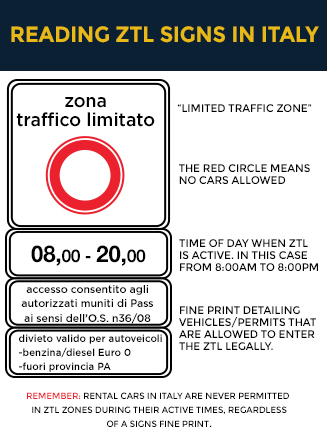
A Zona a Traffico Limitato, or ZTL, is a restricted traffic area often found in historic centres. The signs show when access is restricted, and cameras can record vehicles entering. Your navigation app might still direct you through one, so pay attention to the street signs as well as your phone. Italy’s official driving guide explains the restrictions.
Before driving into a city or historic town, I’d do four things:
- Choose your parking location ahead of time.
- Check whether the route to it crosses a ZTL.
- Read the signs rather than following Google Maps or Waze blindly.
- If your accommodation is inside a ZTL, ask how authorized access works before you arrive.
We found it easiest to park outside restricted areas and explore on foot. If a hotel or garage says it can arrange access, confirm exactly what you need to do with your rental plate. A room booking alone isn’t permission to drive through a ZTL.
Parking in Italy
In larger cities, I’d choose a garage before setting off that morning. It takes away the stress of searching for a space while navigating unfamiliar streets. Your hotel can often suggest a suitable place and tell you whether you’ll need to cross any restricted areas.
Blue marked spaces generally indicate paid parking, white ones generally indicate free parking, and yellow spaces are reserved. Always check the signs for local rules and hours. For us, paying for a garage and then leaving the car there worked especially well in Milan, Florence, and Venice.
Historic Tuscan towns can be particularly awkward to drive through. A road that looks fine on a navigation app may turn into a narrow stone street, so I’d park outside the centre and walk in whenever possible.
Toll Roads and Fuel
Italy’s major highways, or autostrade, made the longer travel days fairly straightforward. Many are toll roads. On some routes, you take a ticket when entering and pay when exiting; other systems vary. Follow the signs above the lanes, keep any entry ticket safe, and don’t enter a lane reserved for an electronic toll tag unless your rental has one. We paid by card at the tolls we used, but carrying a physical card and some cash gave us a backup.
Check which fuel your rental car takes before you reach the pump: benzina means gasoline, while gasolio means diesel. Look at the label inside the fuel door and your rental paperwork rather than guessing. If you need to return the car full, plan a fuel stop near the return location and leave extra time before your flight.
Is Driving in Italy Difficult?
I found city driving busier and more assertive than driving at home in Canada. Scooters squeeze through traffic, streets can narrow quickly, and locating a parking garage sometimes took more attention than the highway drive. Outside the major cities, I settled into it pretty quickly.
Italy drives on the right. Follow posted speed limits and road signs, and keep right on multilane roads except when passing. I’d also allow more time than your navigation app suggests for finding parking and walking to your accommodation.
Don’t Be Afraid to Take the Scenic Route
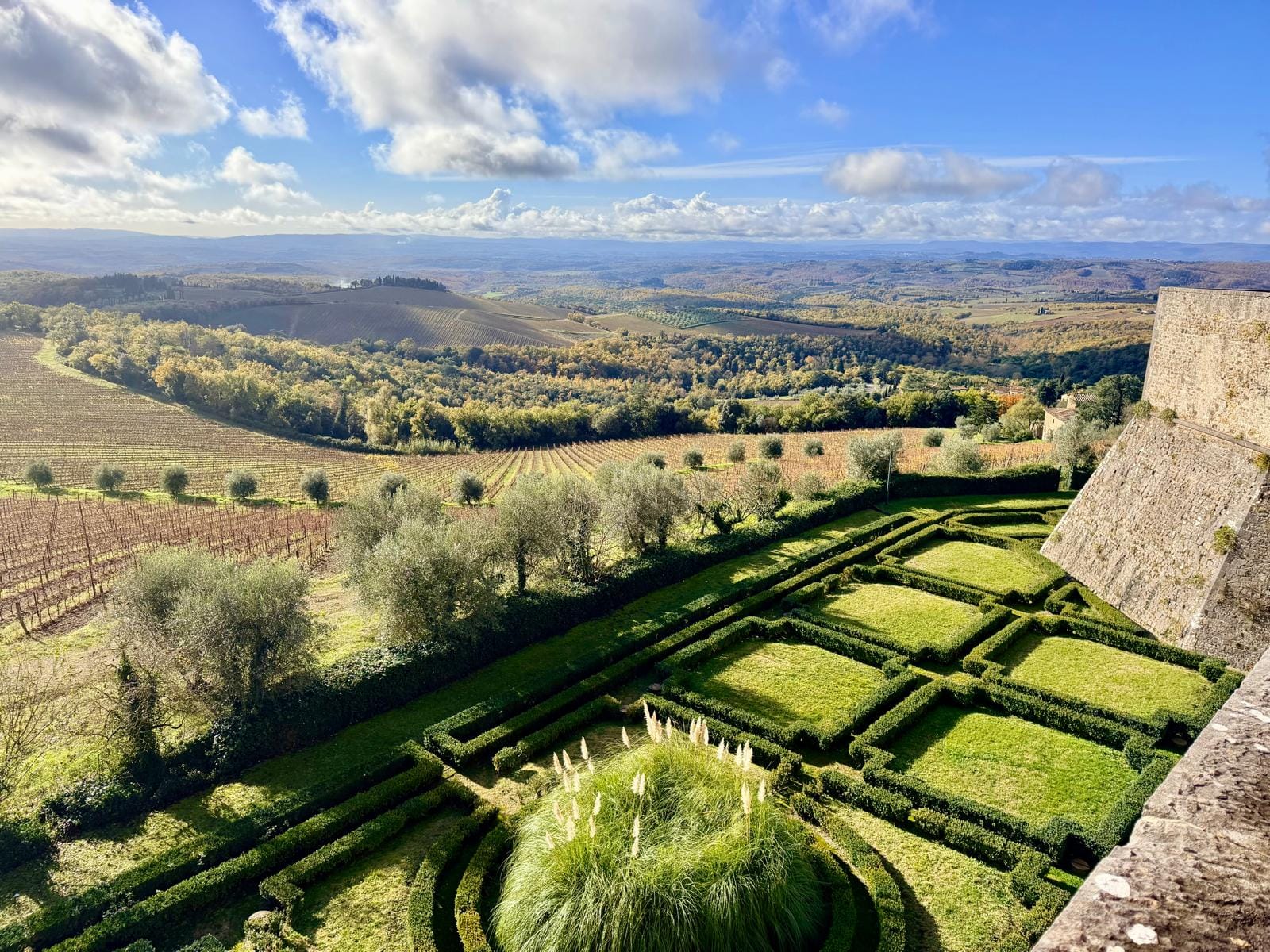
Some of my favourite drives were through Tuscany, where vineyards, olive groves, cypress trees, castles, and hill towns seemed to appear around every corner. If you see a viewpoint with somewhere safe to pull over, stop. If a little town looks interesting, take the detour. Those unplanned moments were a big part of why renting a car was worth it for us.
Would I do it again? Absolutely. Sort out your documents, choose a car that fits your luggage, plan parking before you arrive, and pay close attention to ZTL signs. Then leave yourself room to enjoy the drive.

Frequently Asked Questions About Driving in Italy
What are the speed limits in Italy?
The typical speed limits are 50 km/h in towns, 90 km/h on secondary roads, 110 km/h on main roads, and 130 km/h on motorways. Treat those as a starting point and follow the posted signs, since limits can change by road, weather conditions, and driver experience. I found it easiest to focus on the signs rather than assume the limit stayed the same after leaving a town.
Can you drive into Venice or the Cinque Terre villages?
You can drive to Venice, but you’ll need to park before exploring its historic centre. We left our car at Piazzale Roma, then travelled around Venice on foot and by vaporetto.
You can reach the Cinque Terre villages by car, but the narrow roads and limited parking make it an awkward way to move between them. We based ourselves in Riomaggiore and used the train to explore the other towns. La Spezia also makes a great base to park your car and train in if basing yourself in other villages.
If your accommodation doesn’t include parking, confirm where you’ll leave the car before you arrive. You can see how we planned both stops in my two-week Italy road trip itinerary.