Lake Atitlán is one of those places where choosing where to stay can completely change your experience.
The lake is surrounded by small towns and villages, each with it’s own personality. Some are lively and social, others are quiet and focused on wellness, while others offer a much more traditional Guatemalan experience.
We spent three days exploring Lake Atitlán and visited San Pedro La Laguna, San Marcos La Laguna and San Juan La Laguna. Each one felt surprisingly different, and I’m glad we took the time to see more than one.
We stayed in San Marcos, which ended up being exactly what we wanted after several very active days exploring Guatemala. But that doesn’t mean I’d recommend San Marcos to everyone.
If you’re looking for nightlife, San Pedro may be a much better fit. If you’re interested in traditional Maya culture and local art, San Juan is worth a visit. And if you’re looking for a luxury escape, there are quieter options around the lake that may suit you better.
So, which town should you stay in at Lake Atitlán?
Here’s my honest breakdown of the towns, based on what we experienced, what we learned while planning our trip, and who I think each town is best suited for.
- Best Towns to Stay at Lake Atitlán
- San Pedro La Laguna: Best for Backpackers & Nightlife
- San Marcos La Laguna: Best for Relaxation & Wellness
- San Juan La Laguna: Best for Culture, Art & Local Experiences
- Santa Cruz La Laguna: Best for a Quiet Lakeside Escape
- Panajachel: Best for Convenience & Amenities
- Santa Catarina Palopó: Best for Luxury & Culture
- Is Lake Atitlán Safe?
- How to Get to Lake Atitlán
- How to Get Around Lake Atitlán: Lanchas, Tuk-Tuks and More
- Should You Stay in One Town or Move Around Lake Atitlán?
- How Many Days Do You Need at Lake Atitlán?
- Is Lake Atitlán Safe?
- How Much Does Lake Atitlán Cost?
- Lake Atitlán Travel Tips
- So, Which Lake Atitlán Town Should You Stay In?
- Frequently Asked Questions About Lake Atitlán
Best Towns to Stay at Lake Atitlán
| Town | Best For | Vibe |
|---|---|---|
| San Pedro La Laguna | Backpackers, younger travelers & nightlife | Social, lively & energetic |
| San Marcos La Laguna | Relaxation, yoga & wellness | Peaceful, tranquil & laid-back |
| San Juan La Laguna | Culture, art & traditional experiences | Local, artistic & quiet |
| Santa Cruz La Laguna | Lake views, swimming & a quieter stay | Scenic, peaceful & secluded |
| Panajachel | Convenience, restaurants & transportation | Busy, developed & touristy |
| Santa Catarina Palopó | Luxury, culture & boutique stays | Quiet, traditional & upscale |
San Pedro La Laguna: Best for Backpackers & Nightlife
If you’re a younger traveler, backpacker or someone who wants to meet people and have some nightlife while visiting Lake Atitlán, San Pedro is probably the town for you.
The lakeside and dock area is where you’ll find the most social atmosphere. It’s lined with bars, hostels, restaurants and cafes, and there’s usually music playing and people coming and going.
It is definitely not the quietest place around the lake.
We found San Pedro to be much louder and more energetic than San Marcos, particularly around the waterfront. If you’re looking for somewhere peaceful where you can wake up to nothing but birds and lake views, I wouldn’t choose the dock area of San Pedro.
But if you’re looking for a fun, social base, that’s exactly what makes it appealing.
What to Do in San Pedro
San Pedro has plenty of restaurants and cafes, along with lots of opportunities to shop and explore.
One of the things I’d recommend checking out is Los Termales, where you can soak in the outdoor tubs and relax after exploring the town.
It’s also a good place to shop, and there are tons of accommodation options, from inexpensive hostels to hotels.
If you’re travelling on a backpacker budget, San Pedro is one of the more affordable places to stay around the lake. You can find hostel beds for around $8–$10 USD per night, depending on the property and time of year.
Where to Stay in San Pedro
One thing I noticed is that the experience can change quite a bit depending on where you stay.
The area around the lake and docks is the busiest and loudest, with bars, hostels and international restaurants.
If you stay further uphill and away from the waterfront, you’ll find a much quieter atmosphere and more of a glimpse into everyday local life. However, there are not as many options so book in advance if you’re counting on a quieter stay.
Spanish Language Immersion in San Pedro
San Pedro is also known as a place where travelers can spend more time learning Spanish and getting involved with the local community. It’s also a popular destination for people interested in teaching English.
Choose San Pedro if you want:
- Backpacker-friendly accommodation
- Nightlife and bars
- A younger, social crowd
- Lots of restaurants and cafes
- Plenty of hotel and hostel options
- An affordable place to stay
- Spanish or language immersion opportunities
Skip San Pedro if you want: a quiet, peaceful getaway where you can completely disconnect.
San Marcos La Laguna: Best for Relaxation & Wellness
San Marcos was where we stayed, and it was my favourite place to stay around Lake Atitlán.
That said, I don’t think it’s for everyone.
San Marcos has a reputation for being a yoga and wellness-focused, somewhat “hippie” town. I’m no yogi by any means, but I still really enjoyed the town. You’ll find yoga retreats, wellness-focused restaurants, meditation and plenty of places to slow down.
But personally, I found it to be much more than that.
For me, the biggest draw was simply how tranquil it was.
Our San Marcos Airbnb: Incredible Lake Views
The accommodation we stayed in was one of the highlights of our entire Guatemala trip.
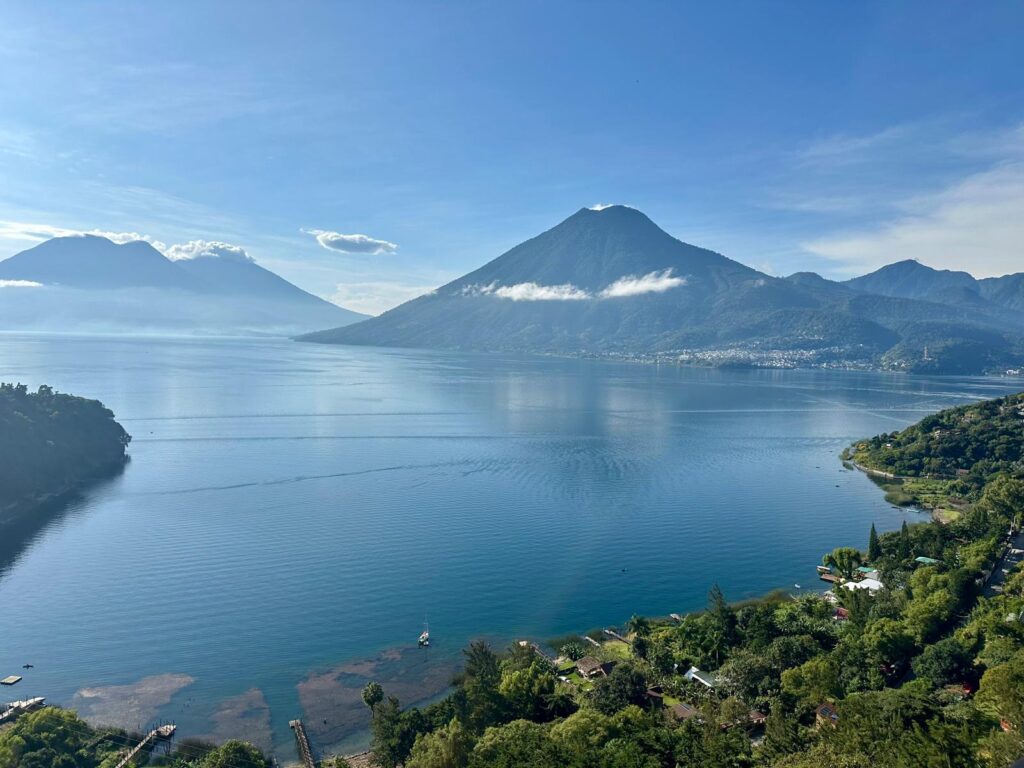
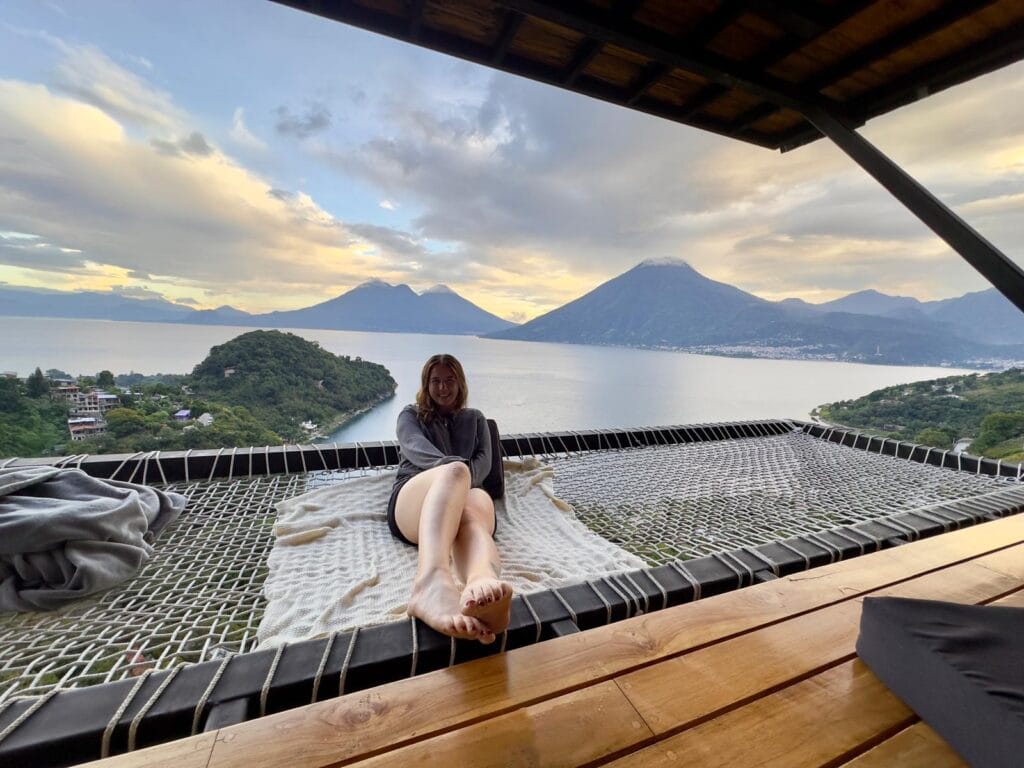
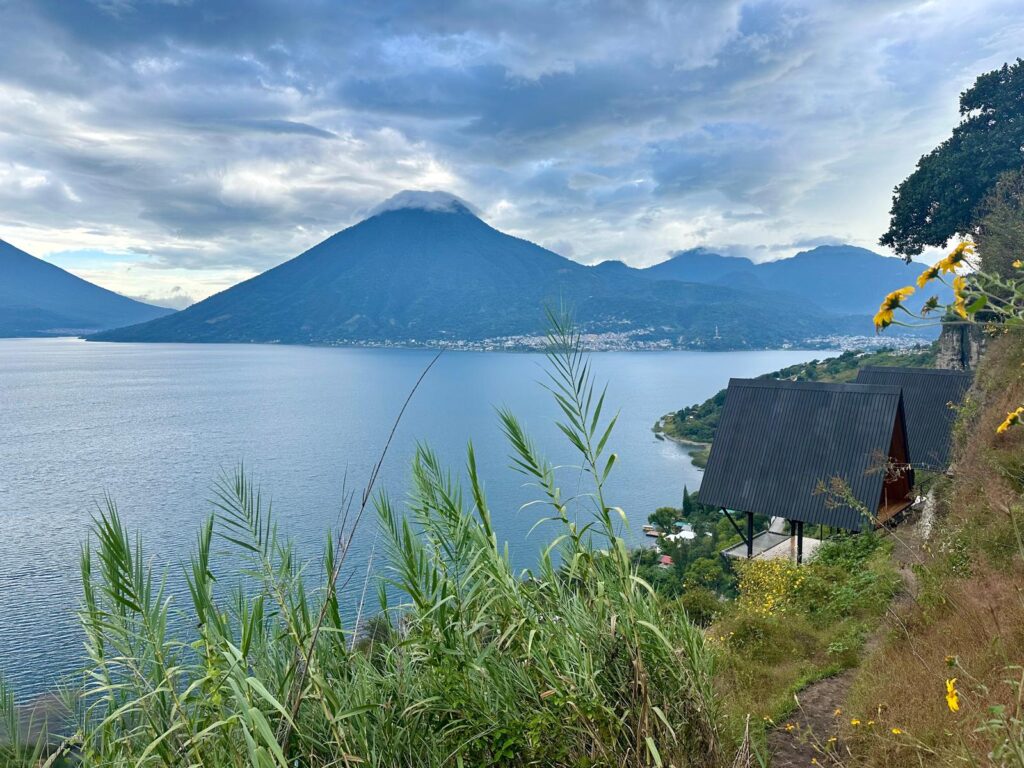
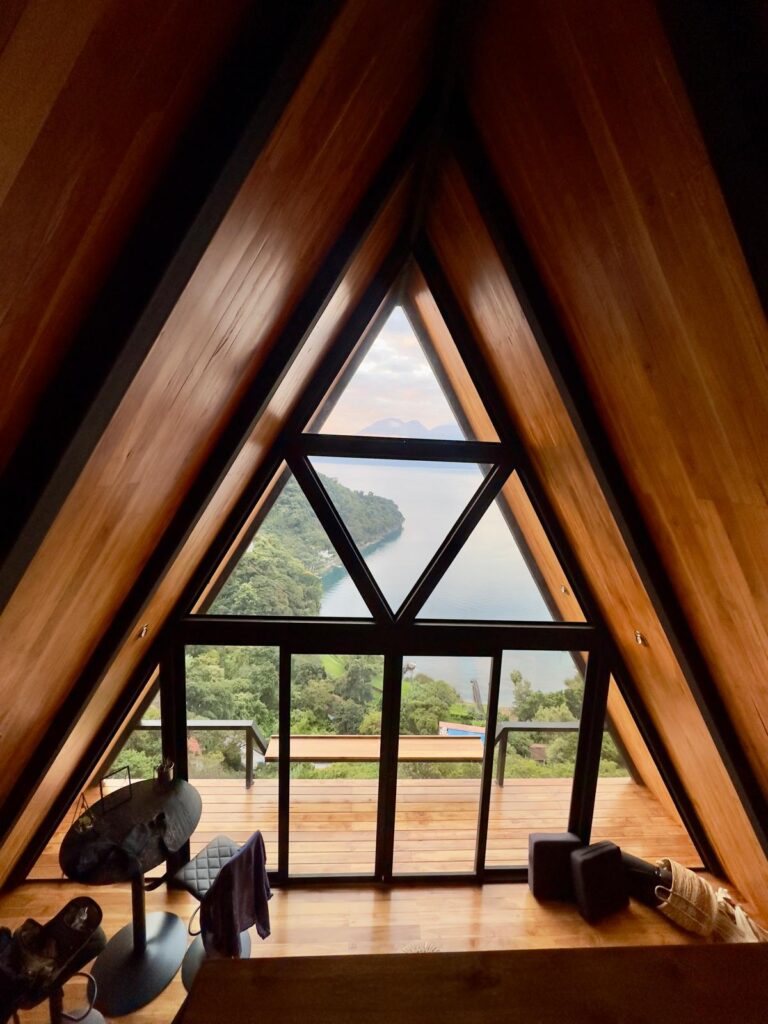
We stayed at Home in San Marcos La Laguna, an Airbnb A-frame perched on the side of the mountain with incredible views over Lake Atitlán.
Every evening, we watched the sun set over the lake and volcanoes from the netting hanging out over the mountainside.
It was one of those places where the accommodation itself became part of the experience.
Swimming in San Marcos
San Marcos was great for swimming, the water was clean and clear, and there are places around town where you can get right into the lake.
You can also rent stand-up paddleboards if you’d rather explore the lake from the water.
For something a little more adventurous, you can go diving at the Cerro Tzankujil Nature Reserve.
Yoga and Wellness in San Marcos
If you’re interested in yoga or wellness retreats, San Marcos is probably the most natural fit around the lake.
You can find yoga classes, retreats and wellness-focused experiences, including Kawoq Forest, which is worth checking out if that style of travel interests you.
The food scene reflects the same atmosphere. You’ll find plenty of wellness-oriented restaurants and cafes, including smoothie bowls and healthier breakfast options.
That was great for us, although if you’re specifically looking for traditional Guatemalan food at every meal, San Juan was a better fit.
Shopping and Souvenirs in San Marcos
One thing that surprised me about San Marcos was the shopping.
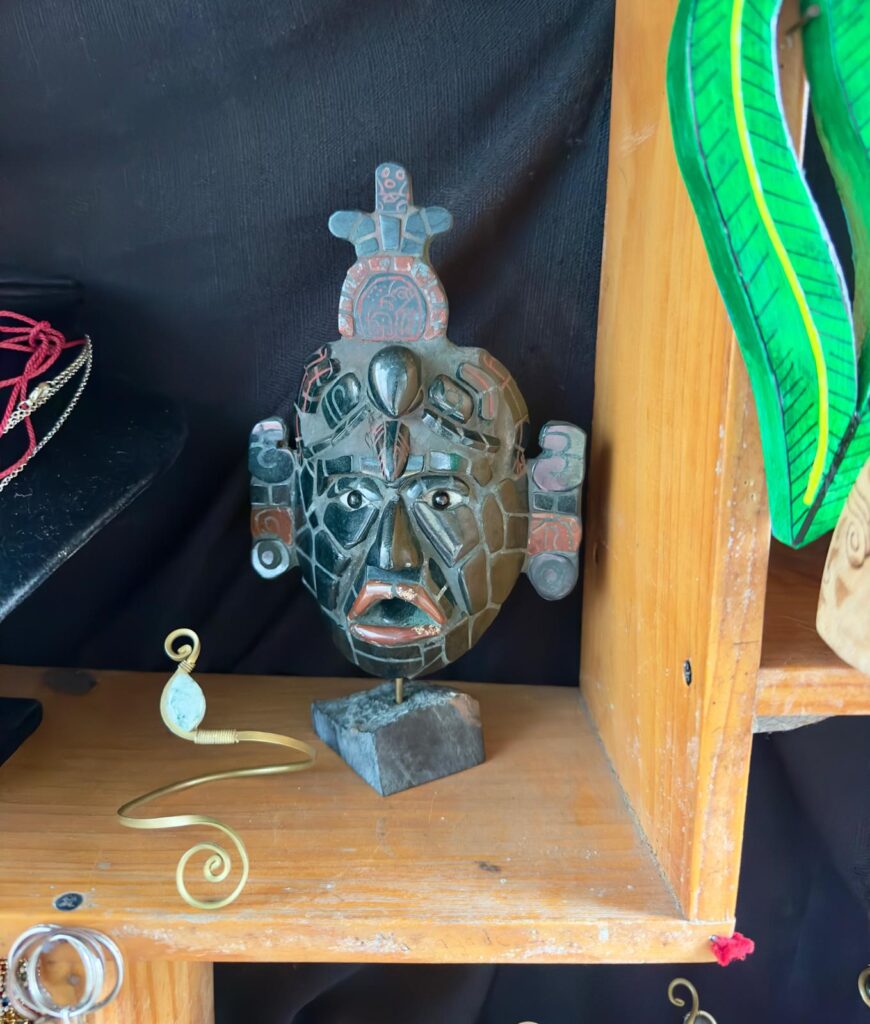
Of the towns we visited, I thought San Marcos had the most unique souvenirs and products.
We found things here that we didn’t see anywhere else, and much of it felt more individual and locally made rather than mass-produced tourist souvenirs.
Choose San Marcos if you want:
- A peaceful atmosphere
- Yoga and wellness
- Swimming
- Stand-up paddleboarding
- Unique shopping
- Beautiful lake and volcano views
- A slower pace
- A romantic or relaxing getaway
- A break from a busy Guatemala itinerary
I wouldn’t choose San Marcos if you’re looking for nightlife.
The evenings are much quieter, which was exactly what we wanted.
For us, San Marcos was the perfect place to slow down after trekking to El Mirador and exploring Tikal.
After several days of long hikes and ancient Maya sites, having somewhere beautiful to sit, swim, watch the sunset and do absolutely nothing was exactly what we needed.
San Juan La Laguna: Best for Culture, Art & Local Experiences
San Juan La Laguna has a completely different feel from San Pedro and San Marcos.
This is the town I’d choose if your main reason for visiting Lake Atitlán is culture, local art and traditional Guatemalan experiences.
San Juan is a quieter local town with a strong focus on art and community.
Art, Murals and Colourful Streets in San Juan
One of my favourite things about San Juan was simply walking around.
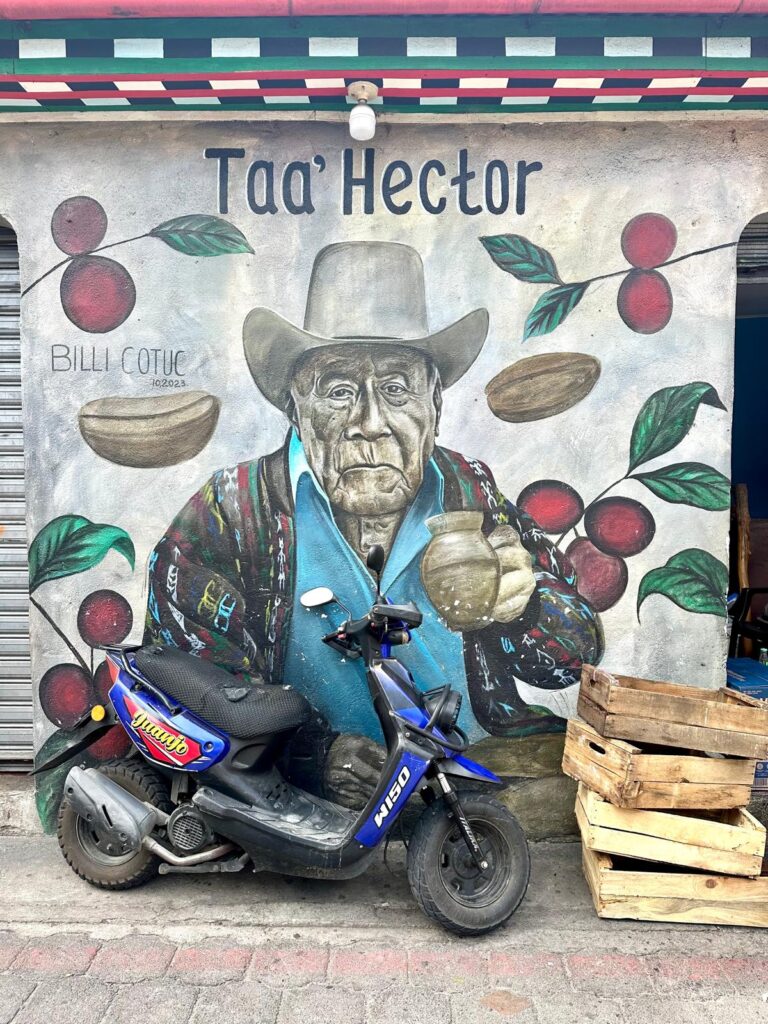
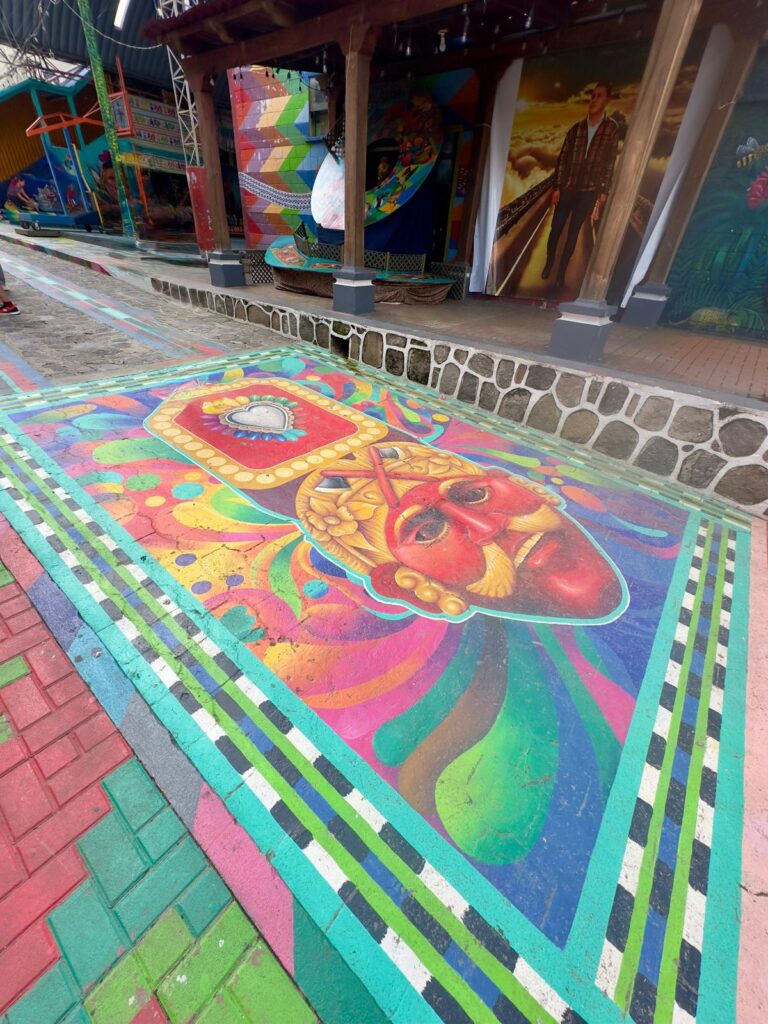
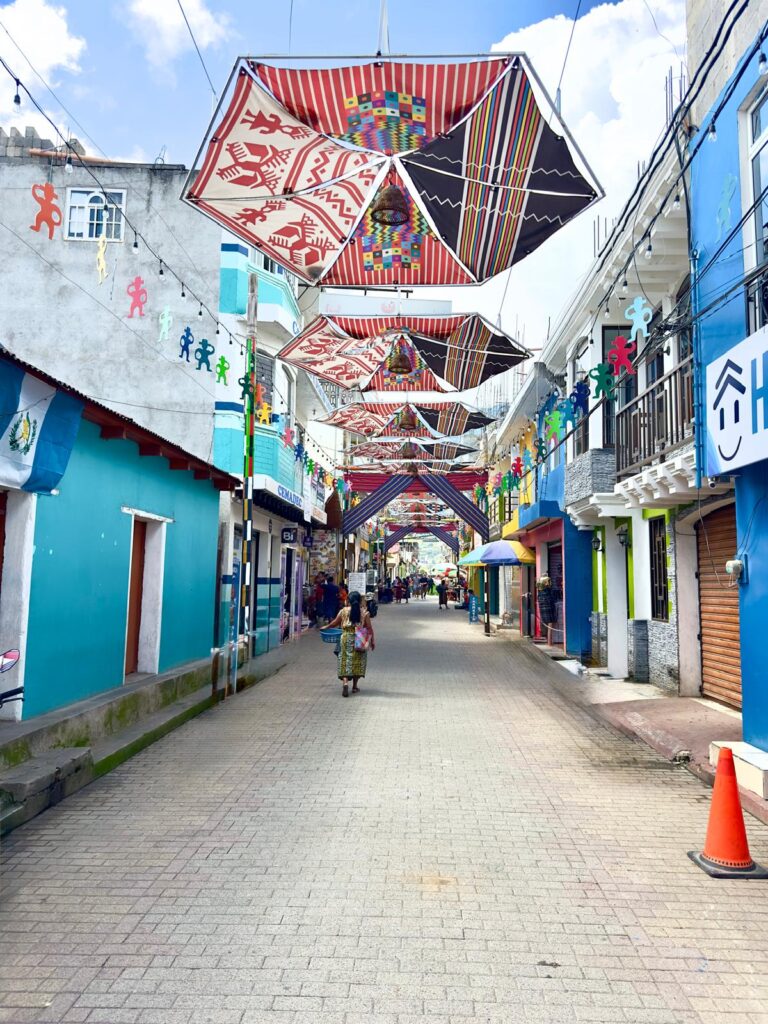
The streets are filled with detailed narrative murals, painted staircases and colourful overhead displays, including Umbrella Street and Hat Street.
It’s the kind of place where you don’t necessarily need a packed itinerary. Walking around and taking in the artwork is part of the experience.
The town has a strong connection to Tz’utujil Maya traditions, and you’ll find local art galleries, textile cooperatives and shops throughout the town.
If you’re interested in textiles, look for women-run weaving cooperatives such as Casa Flor Ixcaco and Lema Weavers, where you can learn more about traditional weaving and natural dyes.
Climb to Mirador Kaqasiiwaan
For one of the best views over the lake, make the climb up to Mirador Kaqasiiwaan.
There are around 300 steps to reach the viewpoint, but the panoramic views over Lake Atitlán and the surrounding volcanoes make the climb worthwhile.
Hiking in San Juan: Indian Nose
You can access the Indian Nose hike from San Juan, although the route from here is more challenging than some of the other approaches.
The route is around 5.5 km round trip and is steeper and more difficult than the approximately 3 km route from Santa Clara.
Traditional Guatemalan Food in San Juan
Another reason I’d recommend San Juan is the food.
Compared with San Marcos, which has a much stronger wellness-food scene, San Juan has more options for traditional Guatemalan food.
If trying local food is an important part of your trip, I’d make sure San Juan is on your list.
Choose San Juan if you want:
- Local culture
- Traditional Maya experiences
- Art and textiles
- Traditional Guatemalan food
- Hiking
- A quieter atmosphere
- Local shopping
It’s not the place I’d choose for nightlife, but that’s part of it’s appeal.
Santa Cruz La Laguna: Best for a Quiet Lakeside Escape
We didn’t have time to visit Santa Cruz, so my experience here is more limited. But here is what we learned from the people we talked to.
Santa Cruz has a very different layout from some of the other towns around Lake Atitlán.
The lakeside area is car-free, and the town is built into the steep hillside. Expect plenty of stairs.
The main residential village sits roughly a 30-minute walk or a quick tuk-tuk ride uphill from the docks, while many of the hotels and accommodations are located down along the shoreline.
That means many visitors staying near the lake end up eating at their hotel’s restaurant or at nearby lakeside spots.
Why Stay in Santa Cruz La Laguna?
The biggest draw is the lake itself.
The water is clean and clear, and Santa Cruz is a good place for swimming and stand-up paddleboarding.
It’s a good option if you want to wake up right beside the lake and don’t mind being a little removed from the larger towns.
Choose Santa Cruz if you want:
- Lakeside accommodation
- Swimming
- Stand-up paddleboarding
- A quieter atmosphere
- A car-free village
- Beautiful lake views
- A more secluded experience
Just be prepared for hills and stairs.
Panajachel: Best for Convenience & Amenities
We didn’t visit Panajachel during our trip because we had limited time and specifically wanted to spend our time exploring the smaller, more local towns around Lake Atitlán.
Panajachel is the largest and most developed town around the lake and is an important transportation hub.
Choose Panajachel if you want:
- Lots of restaurants
- Cafes and bars
- Plenty of hotels
- More conventional tourist infrastructure
- Easy transportation connections
- A more developed town environment
It’s also where many tourist shuttles arrive, making it a convenient gateway to the lake.
The tradeoff is that you’re choosing convenience over the quieter, more local atmosphere you’ll find in some of the smaller villages.
Personally, if I were visiting Lake Atitlán specifically for the scenery, culture and slower pace, I’d rather stay in one of the smaller villages.
If you’re only spending a short amount of time at the lake and need easy transportation connections, however, Panajachel could make sense.
Santa Catarina Palopó: Best for Luxury & Culture
If you’re looking for a more luxurious and peaceful Lake Atitlán experience, Santa Catarina Palopó is another town worth considering.
We didn’t have time to visit during our trip, but it was one of the places I would have liked to stay with another day or two around the lake.
The traditional Kaqchikel Maya village is known for it’s colourful buildings and distinctive blue-painted architecture.
It’s also home to some of the lake’s more upscale boutique accommodations, including properties with infinity pools and sweeping views of the volcanoes. If you’re looking for luxury stays, consider the following:
Because it’s only a short tuk-tuk ride from Panajachel, you can still access the restaurants, supermarkets and transportation connections there while staying somewhere much quieter.
Choose Santa Catarina Palopó if you want:
- A luxury stay
- Boutique hotels
- Traditional Maya culture
- A quiet atmosphere
- Beautiful architecture
- Lake and volcano views
- High-end accommodation
If your budget allows, this would be one of the places I’d look at for a special occasion or a more luxurious Guatemala trip.
Is Lake Atitlán Safe?
Yes. Extremely.
How to Get to Lake Atitlán
We actually drove from Guatemala City to San Marcos.
The highways were generally good, but once you enter the towns around Lake Atitlán, the roads become very narrow and windy.
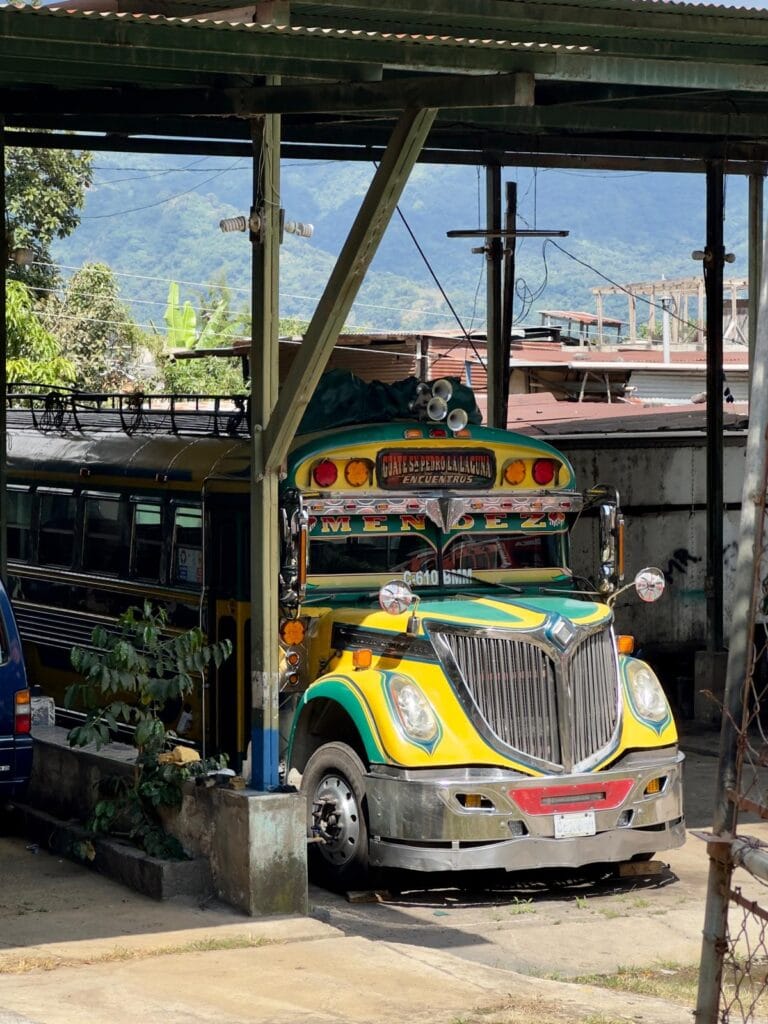
We ended up leaving Guatemala City later than planned and drove after dark. We had no issues, but I wouldn’t recommend doing this unless you’re a confident driver – especially with chicken buses driving around.
Parking can also be limited.
In San Marcos, we knew parking would be difficult, particularly at night, so our Airbnb host helped us arrange parking and we took a tuk-tuk to our accommodation.
Other ways to get to Lake Atitlán
If you don’t want to drive, you have several options:
- Tourist shuttles
- Private transfers
- Organized day trips from Antigua
- Public buses, although I personally wouldn’t recommend taking a chicken bus.
If you’re short on time, a day trip from Antigua can be a good way to see several towns without staying overnight. I really would recommend adding a day or two stay in Lake Atitlán, it was such a fun and unique place to visit!
How to Get Around Lake Atitlán: Lanchas, Tuk-Tuks and More
Lanchas
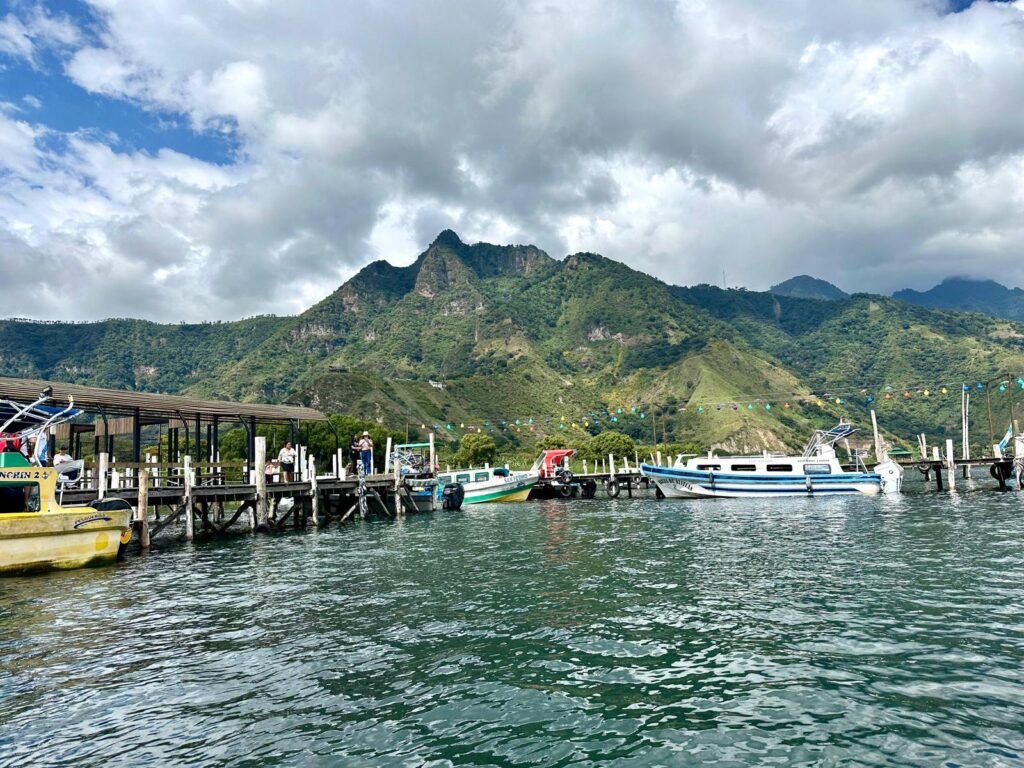
Once you’re at the lake, lanchas are the way to go.
Lanchas are the public motorboats that connect the towns around Lake Atitlán, and honestly, I thought they were one of the most fun parts of getting around.
They’re essentially water taxis, and they make it incredibly easy to visit another town for the afternoon.
Most operate without a strict timetable. Boats generally leave when they have enough passengers, and popular routes can have boats every 15–30 minutes depending on demand.
How to Take a Lancha at Lake Atitlán
It’s much easier than it sounds.
Head to the dock and tell the people working there which town you want to go to. They’ll point you toward the correct boat or line.
Be sure to bring cash, they are cash only.
Most shorter routes cost around 10–15 Q, while longer routes can cost approximately 20–25 Q.
You can also hire a private boat if you’d rather have a boat on your own schedule, but it will cost considerably more.
For me, taking the public lanchas was part of the experience. I’d definitely recommend taking at least one even if you aren’t planning to visit multiple towns.
Getting Around Lake Atitlán by Tuk-Tuk
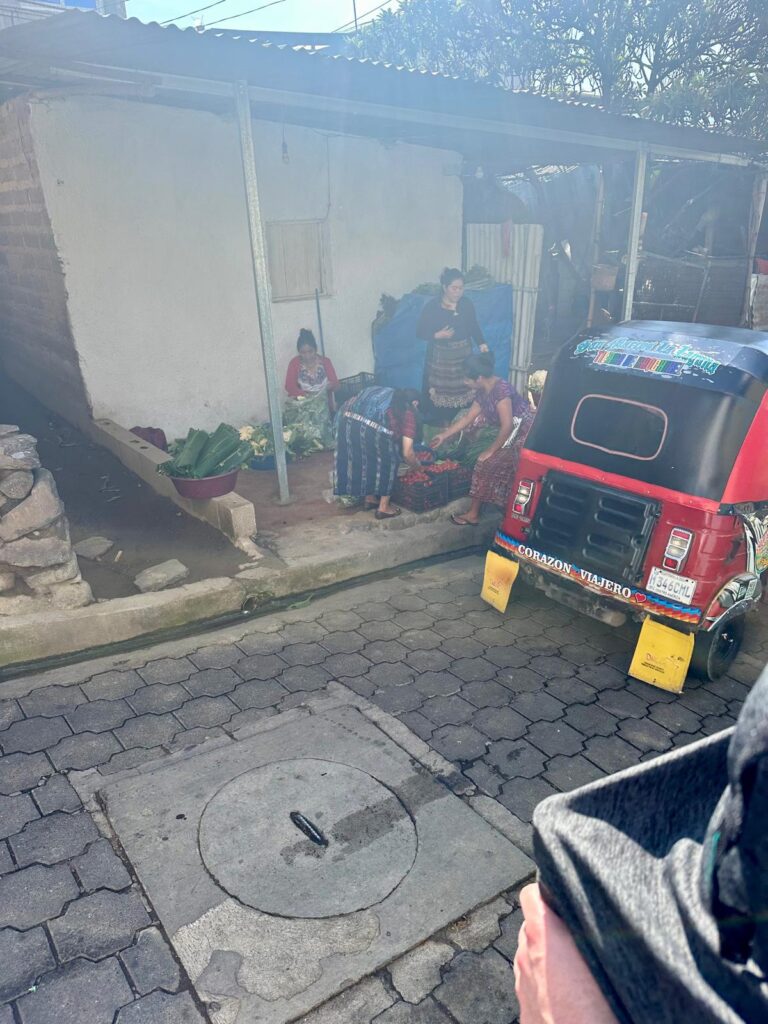
For getting around within towns, tuk-tuks are incredibly useful.
Most of the villages are walkable, but they’re very hilly, and some have a lot of stairs.
For longer distances or getting up into the hills, a tuk-tuk is much easier.
Some tuk-tuks will also take you between nearby towns.
Should You Stay in One Town or Move Around Lake Atitlán?
You definitely don’t need to move around Lake Atitlán if you don’t want.
Unless you’re planning a longer stay and want to experience several towns at a slower pace, I’d recommend choosing one town as your home base based on the type of experience you’re looking for, then visiting the other villages during the day.
Getting around Lake Atitlán is surprisingly easy and inexpensive. Public lanchas connect the towns around the lake, and tuk-tuks are readily available once you’re on land. This means you can stay somewhere that fits your travel style without missing out on what the neighbouring villages have to offer.
The biggest reason you might want to stay in more than one town is if you want to experience the differences between them, particularly when it comes to nightlife. San Pedro is much more social and lively, while places like San Marcos, San Juan and Santa Cruz have a noticeably quieter atmosphere.
For example, you could stay in San Marcos for a relaxing few days, then take a lancha to San Pedro for the afternoon to explore, grab something to eat, or experience the busier side of the lake before heading back to your quieter base.
I stayed for three nights and found that was enough time to get a feel for several different towns without constantly packing and unpacking. Honestly, I could have stayed much longer. Lake Atitlán is one of those places where slowing down and enjoying where you’re staying is part of the experience.
My advice: Unless you’re staying for a week or more, pick one town that matches your travel style and use the lanchas to explore the others. You’ll get to experience more of Lake Atitlán without turning your trip into a constant hotel change.
How Many Days Do You Need at Lake Atitlán?
I’d recommend at least two nights, but if you have the time, I’d stay longer.
We spent three days at Lake Atitlán and easily could have stayed for several more.
There’s much more to do around the lake than I expected, and every town has something different to offer.
You can spend one day exploring villages, another swimming or paddleboarding, another hiking, or simply spend an afternoon sitting somewhere with a view of the lake.
For us, Lake Atitlán was also a much-needed change of pace.
After hiking to El Mirador and visiting Tikal, we were ready to slow down.
Three days gave us enough time to explore San Pedro, San Marcos and San Juan without feeling like we were constantly rushing to the next destination.
If you only have one day, don’t skip Lake Atitlán altogether. There are plenty of day trips from Antigua that visit multiple towns around the lake.
But if you can make room for a couple of nights, I’d recommend staying overnight. The lake is at it’s best when you actually have time to slow down and experience it.
Is Lake Atitlán Safe?
Yes, I personally felt very safe at Lake Atitlán. In fact, it was one of the places in Guatemala where I felt the most comfortable during my trip.
We actually arrived at Lake Atitlán after dark, which isn’t something I would normally recommend when arriving somewhere unfamiliar. Despite that, I never once felt unsafe during our time around the lake. The villages felt relaxed and welcoming, and I was comfortable walking around and exploring.
For me, Lake Atitlán felt very different from some of the busier or more chaotic parts of Guatemala. The smaller lakeside villages have a slower, more relaxed atmosphere, and tourism is an important part of the local economy.
One thing I would particularly pay attention to is how you get around the lake and between villages. Public lanchas are a normal and popular way to travel, but conditions on the lake can change quickly, so follow local advice and be cautious in rough weather.
Of course, every trip is different and conditions can change, so check current travel advisories before you go.
How Much Does Lake Atitlán Cost?
Lake Atitlán is one of the more affordable destinations in Guatemala, but how much you spend depends heavily on where you stay, how you get around, and whether you stick to local restaurants or choose more tourist-focused experiences.
For rough planning purposes, I’d budget around Q150–250 per person per day for a budget trip, or Q500+ per person per day for a more comfortable trip. These estimates don’t include your transportation to and from Lake Atitlán.
A Rough Daily Budget
| Expense | Rough Cost |
|---|---|
| Budget accommodation | Q80–150/night |
| Boutique/lake-view accommodation | Q300+/night |
| Local meal | Around Q30 |
| Tourist restaurant meal | Q60–120 |
| Public boat between towns | Q10–25 |
| Tuk-tuk around town | A few quetzales |
| Tourist shuttle from Antigua | Q80–150 one way |
Prices can vary considerably between villages, and accommodation is usually where you’ll see the biggest difference in your overall budget. San Pedro and San Marcos tend to have some of the more affordable options, while towns such as Panajachel and Santa Cruz also have more upscale properties.
We stayed at a more luxury Airbnb, that cost Q1600 per night, so that was a major cost of our trip. There are many different price ranges for accommodations on Lake Atitlán.
My advice: don’t feel like you need to spend a fortune to enjoy Lake Atitlán. Some of the best experiences are simply taking a public lancha between villages, wandering through the small towns, grabbing food from a local comedor, and enjoying the lake views. Build a little extra room into your budget if you want to add activities such as kayaking, guided hikes, volcano trips, or other tours.
Important: Treat these numbers as a rough planning guide rather than a fixed price list. Prices in Guatemala can change, and transportation and accommodation costs can vary by season and village. I recommend checking current prices before booking your trip.
Lake Atitlán Travel Tips
Bring cash
This is probably my biggest practical tip. We stayed in San Marcos and there were only a few ATMs scattered around the town. There were multiple times we were wandering the streets headed back to the same ATM because we didn’t bring enough.
You’ll want cash for restaurants, tuk-tuks, lanchas and smaller shops.
Don’t assume you can use a credit card everywhere.
Don’t try to see every town
It’s tempting to look at a map and think you can visit every village around the lake.
You can certainly see several by lancha, but I wouldn’t try to turn your entire Lake Atitlán experience into a checklist.
Pick a town that matches your travel style, stay for a few nights and explore from there.
Take a lancha
Even if you’re staying in one town, take a boat somewhere else for the day.
It’s inexpensive, easy and gives you a completely different perspective of the lake.
Expect hills
Lake Atitlán is surrounded by mountains, and the towns reflect that.
San Marcos, San Pedro and San Juan all involve hills, stairs or both.
Comfortable shoes will make your life much easier.
Give yourself time to slow down
This might be the most important tip of all.
Lake Atitlán isn’t somewhere I’d recommend rushing through.
The views, the villages, the lake and the surrounding volcanoes are the experience.
Leave yourself some unplanned time.
So, Which Lake Atitlán Town Should You Stay In?
There’s no single best town to stay in at Lake Atitlán. The best town depends on what kind of trip you’re looking for.
Stay in San Pedro if: you’re a backpacker, want nightlife, enjoy meeting other travelers or want a more social atmosphere.
Stay in San Marcos if: you want peace, beautiful views, swimming, yoga, wellness and unique local shopping.
Stay in San Juan if: culture, traditional food, art, textiles and local experiences are your priority.
Stay in Santa Cruz if: you want a quieter lakeside escape with swimming and paddleboarding.
Stay in Panajachel if: convenience, restaurants, hotels and easy transportation connections matter most.
Stay in Santa Catarina Palopó if: you’re looking for a quieter luxury or boutique stay with a strong cultural atmosphere.
Our San Marcos Stay
We chose San Marcos, and for the kind of trip we were looking for, I couldn’t have asked for a better base.
After the adventure and hiking we’d packed into the first part of our Guatemala trip, having a peaceful place overlooking Lake Atitlán was exactly what we needed.
Watching the sun set over the lake and volcanoes every night was one of my favourite memories from Guatemala.
If you’re planning a trip to Guatemala, I’d strongly recommend giving Lake Atitlán more than just a quick day trip if your itinerary allows.
The towns may all sit around the same lake, but they each offer a completely different experience.
And that’s exactly what makes Lake Atitlán worth spending a few days exploring.
Planning a trip to Guatemala?
Check out my Ultimate 12-Day Guatemala Itinerary for the full route and tips, including where we went and what we did.
If you’re looking for other ideas to add to your trip, check out my Guatemala Highlights: Best Attractions, Adventures & Hidden Gems.
Frequently Asked Questions About Lake Atitlán
What is the best town to stay in at Lake Atitlán?
There isn’t one best town for everyone. San Pedro is best for nightlife and backpackers, San Marcos for relaxation and wellness, San Juan for culture and local experiences, and Santa Cruz for a quieter lakeside stay.
How many nights should you stay at Lake Atitlán?
I’d recommend at least two nights. We stayed three nights and could easily have stayed longer.
Is San Marcos or San Pedro better?
It depends on the type of trip you’re looking for. San Pedro is livelier and more social, while San Marcos is much quieter and better suited to relaxation, swimming, wellness and enjoying the lake views.
Can you visit multiple towns around Lake Atitlán?
Yes. Public lanchas connect the towns around the lake, making it easy to stay in one town and visit others during the day.