Always imagined road-tripping Italy? It’s a lot easier than you might think.
Picture this: You step off the plane at Rome FCO, grab the keys to a zippy Fiat 500, and suddenly Italy’s open road is yours. No train schedules or packed buses, just you cruising past olive groves with the perfect Italian playlist, chasing those pull-over-now views from the cliffs of Cinque Terre to the shores of Lake Como.
This 2-week Italy road trip itinerary starts and ends in Rome, looping through Cinque Terre, Milan, Lake Como, Venice, Florence, and the Tuscan countryside. Along the way, you’ll visit icons like Vatican City and the canals of Venice, hike between colourful coastal villages, eat your way through Tuscany, and have plenty of opportunities to detour whenever somewhere catches your eye.
We completed this route in November, trading peak-season crowds for quiet villages, cozy agriturismo stays, and plenty of pasta. It ended up being one of my favourite ways to experience Italy.
- Two-Week Italy Road Trip Overview
- Is Renting a Car in Italy Worth It?
- Best Time for Your Italy Road Trip
- Driving in Italy: What It's Actually Like
- Day 1: Land in Rome and Get Your Bearings
- Day 2: Vatican City, Museums & Sistine Chapel
- Day 3: Rome → Pisa → Cinque Terre
- Day 4: Cinque Terre
- Day 5: Cinque Terre → Milan
- Day 6: Milan → Lake Como
- Day 7: Lake Como → Verona → Venice
- Day 8: Venice
- Day 9: Venice → Bologna → Florence
- Day 10: Explore Florence
- Day 11: Florence → Brolio Castle → Siena → San Gimignano
- Day 12: Explore San Gimignano
- Day 13: San Gimignano → Rome
- Day 14: One Last Morning in Rome & Fly Home
- Final Thoughts on Our 2-Week Italy Road Trip
- FAQ
Two-Week Italy Road Trip Overview
Before diving into the day-by-day itinerary, here’s a quick look at the route.
This two-week Italy road trip starts and ends in Rome, travelling north through Cinque Terre, Milan, Lake Como, and Venice before looping back through Florence and Tuscany.
One of the things I loved most about this itinerary was that the driving days rarely felt like wasted travel days. Pisa, Milan, Verona, Bologna, Siena, and Brolio Castle can all become stops along the route, turning the drive itself into part of the trip.
You can also easily adjust the itinerary depending on your travel style. Skip Verona or Bologna for a slower pace, add another night in Cinque Terre if hiking is a priority, or spend more time exploring the Tuscan countryside.
Think of this itinerary as a framework rather than a strict schedule.
| Day | Route | Overnight Stay | Highlights | Drive Time |
|---|---|---|---|---|
| 1 | Arrive in Rome | Rome | Settle in, Pantheon, Trastevere | |
| 2 | Vatican City & Rome | Rome | Vatican Museums, St. Peter’s Basilica, Sistine Chapel | |
| 3 | Rome → Pisa → Cinque Terre | Cinque Terre | Leaning Tower of Pisa, arrive in Riomaggiore | 4-5 hours |
| 4 | Explore Cinque Terre | Cinque Terre | Village hopping, coastal trails, pesto & sea views | |
| 5 | Cinque Terre → Milan | Milan | Duomo, Galleria Vittorio Emanuele II, shopping | 3-3.5 hours |
| 6 | Milan → Lake Como | Lake Como | Como, Bellagio, ferries & lake views | 1.5 hour |
| 7 | Lake Como → Verona* → Venice | Venice | Optional Verona stop, arrive in Venice | 3.5 hour |
| 8 | Explore Venice | Venice | St. Mark’s Square, Doge’s Palace, canals & cicchetti | |
| 9 | Venice → Bologna* → Florence | Florence | Optional Bologna stop, arrive in Florence | 3 hours |
| 10 | Explore Florence | Florence | Uffizi, David, Ponte Vecchio & Oltrarno | |
| 11 | Florence → Brolio Castle → Siena → San Gimignano | San Gimignano | Siena, Chianti wine & Tuscan countryside | 2.5-3 hours |
| 12 | Explore San Gimignano & Tuscany | San Gimignano | Medieval towers, countryside & slow Tuscany day | |
| 13 | San Gimignano → Rome | Rome | Return to Rome, Colosseum & Roman Forum | 3 hours |
| 14 | Rome | Breakfast, last wander & departure |
*Optional stops depending on your pace and interests.
Itinerary Map – Our 14-Day Italian Road Trip Route
Is Renting a Car in Italy Worth It?
If you’re only visiting major cities like Rome, Florence, and Venice, I probably wouldn’t recommend renting a car. Italy’s train system connects the major cities really well, and having a car can actually be more of a hassle once you factor in parking and ZTL zones.
For this itinerary, though, I loved having one.
A car gave us the freedom to turn travel days into part of the trip. Instead of simply getting from Rome to Cinque Terre, we could stop in Pisa along the way. On the drive through Tuscany, we could visit Siena, tour Brolio Castle, stay in San Gimignano, and pull over whenever a viewpoint or little town caught our attention.
That flexibility was one of my favourite parts of road-tripping Italy.
It also made travelling with luggage much easier. We weren’t hauling suitcases through train stations every few days.
There are definitely some downsides. Parking in larger cities can be expensive, ZTL zones take a little research, and driving through busy Italian city centres isn’t for everyone. We usually parked the car once we arrived and explored on foot, by ferry, or by scooters/bikes instead.
Would I rent a car for this itinerary again? Absolutely. If you want to combine Italy’s major cities with smaller towns, the Tuscan countryside, Lake Como, and spontaneous stops along the way, the freedom is worth the extra planning.
If you’re planning to drive, read my Driving in Italy guide for what to know about rental documents, ZTL zones, parking, tolls, and fuel before you go.
Best Time for Your Italy Road Trip
If I were planning this road trip purely around weather and crowds, I’d choose spring or early fall, particularly April–May or September–October.
You’ll generally have comfortable temperatures for walking around cities and exploring outdoors, while avoiding some of the intense heat and peak crowds of July and August.
That said, we did this entire road trip in November, and I was pleasantly surprised by how much I liked travelling Italy in the off-season.
We had mild temperatures, minimal rain outside of Cinque Terre, and significantly fewer crowds. Some of the smaller towns and countryside areas were incredibly quiet, and we rarely had to deal with the long lines you’d expect during peak season.
There were trade-offs. The days were shorter, some seasonal businesses had reduced hours, and rain affected our hiking plans in Cinque Terre. But getting to experience places like Tuscany and Lake Como without the summer crowds made November feel surprisingly special. Another unexpected bonus was the start of the Christmas season. By the time we reached Florence, Christmas markets had started popping up around the city, giving us a little taste of the festive markets Europe is so well known for.
Driving in Italy: What It’s Actually Like
Driving in Italy felt more assertive than what we’re used to in Canada, especially in cities. Scooters squeeze through traffic, lane changes can happen quickly, and drivers don’t always leave much space. It took us a little time to adjust, but once we were outside the major cities, I found driving surprisingly easy.
On travel days, we averaged 3-5 hours driving per day and always stopped for espresso breaks. Waze is better than Google Maps for live traffic and ZTL warnings. You’ll get the hang of it fast.
Pro Tip: Don’t sleep on gas station restrooms. They’re free and extremely clean!
Planning to rent a car? Read my complete Driving in Italy Guide for everything I wish I’d known before our road trip, including ZTL zones, toll roads, parking, fuel, speed cameras, and what driving in Italy is actually like.
Day 1: Land in Rome and Get Your Bearings
Arrive in Rome
Welcome to Italy!
After landing at Rome Fiumicino Airport (FCO), clearing customs, and picking up your rental car, make your way into Rome. The drive takes around 45 minutes without heavy traffic, although I’d give yourself some extra time, especially if this is your first experience driving in Italy.
We landed at 11 AM, which gave us plenty of time to explore before checking into our hotel. I wouldn’t pack too much into your first day, though. Between the overnight flight, picking up the rental car, and getting settled, this is a good day to keep your plans flexible.
Drop your bags, grab your first espresso, and start exploring Rome on foot.
Arriving Before Hotel Check-In? Store Your Luggage
One thing we ran into throughout this trip was the gap between arriving in a new city and being able to check into our hotel. Many of our accommodations didn’t allow check-in until around 4 PM, which can leave you with several hours to kill while hauling around your luggage.
This is where Bounce came in handy.
Bounce lets you book luggage storage at participating hotels, shops, and other businesses around the city. We found it especially useful on travel days when we arrived early but didn’t want to waste half the afternoon waiting to check in.
You can book and pay through the app ahead of time, drop your bags off, and start exploring.
Pro Tip: I’d check whether your hotel will hold your luggage first since many will do it for free. If they won’t, Bounce is a convenient backup.
Book luggage storage with Bounce →
Spend the Afternoon Exploring Central Rome
For your first afternoon, I wouldn’t worry about following a strict itinerary. Rome is one of those cities where simply walking around is part of the experience.
Start around Piazza Navona, wander through the surrounding streets, and make your way toward the Pantheon. If Campo de’ Fiori is still lively when you pass through, it’s also worth a wander.
And, obviously, stop for gelato.
Giolitti is one of Rome’s best-known gelaterias and an easy addition while exploring the historic centre. Pistachio is always my pick.
If you’re short on time or don’t feel like walking for hours after a long flight, a golf cart tour can also be a surprisingly good way to get an overview of Rome. You’ll cover far more ground than you would on foot, especially if someone in your group has limited mobility.
Aperitivo by the Pantheon
One of my favourite moments from our first day was also one of the simplest.
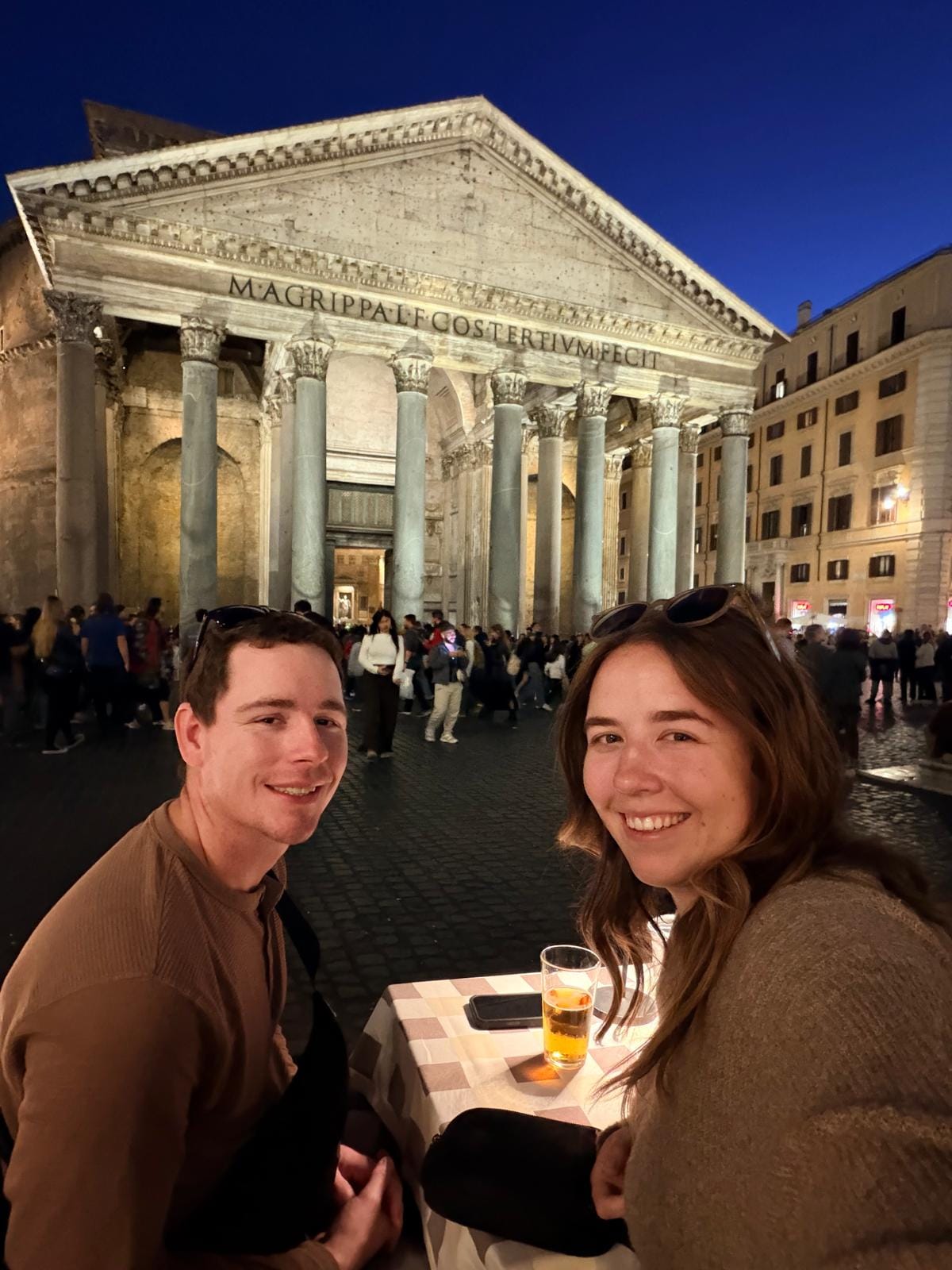
We grabbed aperitivo just outside the Pantheon and sat there taking everything in. After a long travel day, there was something pretty surreal about having a drink with a nearly 2,000-year-old Roman monument sitting right in front of us.
This is exactly why I wouldn’t over-plan Day 1.
Give yourself time to wander, stop somewhere that looks good, and enjoy actually being in Rome.
Dinner in Trastevere
For dinner, head across the river to Trastevere.
The neighbourhood is packed with restaurants and comes alive in the evening, but I’d wander a few streets away from the busiest areas before choosing somewhere to eat.
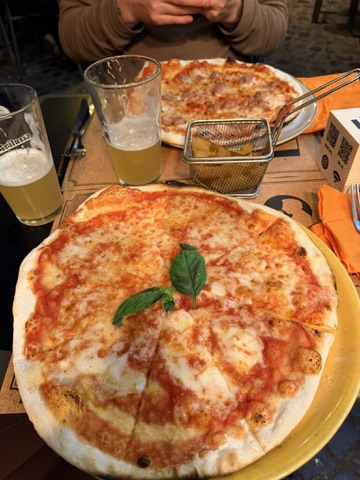
We ended up at Da Teo and had a simple cacio e pepe that was exactly what we wanted after a long first day.
After dinner, call it an early night. Tomorrow is your big Vatican day.
Where to Stay in Rome:
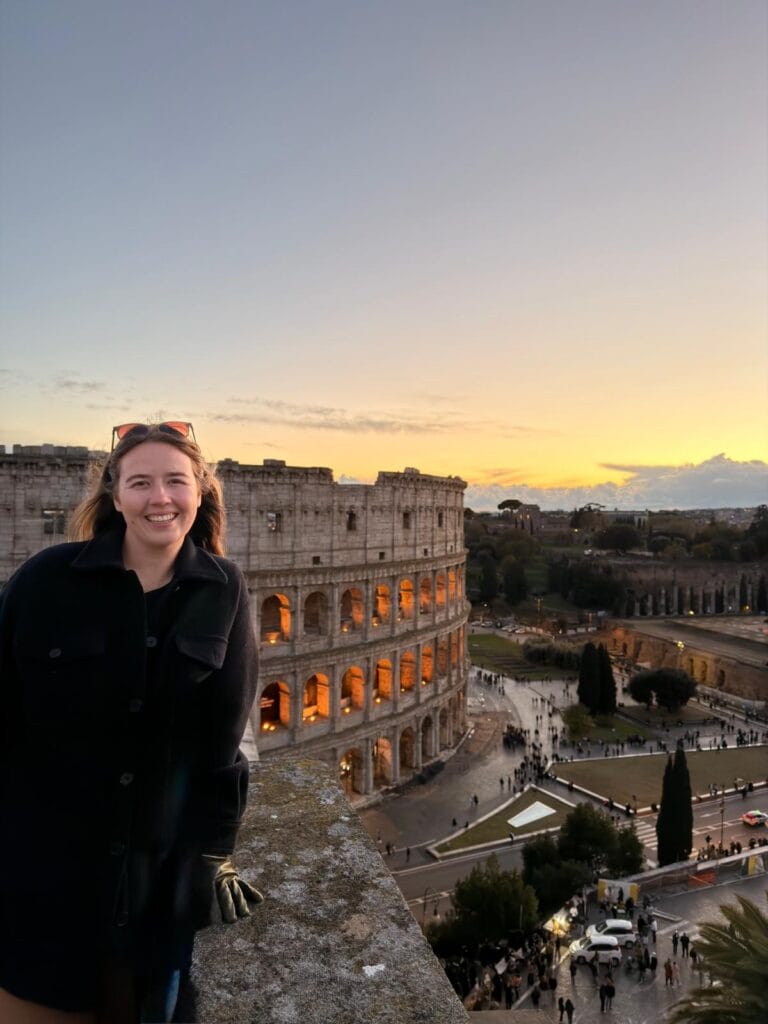
For this itinerary, I recommend staying somewhere that either offers parking or can direct you to a nearby garage. Having the rental car is great once you leave Rome, but you won’t need it while you’re exploring the city. We stayed right beside the Colosseum and it was perfect. It was a great location and they offer rooftop views of Rome.
Where we stayed: Colosseum Corner
Pro Tip: Contact your accommodation before arriving and ask exactly where you should park. Rome is not the place I’d want to figure that out while driving around with luggage in the back seat.
Day 2: Vatican City, Museums & Sistine Chapel
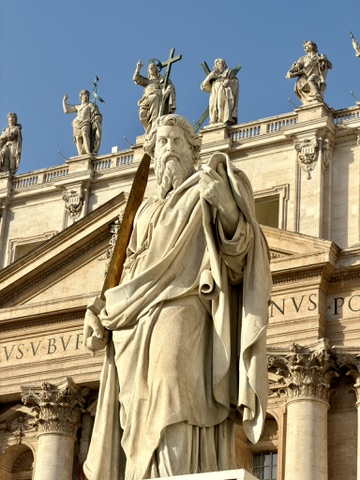
Day 2 is all about Vatican City. You’ll visit St. Peter’s Basilica, climb the dome, explore the Vatican Museums, and finish at the Sistine Chapel before spending the evening back in Rome.
This is one day I’d recommend planning ahead. There’s a lot to see, and having your tickets and time slots booked before you arrive makes the day much easier.
We visited during the 2025 Jubilee Year, which made the experience even more memorable. Jubilee Years typically take place every 25 years, and we were able to enter St. Peter’s Basilica through the Holy Door, something that normally isn’t possible outside a Jubilee.
Fun Fact: The Vatican is the world’s smallest country. Only ~800 people live here
St. Peter’s Basilica
Start your morning early at St. Peter’s Basilica.
We arrived around 9 AM and entered through the Holy Door before exploring the basilica itself. Even if you’ve seen photos, the scale of St. Peter’s is hard to appreciate until you’re standing inside it.
Take your time wandering through the basilica and looking for some of its most famous works, including Michelangelo’s Pietà and Bernini’s enormous bronze baldachin over the papal altar.
I’d give yourself around 1–2 hours here, especially if you also want to visit the grottoes beneath the basilica.
Pro Tip: St. Peter’s Basilica has a dress code. Shoulders and knees should be covered, so keep this in mind when visiting during the warmer months.
We did the audio tour through GetYourGuide for stories and skip-the-line entrance (includes the dome climb). I would give yourself about 1-2 hours, especially if you also want to visit the grottoes beneath the basilica.
St. Peter’s Dome Climb
If you’re up for the 430 stair climb, add St. Peter’s dome before leaving the basilica.
You can take an elevator part of the way, but you’ll still have stairs to tackle near the top. The passageways get narrow and slightly awkward as you climb inside the curve of the dome, but the view is worth it.
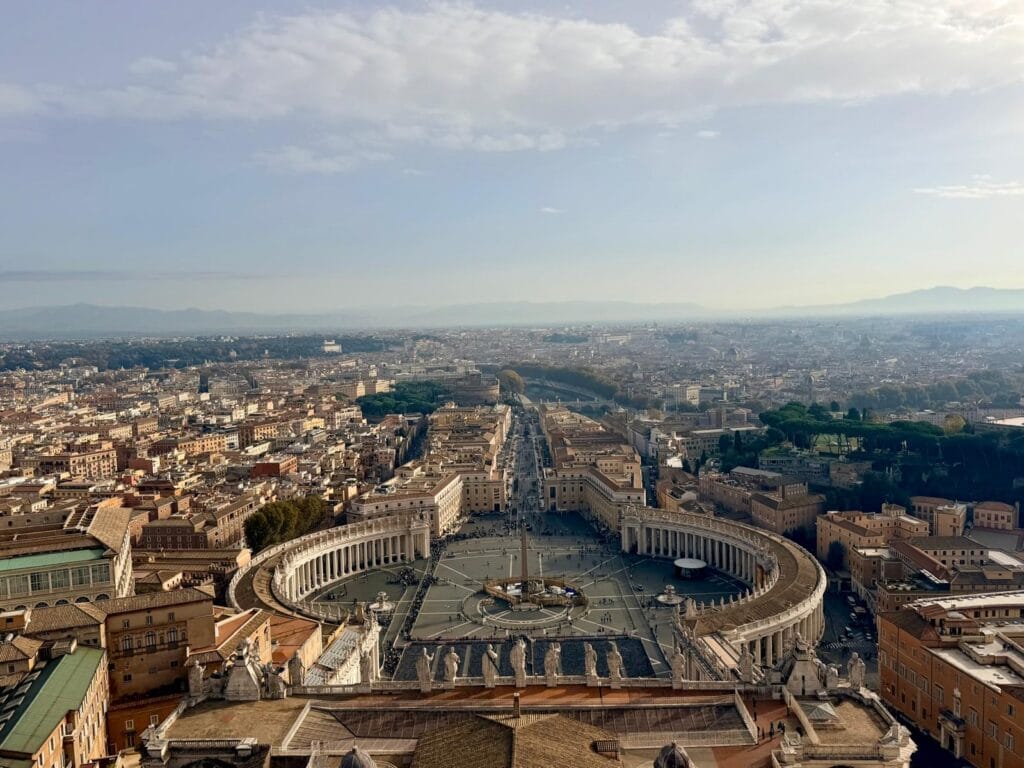
One of my favourite parts is actually before you reach the very top. You get an incredible close-up look at the interior of the dome and can look down into St. Peter’s Basilica from above.
Once you reach the outdoor viewing platform, you’ll have panoramic views across Vatican City and Rome.
If you’re visiting during the warmer months, I’d do this as early as possible before the heat sets in.
Walk to the Vatican Museums
The entrance to the Vatican Museums is separate from St. Peter’s Basilica, so don’t make the mistake of looking for it inside the square.
You’ll need to leave Vatican City and walk around the exterior walls to reach the museum entrance. Give yourself around 10–15 minutes for the walk, plus a little extra time so you aren’t rushing to your reservation.
We booked a 12 PM entry, which gave us enough time to explore St. Peter’s Basilica and the dome beforehand, with the very important addition of a quick gelato stop along the way.
Vatican Museums & Sistine Chapel
Be sure to pre-book your tickets, lines were absolutely crazy! This is one attraction I would not leave until the last minute.
The museums are enormous, and you could easily spend most of the day here if you wanted to see everything. For this itinerary, I’d plan for around 2–3 hours.
Some of the highlights for us were the Raphael Rooms and, of course, the Sistine Chapel. We also rented the audio guide and were glad we did. There is so much history packed into the museums that having some context made the experience much more interesting than simply walking from room to room.
Eventually, the route leads you into the Sistine Chapel, where Michelangelo’s ceiling is the obvious star.
Take your time here. After spending hours walking through the museums, it’s easy to feel like you need to keep moving, but this is one of those places worth slowing down for.
Spend the Evening in Rome
After the Vatican, give yourself a less structured evening.
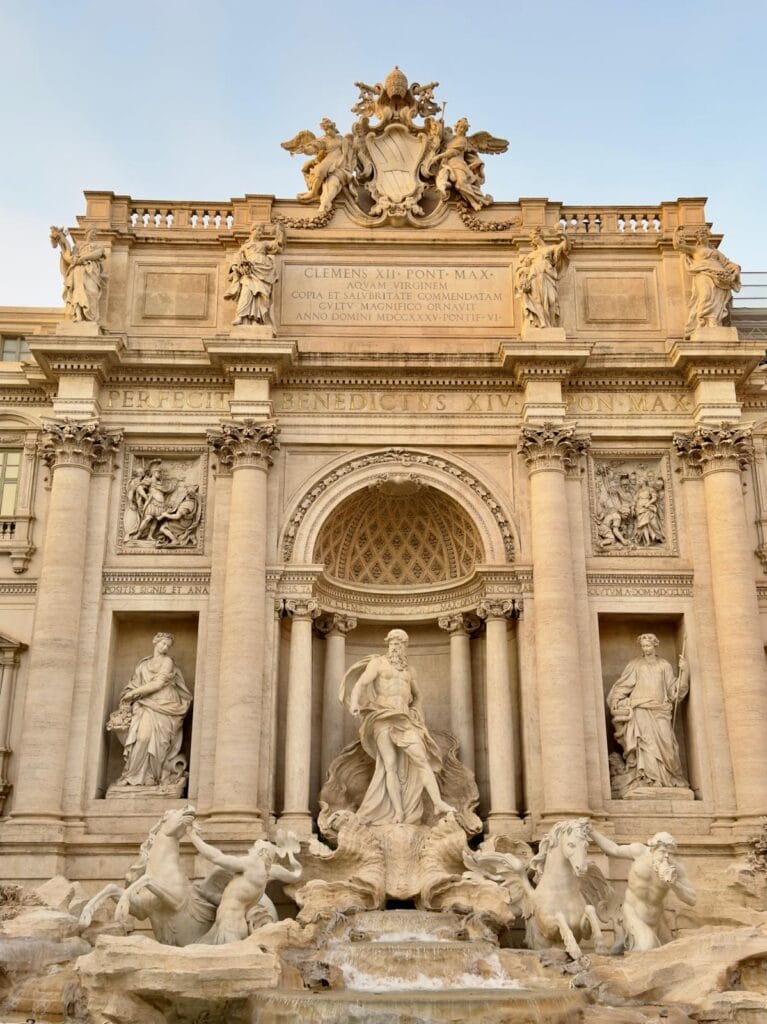
We continued exploring Rome and eventually made our way to the Trevi Fountain. And yes, it was packed.
If seeing the fountain without a wall of people is high on your list, you’ll need to visit very early in the morning or late at night, think between the hours of 2-5AM. There’s also a Live Trevi Fountain Cam you can check before walking over to get an idea of the crowds.
From there, grab dinner somewhere nearby or head back toward one of Rome’s neighbourhoods for carbonara.
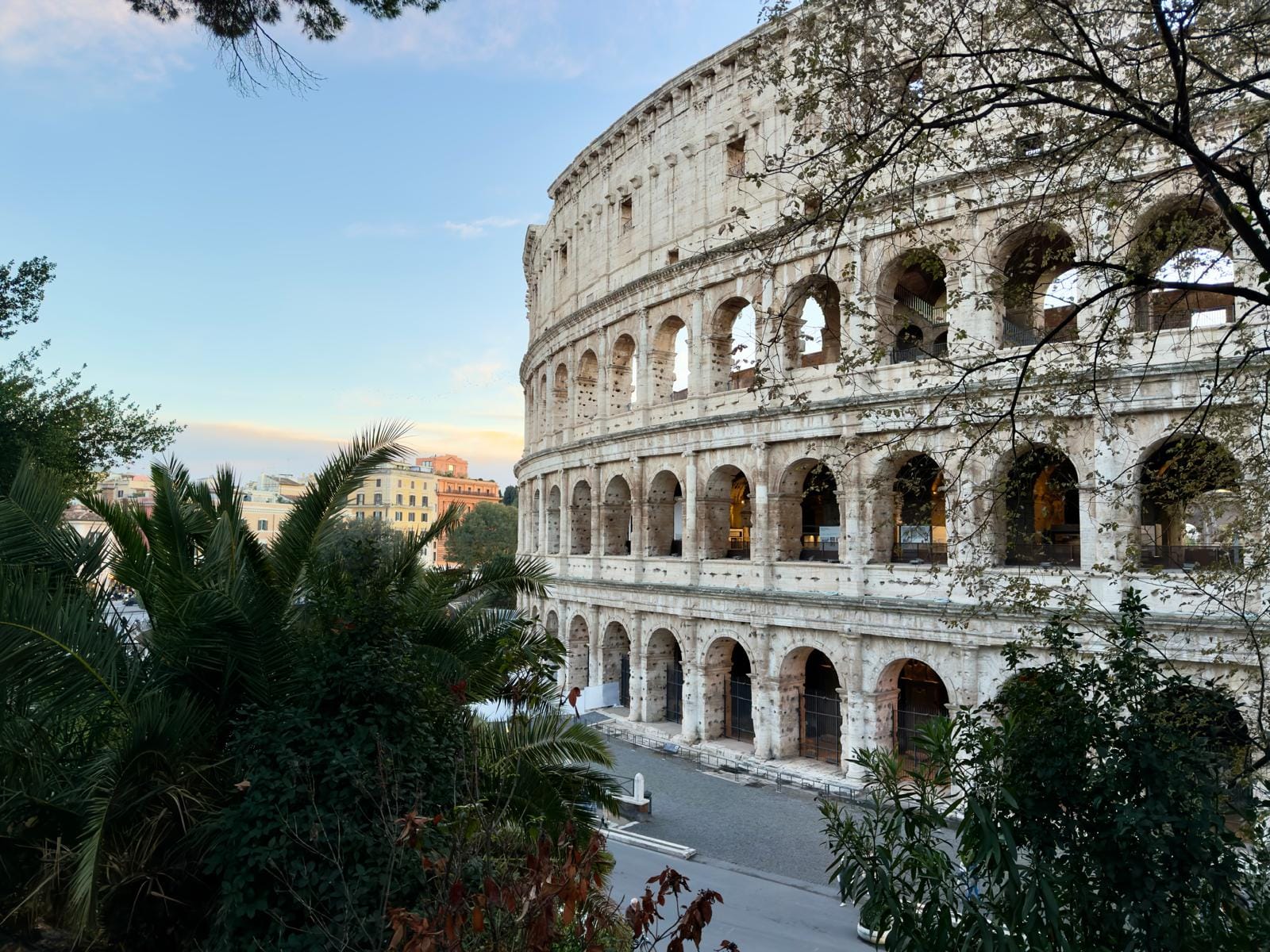
We finished our night by taking scooters past the Colosseum after dark, and seeing it completely lit up was one of my favourite Rome moments. Even if you’re planning to properly tour the Colosseum later in the trip, I’d still make a point of seeing it at night.
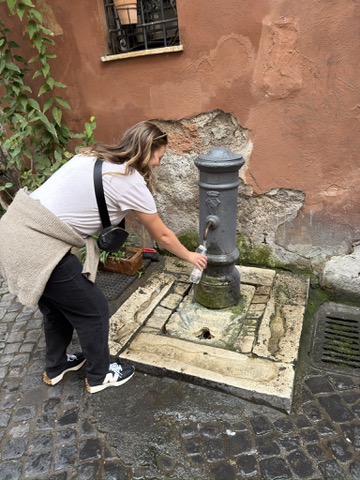
Pro Tip: Carry a reusable water bottle. You’ll see small public fountains called nasoni throughout the city where you can refill with drinking water for free. The water is fed by ancient Roman aqueducts that still feed the city today – entirely safe to drink!
After a full day at the Vatican and wandering Rome, head back to your hotel. Tomorrow, you’re picking up the pace and heading north to Pisa and Cinque Terre.
Day 3: Rome → Pisa → Cinque Terre
Today is your first real driving day, taking you from Rome north to Cinque Terre with a stop in Pisa along the way.
It’s a longer travel day, but this is exactly where having a rental car starts to pay off. Instead of spending the entire day getting from one destination to the next, you can break up the drive with a few hours in Pisa.
I’d recommend getting an early start, but don’t worry, there will be plenty of Autogrill stops for espresso along the way
Drive from Rome to Pisa
Aim to leave Rome around 7–8 AM. The drive to Pisa takes roughly 3.5–4 hours depending on traffic, so load up your Italian road trip playlist and settle in for your first stretch on the autostrada.
Italian highway service areas, known as Autogrills, are surprisingly good places to stop. You can grab an espresso at the counter, pick up a panino, use the washroom, and get back on the road without venturing far off the highway.
Pro Tip: Keep your toll ticket somewhere safe when entering a toll highway. On many routes, you’ll collect a ticket when you enter and use it to calculate your toll when you exit.
Stop in Pisa
Originally, Pisa was supposed to be exactly that: a stop.
Stretch our legs, see the Leaning Tower, grab something to eat, and continue on to Cinque Terre.
But I ended up liking Pisa way more than I expected.
Beyond the famous tower, the city has colourful streets, cafés, beautiful architecture, and the Arno River running right through the centre. It felt much more like a city worth exploring than the quick photo stop I had pictured beforehand.
For this itinerary, give yourself around 2–3 hours. That’s enough time to see the major sights and grab some food without turning an already long travel day into an exhausting one.
Would I stay longer next time? Absolutely. I could easily spend a night or two here.
Parking in Pisa
Parking was surprisingly easy.
Rather than trying to drive right into the historic centre, use one of the paid parking lots outside the busiest area and walk in. We found this much easier than navigating the narrow streets closer to the Leaning Tower.
Lots are plentiful and cheap (~€2/hour).
Pisa in a Few Hours: What to See
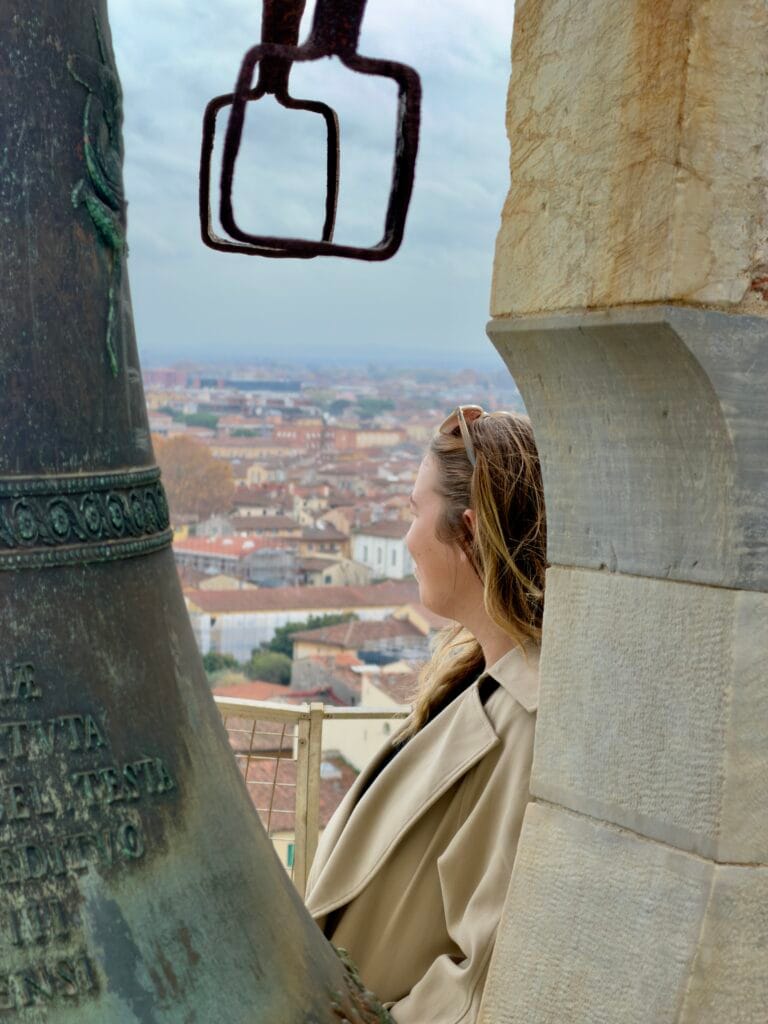
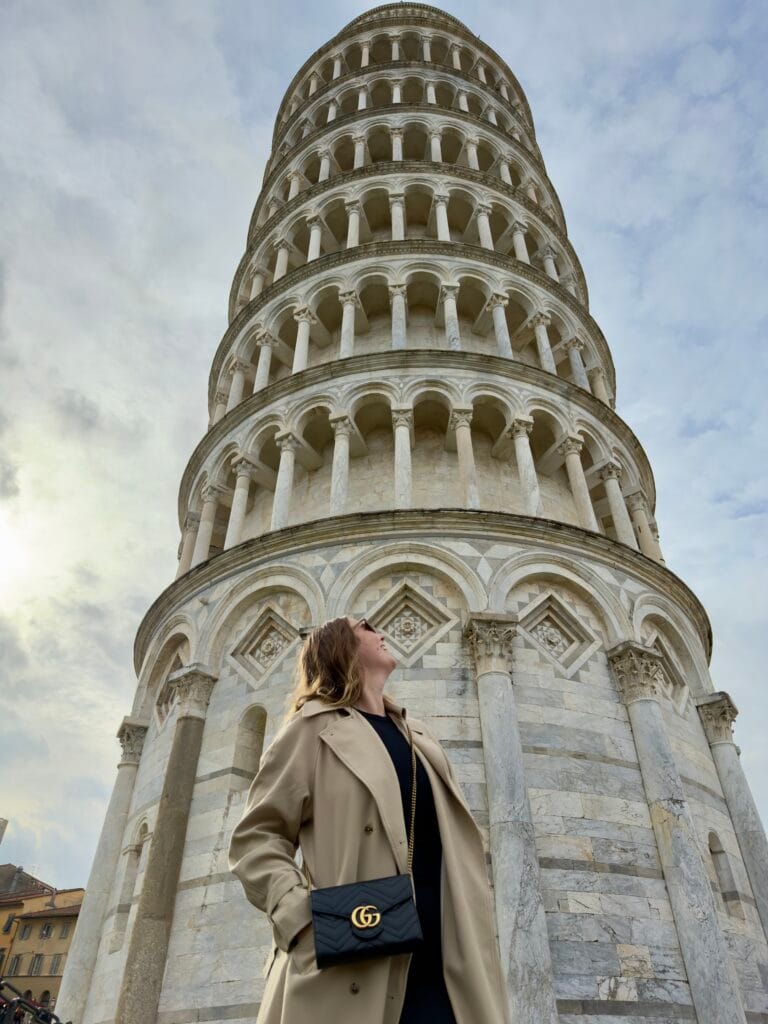
Start at the Piazza dei Miracoli, where you’ll find Pisa’s most famous sights all in one place: the Leaning Tower, Pisa Cathedral, the Baptistery, and the Camposanto.
Even if you aren’t planning to climb the tower, give yourself some time to explore the entire square rather than taking the classic Leaning Tower photo and immediately leaving.
From Piazza dei Miracoli, wander toward the Arno River. Pisa is compact and relatively flat, making it easy to explore on foot. Bikes and e-scooters are also available if you want to cover a little more ground.
Grab Something to Eat in Pisa
Before getting back on the road, look for cecina, a thin, savoury chickpea flatbread that’s crispy around the edges and soft inside. Its the traditional dish of the Pisa area.
It’s simple, cheap, and exactly the kind of regional food I love finding on road trips.
We ate at the Opera Della Primaziale, which had decent food but offered great views of the leaning tower while we ate.
Want more? Check my guide: Pisa Weekend Travel Guide: An Underrated, Charming Little City.
Drive from Pisa to Cinque Terre
From Pisa, continue north toward Cinque Terre. Depending on where you’re staying, the drive takes roughly 1–1.5 hours.
This is where I’d stop relying blindly on your GPS.
The five Cinque Terre villages were not built with rental cars in mind. Roads become narrow, parking is limited, and in most cases you’ll be much happier parking once and using the train to travel between the villages.
We stayed in Riomaggiore, so I highly recommend confirming exactly where you can park with your accommodation before arriving. Don’t wait until you’re winding your way down toward the coast with luggage in the car to figure it out.
If your accommodation doesn’t offer a practical parking option, La Spezia is another good place to leave the car and take the train into Cinque Terre.
Your First Evening in Cinque Terre
Once you’ve parked and checked in, slow things down.
After driving from Rome and exploring Pisa, I wouldn’t try to squeeze all five villages into your first evening. You’ll have tomorrow to properly explore Cinque Terre.
Instead, wander through your base village, find somewhere for pesto or seafood pasta, and make your way toward the water.
If you still have some energy, hop on the train to another village for an evening stroll and aperitivo. Otherwise, grab a glass of local wine and enjoy your first night on the Ligurian coast.
We visited in November, so the weather was a little moody and some of the trails were closed. But there was something pretty special about experiencing the villages without the huge summer crowds.
Have extra time? Don’t rush Cinque Terre. I’ll explain below why this is one of the places I’d consider adding an extra night.
Where to Stay in Cinque Terre
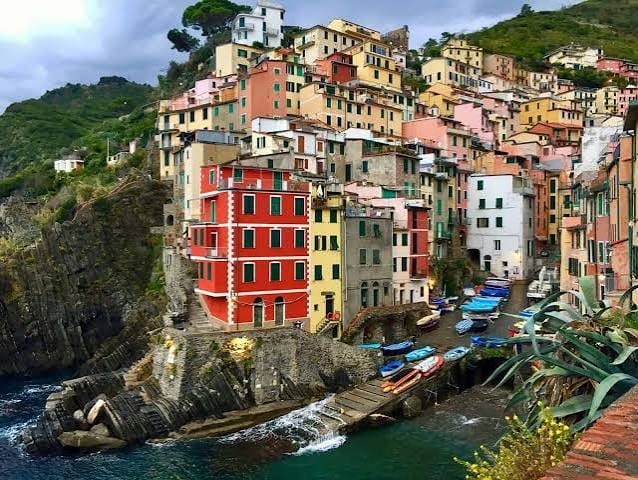
We based ourselves in Riomaggiore, which I loved for its colourful harbour, narrow streets, and quieter mornings before the day-trippers arrived.
Where we stayed: Terre Prime Suite
Day 4: Cinque Terre
After yesterday’s drive from Rome, today is completely car-free. Leave your rental parked, lace up your walking shoes, and spend the day exploring Cinque Terre by train and on foot.
Cinque Terre translates to “Five Lands,” referring to the five colourful villages tucked along this stretch of the Ligurian coast: Riomaggiore, Manarola, Corniglia, Vernazza, and Monterosso al Mare.
You can visit all five in one day, but I wouldn’t make that the goal. Pick a few villages that interest you most, leave some room for a hike if the trails are open, and give yourself time to actually enjoy where you are.
Start Your Morning in Riomaggiore
We stayed in Riomaggiore, and mornings were one of my favourite times to explore.
Before the day-trippers arrive, grab a coffee and wander through the village’s narrow streets, known as caruggi, before making your way down toward the harbour.
The colourful buildings seem to tumble down the hillside toward the water, and early in the morning you can experience it without nearly as many people around.
Don’t rush off to the next village right away. Cinque Terre is one of those places where sitting with a coffee and watching the village wake up is part of the experience.
Hike the Cinque Terre Trails
One of the best ways to experience Cinque Terre is on foot.
A network of trails connects the villages, with routes ranging from relatively easy coastal walks to steeper hikes through vineyards and hillsides. Trail conditions can change throughout the year, especially after heavy rain, so always check the official trail status before setting out.
The most famous section is the Via dell’Amore, or “Path of Love,” connecting Riomaggiore and Manarola. If it’s open during your visit, it’s an easy and incredibly scenic way to travel between the two villages.
For something more challenging, sections of the Sentiero Azzurro, or Blue Trail, connect the villages along the coast and offer some of the classic cliffside views Cinque Terre is known for.
We visited in November and rain meant some of the trails were closed, so we had to adjust our plans. That’s something I’d keep in mind if you’re visiting outside the summer months. Build a little flexibility into your day rather than planning your entire itinerary around one particular trail.
And wear proper shoes. Even the shorter routes can be steep and slippery when they’re wet.
Village Hop by Train
When you aren’t hiking, the train is easily the best way to travel between the five villages.
The rides themselves are incredibly short, so you can have breakfast in Riomaggiore, wander through Manarola, stop somewhere else for lunch, and still make it to another village for sunset.
Each town feels a little different:
- Riomaggiore: Colourful harbour, steep streets, and a great base for starting the Via dell’Amore.
- Manarola: One of the classic Cinque Terre postcard views. Walk out along the path opposite the village for that famous view back toward the colourful houses.
- Corniglia: The only one of the five villages that doesn’t sit directly at sea level. You’ll have to climb to reach it, but you’re rewarded with beautiful views over the coast.
- Vernazza: A tiny harbour surrounded by colourful buildings, with viewpoints above town that are especially beautiful if you’re hiking.
- Monterosso al Mare: The largest and flattest of the five villages, with the best beach if you want to trade hiking for some time by the water.
You don’t need to check off all five. We kept things fairly relaxed and spent more time in fewer places rather than rushing from train to train.
Eat Pesto Where It Comes From
If there is one thing you need to eat in Cinque Terre, make it pesto.
Pesto alla Genovese comes from Liguria, the region surrounding Cinque Terre, and you’ll see it everywhere. Try it with trofie, the short, twisted pasta traditionally served with pesto in this part of Italy.
Fresh anchovies are another local specialty and show up on menus throughout the villages.
Grab lunch somewhere overlooking the water, order a glass of local wine, and give yourself a little time to do absolutely nothing.
That’s part of the itinerary too.
Fun Fact: Cinque Terre is also known for Sciacchetrà, a sweet wine traditionally made from grapes grown on the steep terraced vineyards above the villages. Because the vineyards are so difficult to access, much of the work is still done by hand.
End the Day by the Water
As the afternoon crowds start thinning, pick a village for sunset.
Grab some wine and snacks from a local market, find a spot overlooking the harbour or coast, and settle in.
Cinque Terre gets a lot of attention for its colourful buildings and hiking trails, but some of my favourite moments here were the simple ones: wandering without much of a plan, eating pesto, and watching the light change over the water.
Should You Spend Two Days in Cinque Terre?
If you have an extra day to add anywhere on this itinerary, Cinque Terre would be high on my list.
One full day gives you enough time to experience several villages and possibly fit in a hike, but two full days would let you slow down considerably. You could dedicate one day to hiking and another to village hopping, swimming, or simply enjoying the coast.
This is especially worth considering if you’re visiting in warmer weather when more trails are open.
Pro Tip: Download the Cinque Terre app for real-time trail status. Saves headaches on rainy days.
Tomorrow, it’s back on the road as you leave the Ligurian coast and head north toward Milan.
Day 5: Cinque Terre → Milan
Today, trade the colourful villages of Cinque Terre for one of Italy’s most stylish cities.
The drive from Cinque Terre to Milan takes around three hours, making this a fairly easy travel day. Leave after breakfast and aim to arrive around midday so you still have most of the afternoon and evening to explore.
We stayed right in downtown Milan, which I’d recommend if you only have one night. Once we parked the car, we could explore almost everything on foot without wasting time travelling back and forth from the outskirts.
Drive from Cinque Terre to Milan
Enjoy one last slow morning by the coast before checking out and heading north.
Once you’re back on the autostrada, the drive is relatively straightforward, with plenty of tunnels as you make your way away from the Ligurian coast.
If shopping is high on your Italy list, there’s also one very tempting detour along the way.
Designer Outlet Serravalle
If you’re into designer shopping, consider stopping at Serravalle Designer Outlet on your way to Milan!
t’s conveniently located along the route and has a huge collection of Italian and international designer brands, making it an easy way to break up the drive.
Just keep an eye on the time. What starts as a “quick stop” at an Italian designer outlet could very easily eat into your afternoon in Milan.
If shopping isn’t your thing, skip it and head straight into the city.
Arrive & Park in Milan
Driving into Milan requires a little planning because the historic centre includes restricted traffic zones, including Area C.
If you’re staying downtown like we did, contact your hotel before arriving and ask exactly where you should park and whether you’ll be entering a restricted zone. Depending on your accommodation and garage, there may be specific procedures you’ll need to follow with your rental car.
Once the car is parked, leave it there.
Central Milan is extremely walkable, and for anything farther away you can easily use the metro.
Duomo di Milano
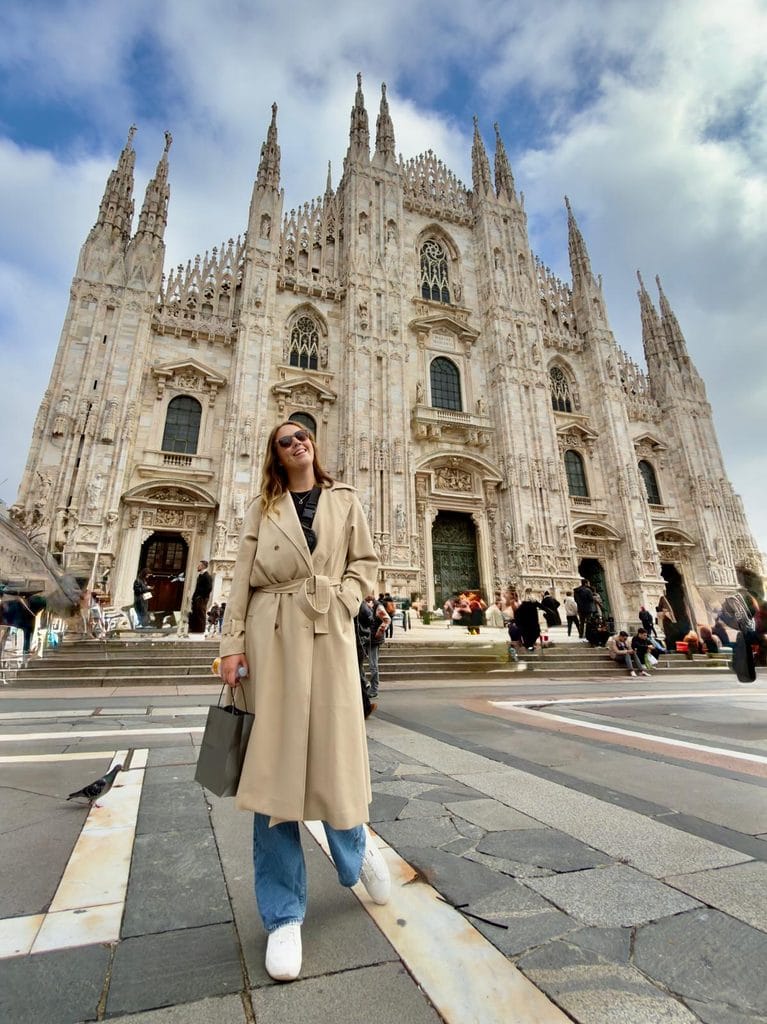
Yea If you only see one thing in Milan, make it the Duomo.
The cathedral dominates Piazza del Duomo, but the best part, in my opinion, is heading up to the rooftop terraces.
Fun Fact: Milan’s Duomo took nearly six centuries to complete. Construction began in 1386, and work continued for hundreds of years, which helps explain the incredible amount of detail covering the cathedral.
If you want to visit the rooftop, book your ticket ahead of time. You can choose between taking the stairs or an elevator for part of the journey.
Walk Through Galleria Vittorio Emanuele II
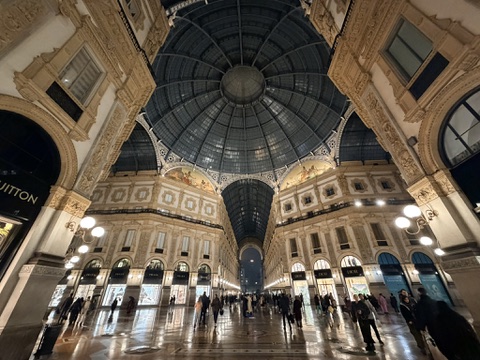
Right beside the Duomo is Galleria Vittorio Emanuele II, one of the most beautiful shopping galleries I’ve ever seen.
Even if you aren’t planning on buying anything from Prada or Louis Vuitton, it’s worth walking through just for the architecture. Look up at the enormous glass ceiling and mosaics before making your way toward the centre of the gallery.
You’ll probably notice people spinning around with their heel planted on a mosaic bull.
According to local tradition, spinning on the bull brings good luck. You’ll know exactly where to put your foot because generations of visitors have worn a very obvious hole into the mosaic.
Obviously, we had to try it.
Spend the Afternoon Shopping & Exploring Milan
Milan is Italy’s fashion capital, so if there’s one city on this itinerary where I’d leave room for shopping, this is it.
The streets around the Duomo and Galleria are packed with everything from major designer labels to more affordable Italian brands.
If shopping isn’t your priority, there are plenty of other places to explore nearby.
If you have some extra time in Milan, I’d recommend:
- Brera District: Boutiques, vintage stores and art galleries
- Sforzesco Castle: The surrounding park and grounds are beautiful
- Visit the Starbucks Reserve Roastery
- Milan Cathedral interior tour
For dinner, try one of Milan’s classic dishes: risotto alla Milanese.
Its golden colour comes from saffron, giving the creamy risotto a flavor completely different from the pasta dishes you’ve probably been eating so far.
Another Milanese classic is cotoletta alla Milanese, a breaded veal cutlet that’s perfect if you’ve had enough pasta for the day.
After several nights of coastal villages and smaller towns, Milan feels completely different: busy, polished, fashionable, and very urban. That’s part of what I liked about including it in this itinerary.
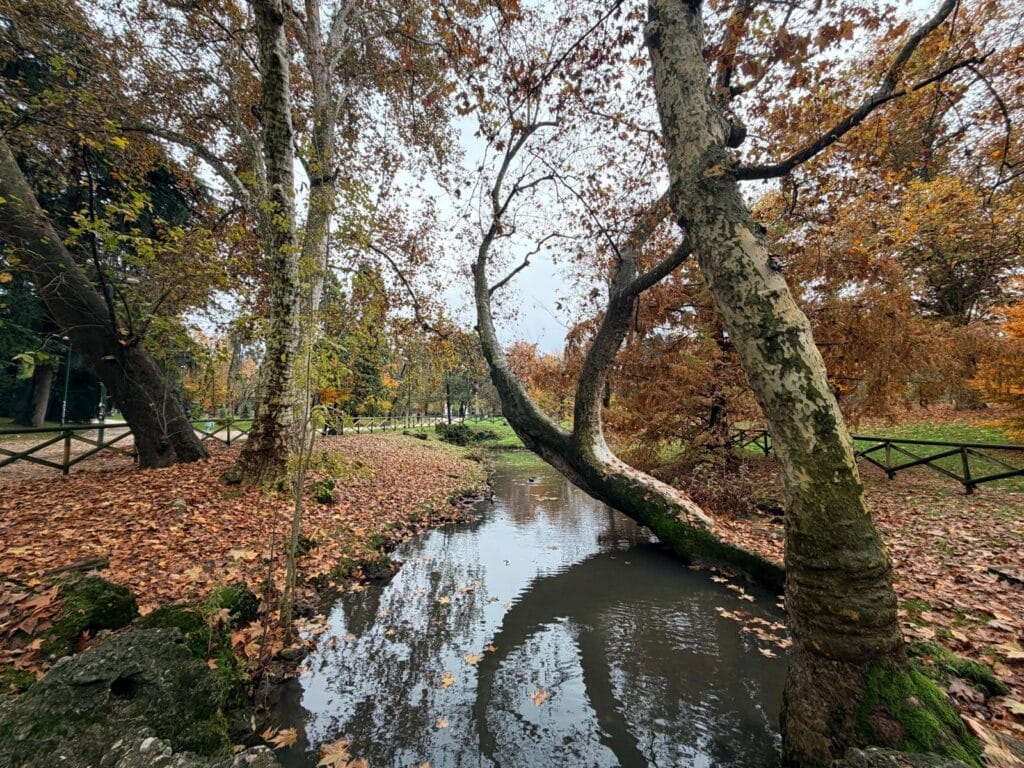
Where to Stay in Milan
For a one-night stay, I’d prioritize location over almost everything else.
Staying near the historic centre means you can park once and explore Milan on foot, which is exactly what we did. We got an amazing deal on our last minute hotel that gave views of the Duomo right outside our window. The place is no longer available but here is something similar.
My recommendation: Rosa Grand Milano
Tomorrow morning, you’ll leave the city behind and make the short drive north to Lake Como.
Day 6: Milan → Lake Como
After a night in busy Milan, today is a complete change of pace.
Lake Como is only about an hour from Milan, so you don’t need an painfully early start. Grab breakfast, check out, and make the short drive north toward the mountains.
As you get closer to the lake, the scenery changes quickly. City streets give way to mountains, winding roads, and eventually your first glimpses of Lake Como.
Once you arrive, park the car and forget about it for the rest of the day. The best way to explore Lake Como is from the water.
Drive from Milan to Lake Como
The drive from Milan to Como takes roughly an hour, depending on traffic and where around the lake you’re staying.
Start in Como
Begin your day in the city of Como itself.
Take a walk along the waterfront promenade before making your way toward the ferry terminal. You’ll pass the Life Electric sculpture and have beautiful views across the lake toward the surrounding mountains.
If you have time, wander into Como’s historic centre as well. The streets around the cathedral are easy to explore on foot and packed with cafés, shops, and restaurants.
From here, head toward the ferry terminal and start making your way farther up the lake.
Explore Lake Como by Ferry
The ferry is hands-down my favourite way to explore Lake Como.
Instead of spending the day navigating narrow roads and searching for parking, leave your car behind and take the ferry across the lake. The journey itself is part of the experience, with views of colourful villages, grand villas, mountains, and tiny towns tucked along the shoreline.
For our day on Lake Como, we chose Bellagio.
With only one day here, I think focusing on one village rather than trying to check off Bellagio, Varenna, and Menaggio makes for a much more enjoyable day.
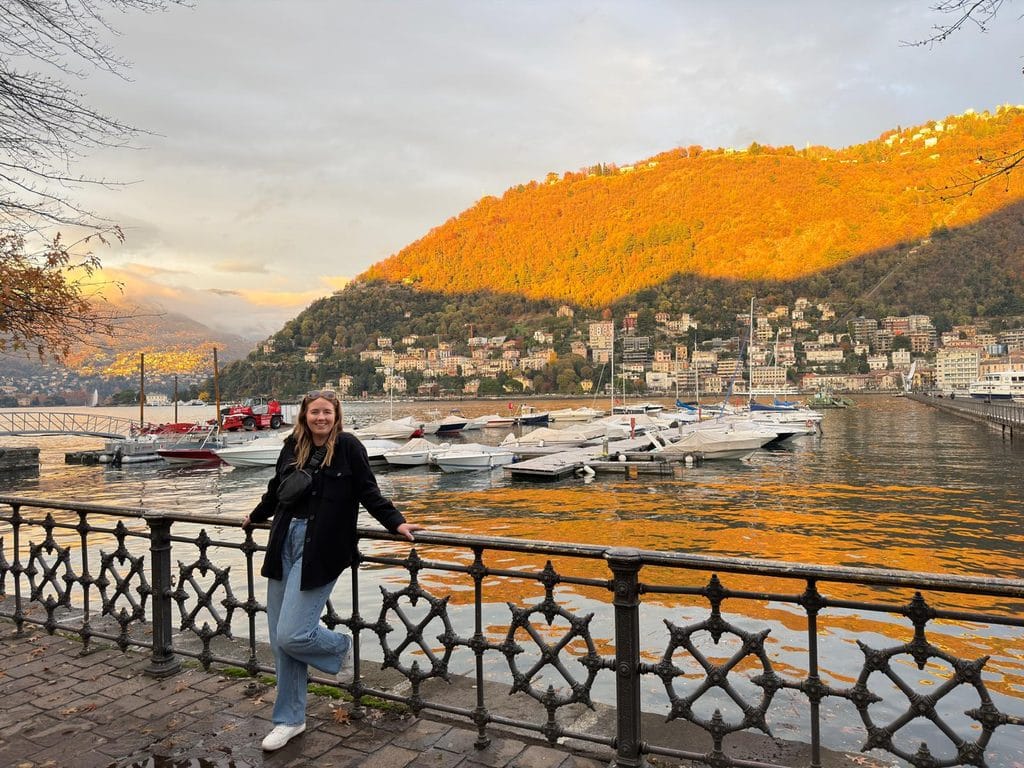
Spend the Afternoon in Bellagio
Known as the “Pearl of Lake Como,” Bellagio sits right where the lake divides into its two southern branches, giving you beautiful views in almost every direction.
Once you arrive by ferry, don’t over-plan it.
Wander the narrow stone streets and stairways leading uphill from the waterfront, pop into the little shops, stop for gelato, and eventually make your way back toward the lake.
One of Bellagio’s most photographed streets is Salita Serbelloni, a steep stone staircase lined with colourful buildings, restaurants, and boutiques. You’ll probably recognize it before you even realize where you are.
If you have more time, walk over to the gardens at Villa Melzi, which stretch along the lakeshore just outside the centre of Bellagio.
Fun Fact: Lake Como is shaped like an upside-down letter Y, and Bellagio sits almost exactly where its three branches meet. That’s why you can get completely different views of the lake simply by walking from one side of town to the other.
Lunch in Bellagio
Stop for lunch in whichever village you find yourself around midday.
Look for risotto, polenta, or locally caught lake fish, preferably somewhere with a terrace overlooking the water.
And don’t rush off as soon as you’re finished.
Order another coffee or glass of wine and enjoy where you are. With only one day on Lake Como, I think it’s much better to properly experience Bellagio than spend the afternoon watching the clock and racing between ferry terminals.
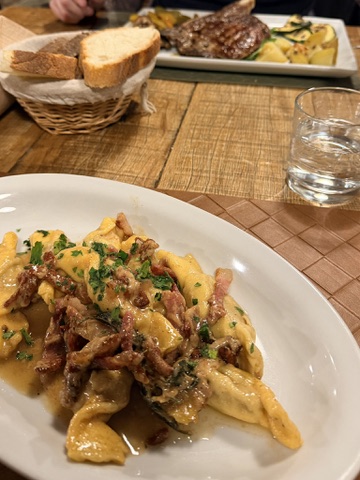
Have More Time on Lake Como?
If you have an extra day, Varenna and Menaggio would be easy additions.
Varenna sits across the lake from Bellagio and is known for its colourful waterfront, Villa Monastero gardens, and beautiful lakeside paths. Menaggio, on the western shore, has a relaxed promenade and makes another easy ferry stop.
You could easily spend two or three days exploring the towns around Lake Como, but for this road trip, Bellagio gave us a great taste of the lake without making the day feel rushed.
Take the Brunate Funicular
If you make it back to Como with enough time, take the Como–Brunate Funicular up the mountainside.
The ride is short, but once you reach Brunate you’ll be high above Como with views over the lake and surrounding mountains.
If the weather is clear, this is a beautiful place to finish your afternoon or catch the changing light over the lake.
Fun Fact: The Como–Brunate Funicular has been carrying passengers between Como and the hillside village of Brunate since the late 1800s. It was originally steam-powered before later being converted to electricity.
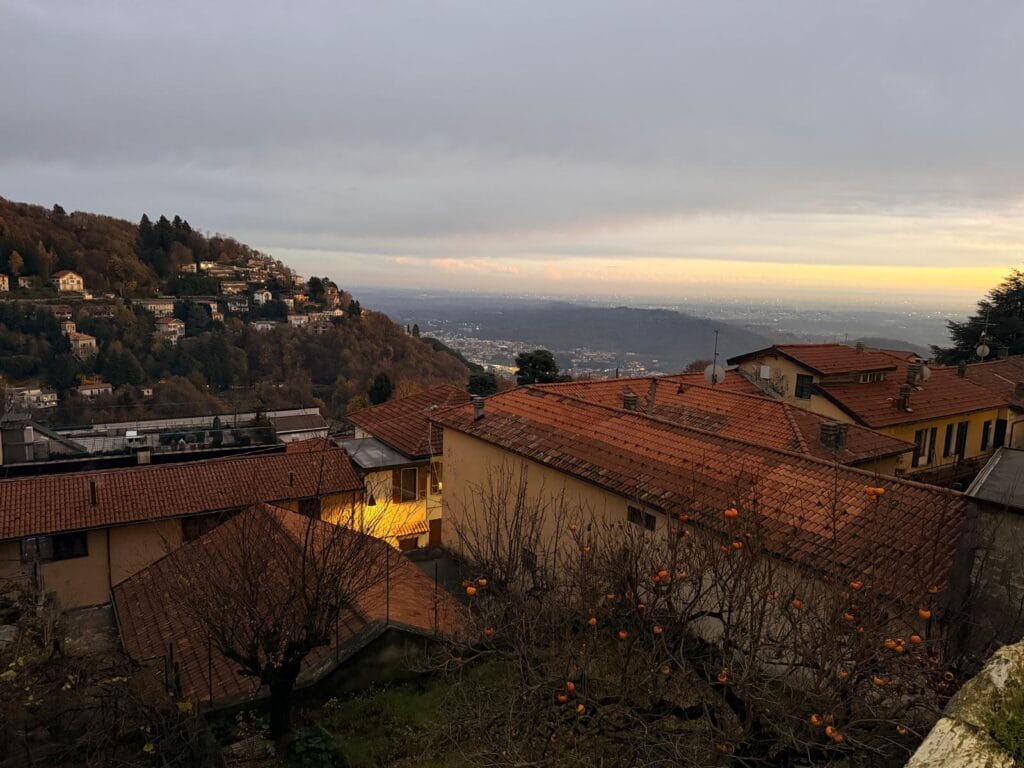
Where to Stay in Como
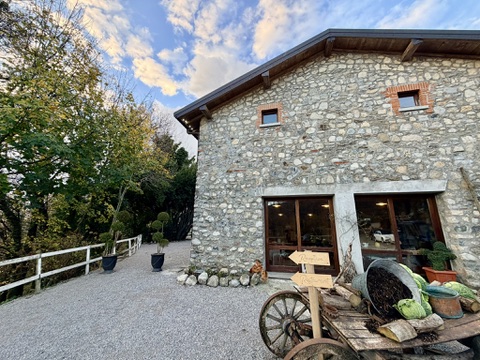
We chose to stay at an agriturismo, which ended up being one of my favourite types of accommodations in Italy. Agriturismos are working farms or agricultural properties that offer guest accommodations, and they can be a great way to stay somewhere quieter and experience a different side of Italy.
Where we stayed: Agriturismo Cascina Mirandola
For more about this style of accommodation, read: Why Agriturismos Are the Best Way to Stay in Italy.
Spend the Evening at Your Agriturismo
After a full afternoon on the lake, head back to your agriturismo and slow things down.
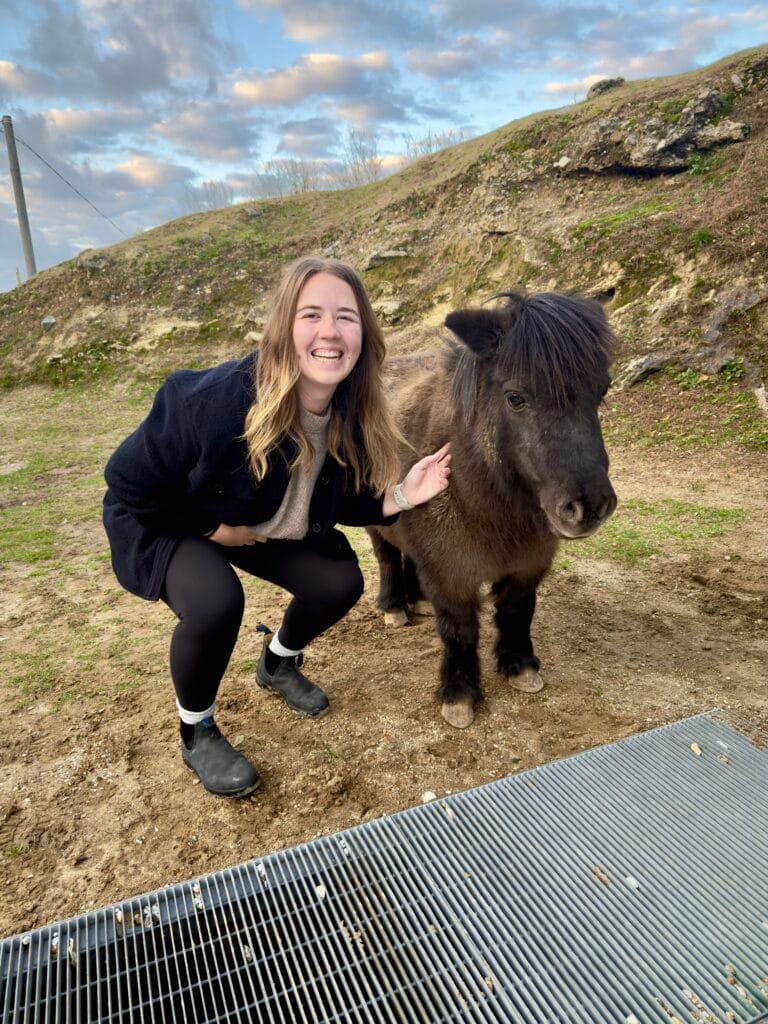
One of my favourite things about staying here was simply being able to wander around the property. There were animals throughout the grounds, including a donkey that casually roamed the yard, which made the whole experience feel completely different from staying at another hotel.
The property also had its own farm-to-table restaurant, where the ingredients were grown or produced right there on the farm. After a day of exploring, being able to come back, wander the property, visit the animals, and sit down to a meal made with ingredients grown just outside was such a memorable way to end the day.
That’s exactly what I loved about staying at an agriturismo. During the day, we could explore places like Como and Bellagio, then retreat somewhere quiet and rural in the evening.
If you want to experience a different side of Italy beyond the cities and major tourist destinations, I highly recommend working at least one agriturismo stay into your road trip.
Tomorrow, you’re heading east toward Venice, with the option to stop in Verona along the way.
Day 7: Lake Como → Verona → Venice
Today, say goodbye to Lake Como and make your way east toward Venice, with an optional stop in Verona along the way.
If you want to maximize your time in Venice, you can drive straight there. But if you don’t mind adding a few hours to your travel day, Verona makes a great stop. The historic centre is compact enough to explore in a few hours, and it’s conveniently located along the route.
One Last Breakfast at the Agriturismo
Before hitting the road, take advantage of breakfast at the agriturismo.
Ours put out a phenomenal spread, with many of the ingredients grown or produced right on the property. From local cheeses to homemade pastries and freshly squeezed orange juice, it was one of those breakfasts you actually want to sit down and enjoy rather than grab a coffee and rush out the door.
After one last wander around the property, it’s time to say goodbye to Lake Como and get back on the road.
Drive from Lake Como to Verona – Optional Stop
We didn’t end up stopping in Verona on this trip; however, it would be a great addition if you are looking to add an extra stop. The drive from Lake Como to Verona takes roughly two hours, depending on where you’re staying and traffic.
If you decide to stop, give yourself around 3–4 hours in Verona. That’s enough time to walk through the historic centre, see the Arena, visit Piazza delle Erbe and Juliet’s House, and grab lunch before continuing to Venice.
Pro Tip: If wanting to tour more of Verona, buy the Verona City Card that includes priority entrance and all-inclusive access to all Verona’s attractions.
If none of those things particularly interest you, skip Verona altogether. One of the advantages of a road trip is being able to tailor these stops to what you actually want to see.
Drive from Verona to Venice
From Verona, you have roughly another 1.5 hours of driving before reaching Venice.
And this arrival is going to be very different from everywhere else you’ve stayed so far.
You can’t drive into Venice itself.
Where to Park for Venice
our rental car will need to stay parked for the duration of your Venice stay, so I’d decide where you’re parking before you arrive.
There are two main approaches:
Tronchetto or Piazzale Roma: More convenient because you’re already at the edge of Venice and can continue by vaporetto or on foot.
Mestre: Usually farther from the historic centre, but you can park on the mainland and take a train or bus into Venice.
We chose Piazzale Roma, which worked well for us because we just brought small overnight bags with us for Venice, rather than lugging around big suitcases. It has secure parking and we felt safe there.
Whichever option you choose, I’d consider reserving parking ahead of time, especially during busier months.
And once you’ve parked, make sure you have everything you need. You’re not going to want to return to the car because someone forgot their phone charger.
Take the Vaporetto into Venice
With the car officially abandoned for the next couple of days, grab your luggage and make your way into Venice.
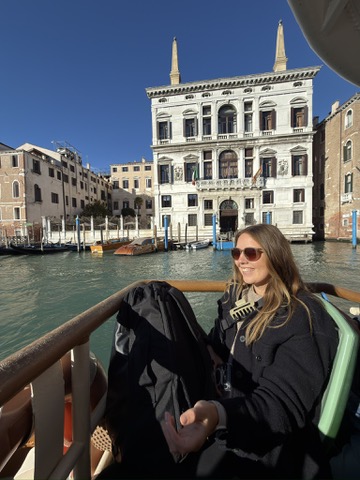
The vaporetto is Venice’s public water bus system and will become your main form of transportation while you’re here.
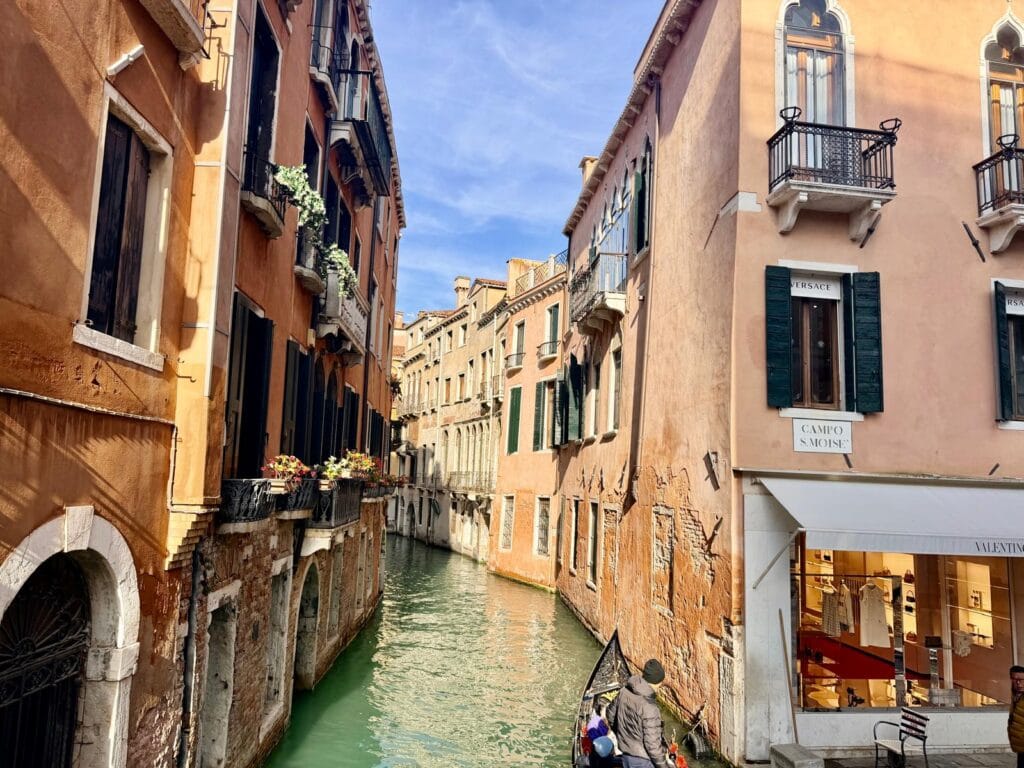
This was one of those moments where Venice immediately felt different from anywhere else on the trip. Instead of leaving a parking garage and calling a taxi, you’re suddenly standing on a boat with your luggage, travelling down a canal toward your hotel.
Check in & Get Your First Taste of Venice
Once you’ve checked into your hotel and dropped off your luggage, don’t worry about rushing around trying to see the major sights. You’ll have all of tomorrow for St. Mark’s Basilica, Doge’s Palace, the Rialto Bridge, and everything else on your list.
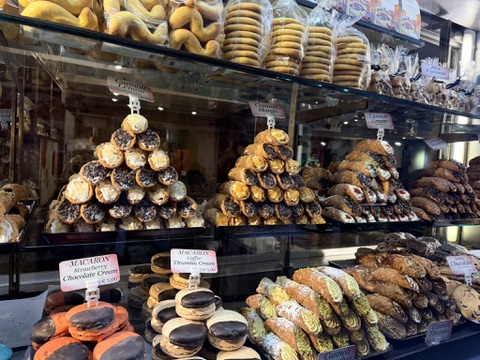
Instead, we did something that ended up being one of my favourite ways to start our time in Venice: a local food tour.
Take a Venice Food Tour
We booked a Street Food Tour with Local Guide & Tastings for our first evening, and I honestly think it was one of the best things we could have done when we arrived.
It was a great way to learn Venetian life, local history, and experience great food.
The food was great, but what I loved most was everything we learned along the way.
Our guide introduced us to Venetian food traditions, explained what to look for when choosing somewhere to eat, and gave us a much better understanding of the city before we headed out to explore on our own the next day.
We learned about bacari, Venice’s traditional wine bars, and cicchetti, the small bites you’ll see displayed behind the counter. Think little pieces of bread topped with seafood, meats, cheeses, or whatever else the bacaro specializes in, usually enjoyed alongside a small glass of wine.
It completely changed how we looked at restaurants and bars for the rest of our stay. Instead of wandering around wondering where to eat, we had a better idea of what was actually Venetian and what to look for when choosing a spot.
Local Food Tip: If you see a tiny bacaro packed with people standing at the counter with a glass of wine and a plate of cicchetti, that’s usually a pretty good sign. Don’t feel like every meal in Venice needs to be a long sit-down dinner.
The tour was also a great introduction to Venice itself. As we walked between stops, our guide shared stories about the city’s history and traditions, so we were getting our bearings without feeling like we were on a formal sightseeing tour.
By the time we finished, I felt like we understood Venice a little better, which made exploring on our own the next day even more enjoyable.
If you’re going to book a food tour during this road trip, I’d specifically recommend doing it on your first night in Venice. It sets you up perfectly for the rest of your stay.
Wander Venice After Dark
After the tour, don’t rush back to your hotel.
Take the long way home.
Venice is one of the best places on this trip to put your phone away for a while and deliberately get a little lost. Wander across bridges, follow narrow streets without worrying too much about where they lead, and enjoy the canals once the daytime crowds start disappearing.
I loved Venice way more than I expected. I went in thinking it might feel like one giant tourist trap, and I was completely wrong.
Once you wander away from the busiest areas, especially in the evening, it’s incredibly charming.
And after spending a few hours with a local guide learning how Venetians actually eat and experience their city, we felt much more prepared to explore it properly the next day.
Where to Stay in Venice
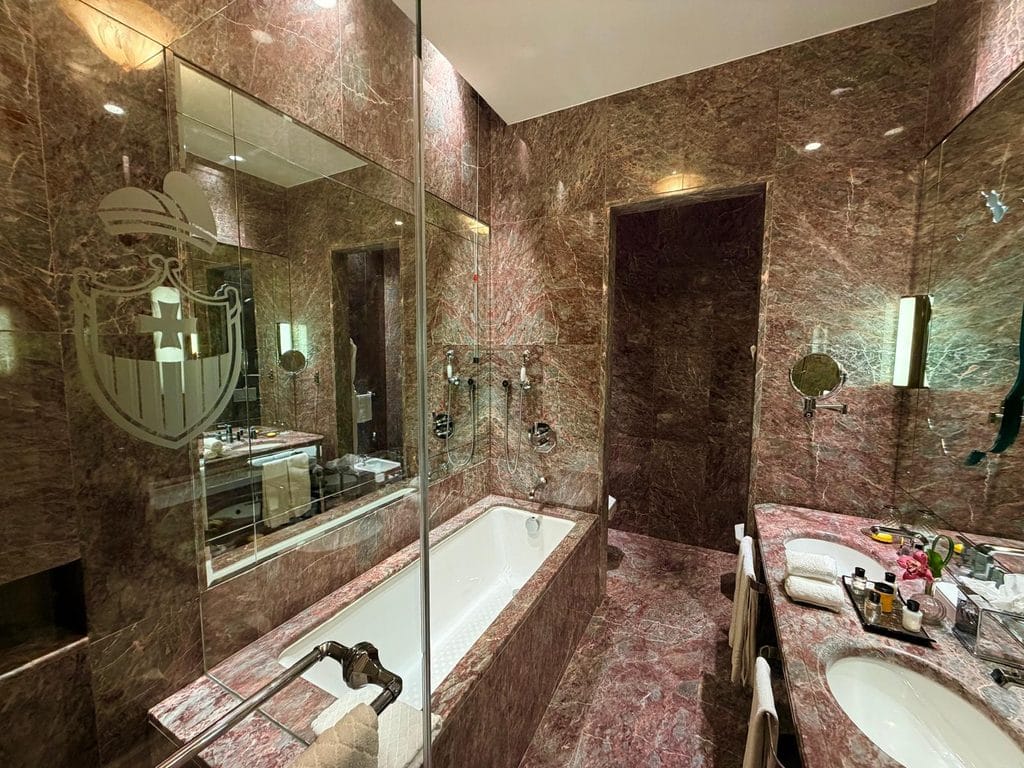
We stayed at The Gritti Palace, and it was easily one of the most memorable hotels of the trip. The rooms are filled with traditional Venetian fabrics and details, paired with stunning floor-to-ceiling Venetian marble bathrooms. Everything about our stay felt special, from the beautiful Grand Canal location to the food, service, and incredible attention to detail. It was definitely a splurge, but one that felt like part of the Venice experience itself.
The Gritti Palace was a truly amazing place to stay, explore more by reading my post: Gritti Palace: A Full Review Before You Book . (link to come)
Day 8: Venice
Today is completely dedicated to Venice, and your rental car can stay exactly where you left it.
After last night’s food tour, you’ll already have a better feel for the city, its food traditions, and what to look for as you explore. Start early for the major sights, then leave the afternoon a little more open. Venice is one city where wandering without much of a plan is half the fun.
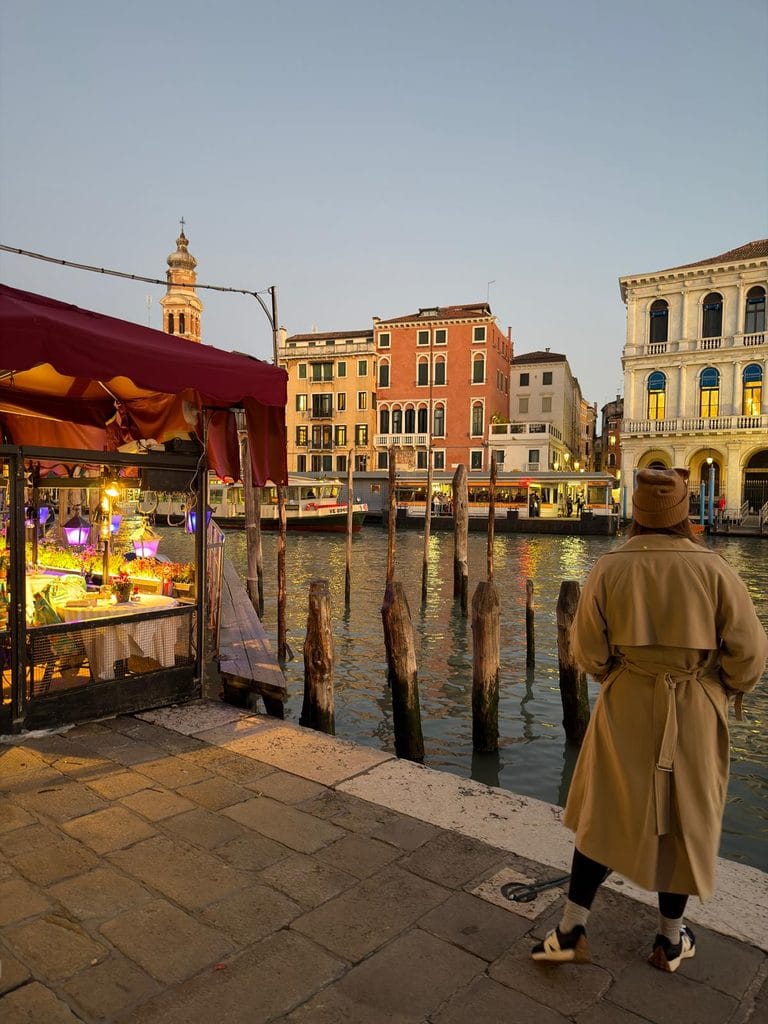
I loved Venice way more than I expected. I went in thinking it might feel like one giant tourist trap, and I couldn’t have been more wrong. Yes, the area around St. Mark’s Square gets incredibly busy, but wander a few streets away and Venice becomes a maze of quiet canals, tiny bridges, boutiques, wine bars, and beautiful old buildings. One of my favourite things to do was just get lost in the streets of Venice exploring.
Start Early at St. Mark’s Square
Make your way to Piazza San Marco early, ideally before the biggest crowds arrive.
This is Venice’s most famous square and home to several of the city’s major landmarks, including St. Mark’s Basilica, the Campanile, and Doge’s Palace.
Start with St. Mark’s Basilica and take some time to appreciate the incredible mosaics covering the interior.
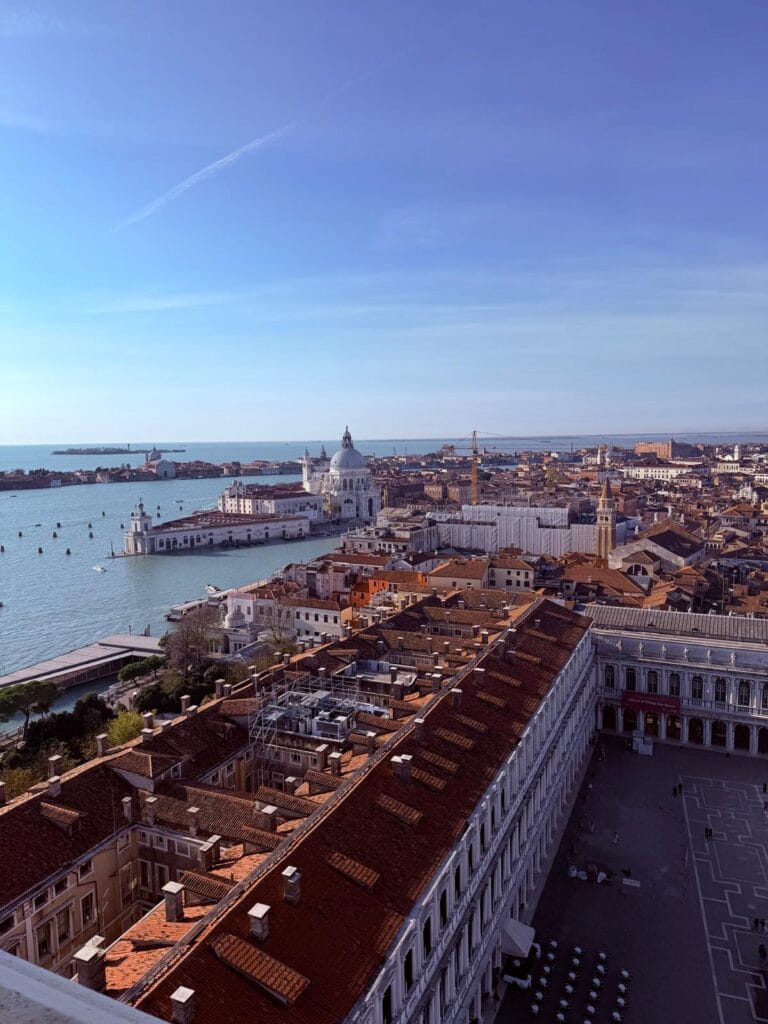
If you want a completely different perspective of the square, head up the St. Mark’s Campanile. Unlike many of the towers we’ve encountered in Italy, you don’t have to climb hundreds of stairs to reach the top. An elevator takes you up to the viewing platform for panoramic views across Venice and the lagoon.
Pro Tip: Avoid the San Marco rush between 10AM-4PM
Walk to the Rialto Bridge
From St. Mark’s Square, wander toward the Rialto Bridge.
Don’t worry too much about following the fastest route. Some of the best parts of Venice are the tiny streets and canals you’ll stumble across on the way.
If you’re there early enough, stop by the Rialto Market, which has been part of Venice’s commercial heart for centuries. You’ll find stalls selling fish, seafood, fruit, and vegetables, although the market is much livelier earlier in the day.
Then make your way onto the Rialto Bridge for one of the classic views over the Grand Canal.
Stop for Cicchetti Along the Way
By now, put some of what you learned on last night’s food tour to use.
Find a small bacaro, order a few cicchetti, and grab a glass of wine or spritz. There’s no need to plan a formal sit-down lunch unless you want one.
This became one of my favourite ways to eat in Venice. You can stop somewhere for a couple of bites, keep exploring, and then find another bacaro later.
Take a Gondola Ride
Yes, it’s touristy.
But you’re in Venice.
If a gondola ride has always been on your Italy bucket list, this is the place to do it. Once you leave the Grand Canal and slip into some of the smaller waterways, you get a completely different view of the city from the water.
You’ll pass underneath tiny bridges and alongside buildings that you might have walked straight past without realizing what was hidden behind them.
Spend the Afternoon Getting Lost
After you’ve seen the major sights, stop following an itinerary.
Seriously.
One of the best pieces of advice we heard in Venice was simply to have fun getting lost, and that’s exactly what we did.
Cross whatever bridge looks interesting. Follow narrow alleyways. Wander into quiet squares. Stop when you see a shop you like.
Venice ended up being one of my favourite places for souvenirs. We found beautiful boutiques tucked throughout the city and both bought cashmere-lined leather gloves. We also found some local artwork and ended up chatting with the artist about his life in Venice, which made the piece feel much more meaningful than buying something from a souvenir stand.
Those unplanned moments ended up being some of my favourite memories from the city.
Spend Your Final Evening in Venice
For your final night, keep things flexible.
Return to one of the neighbourhoods or bacari you discovered on your food tour, find somewhere for dinner, or continue your cicchetti crawl with a glass of wine.
After spending the previous evening learning about Venetian food and traditions and today exploring the city on your own, you’ll probably already have a few places you want to revisit.
That’s exactly why I loved doing the food tour on our first night rather than our last.
Take the long way back to your hotel, cross a few more bridges, and enjoy one last night wandering Venice.
Tomorrow, it’s back to the rental car as you head south toward Florence, with an optional stop in Bologna along the way.
Have another day in Venice? Use it to visit Murano and Burano. They’re well worth the trip!
Day 9: Venice → Bologna → Florence
Today, it’s time to say goodbye to Venice and get back on the road.
Your final destination is Florence, but if you’re willing to add a few hours to the journey, Bologna makes an excellent stop along the way, especially if you plan your visit around lunch.
Bologna is known for some of Italy’s most famous food, so rather than trying to cram in every attraction, I’d treat this as exactly what it is: a very delicious road-trip stop.
If you’d rather have more time in Florence, skip Bologna and drive straight there. You’ll have no shortage of incredible food later in Tuscany.
Pick Up Your Car & Leave Venice
After breakfast, check out of your hotel and make your way back to wherever you left your rental car.
After a couple of completely car-free days, it feels a little strange getting behind the wheel again.
From Venice, the drive to Bologna takes roughly 1.5–2 hours, depending on traffic.
Optional Stop: Bologna
If there’s one reason I’d stop in Bologna, it’s the food.
Bologna sits in Emilia-Romagna, a region responsible for an almost unfair number of foods you probably already associate with Italy, including Parmigiano Reggiano, Prosciutto di Parma, traditional balsamic vinegar, and mortadella.
And then there’s ragù.
What most of us outside Italy call “Bolognese” comes from here, although don’t expect to find the classic spaghetti Bolognese you might be used to at home. Look for tagliatelle al ragù on the menu.
Bologna to Florence
From Bologna, continue south toward Florence.
This stretch takes you through the Apennines before eventually emerging into the rolling landscapes of Tuscany.
As you get closer to Florence, start paying attention to where your GPS is taking you. Florence has extensive ZTL zones, and this is one city where you really don’t want to blindly follow directions straight toward your hotel.
Arriving & Parking in Florence
If your hotel is inside Florence’s ZTL, contact them before you arrive and ask exactly what you need to do with your rental car.
Some hotels and authorized garages can arrange access or register your license plate when appropriate, but don’t assume you’re allowed to enter simply because your hotel is inside the restricted area.
Otherwise, park outside the ZTL and walk or take a taxi to your accommodation.
Once you’re parked, you won’t need the car for the rest of today or tomorrow. Central Florence is incredibly walkable.
Getting Your First Look at Florence
After checking in and dropping off your luggage, head out on foot.
I wouldn’t schedule the Uffizi, Accademia, or any other major museum today. Tomorrow is completely dedicated to Florence, so tonight is about getting your bearings and enjoying the city without watching the clock.
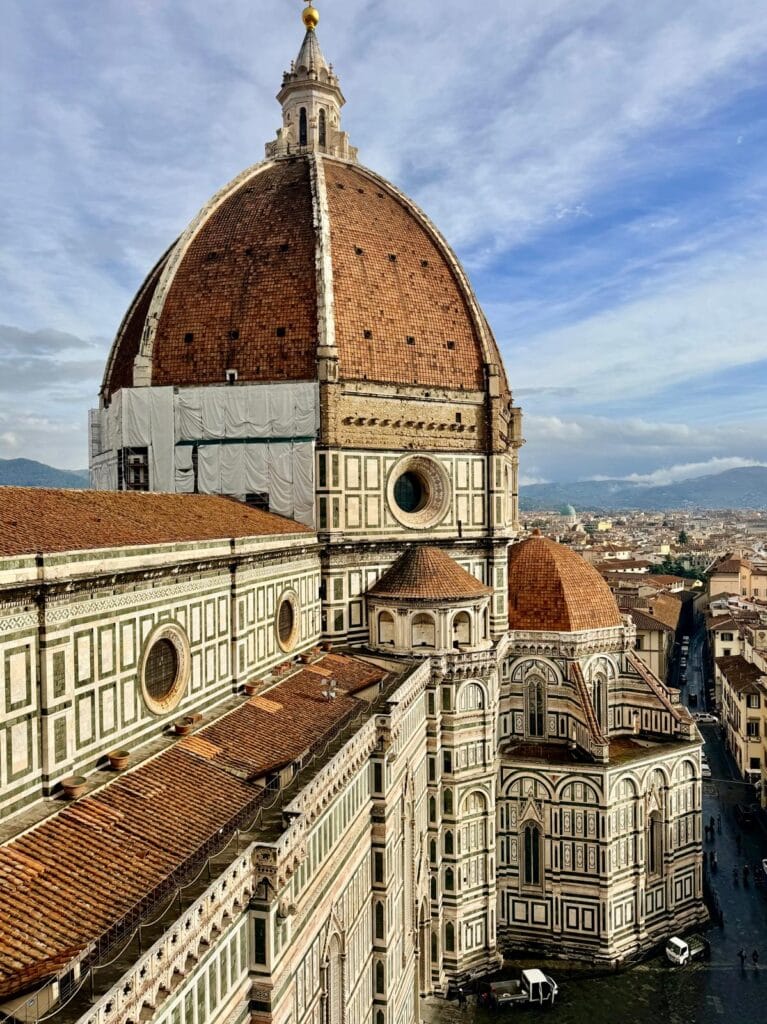
Make your way toward the Duomo, officially the Cathedral of Santa Maria del Fiore.
No matter how many photos you’ve seen, seeing the enormous red dome appear between Florence’s narrow streets is pretty incredible.
Take some time to walk around the cathedral complex and see Giotto’s Bell Tower and the Baptistery from the outside. You’ll have time tomorrow if you want to properly explore the complex or climb the dome.
If you’re looking for a full guide on what to do in Tuscany, check out my other guide: 10 Unique Things To Do in Tuscany.
Walk to Ponte Vecchio
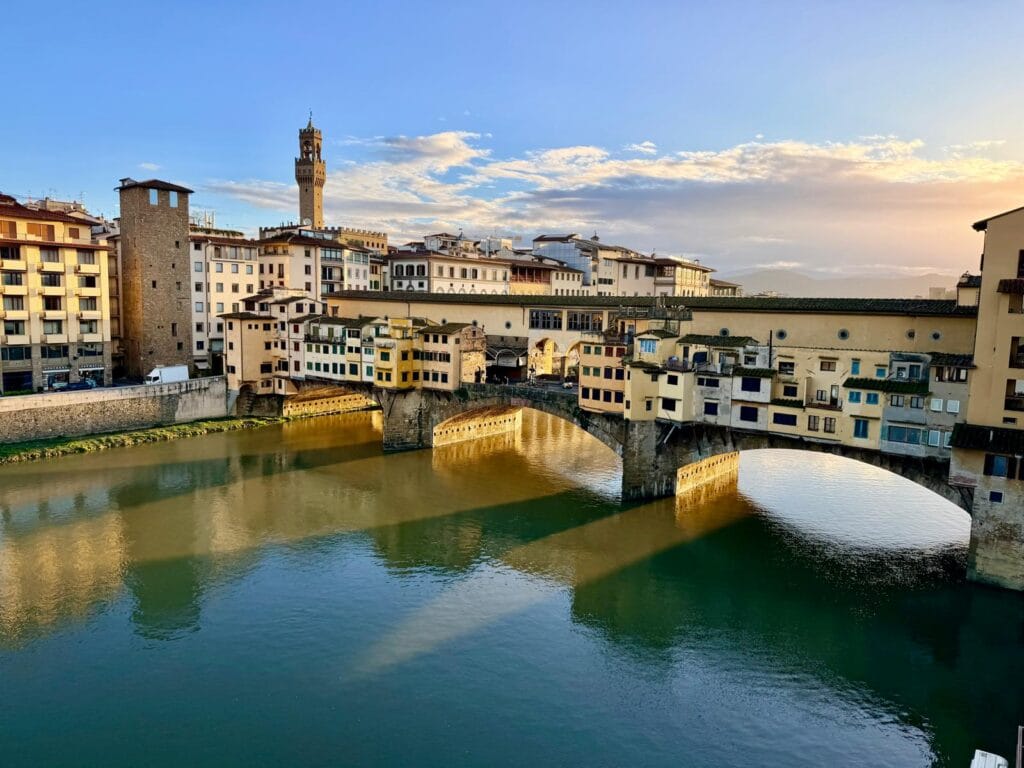
From the Duomo, wander toward the Arno River and Ponte Vecchio.
Florence’s famous medieval bridge is lined with tiny shops built directly over the water, most of which are now occupied by goldsmiths and jewellers.
But that wasn’t always the case.
Fun Fact: Ponte Vecchio was once home to butchers, fishmongers, and other food sellers. In the late 1500s, the Medici ruler Ferdinand I ordered them off the bridge and replaced them with goldsmiths and jewellers, helping create the character Ponte Vecchio is known for today.
Look above the shops and you’ll also see part of the Vasari Corridor, an elevated passageway built for the Medici family so they could travel between Palazzo Vecchio and the Pitti Palace without walking through the streets below.
Aperitivo & Sunset at Piazzale Michelangelo
If you still have some energy, finish your first evening at Piazzale Michelangelo.
It’s uphill from the historic centre, but the payoff is one of the best views over Florence.
From here, you can see the Duomo, Palazzo Vecchio, Ponte Vecchio, and the Tuscan hills surrounding the city.
Time it around sunset if you can.
Watching the light change over Florence is an incredible introduction to the city and a much better way to spend your first evening than rushing through another museum.
Where to Stay in Florence
For a short stay, I’d choose somewhere within walking distance of the historic centre so you can leave your rental car parked and explore entirely on foot.
Where we stayed: FH55 Hotel in Florence
Day 10: Explore Florence
Today, you have a full day to properly explore Florence.
Florence is surprisingly compact, so even though there’s a lot to see, most of today’s stops are within walking distance of each other. The bigger challenge is deciding how much Renaissance art you can realistically absorb in one day.
I’d book your major attractions ahead of time, especially the Uffizi Gallery, Accademia Gallery, and Duomo. Then leave some breathing room between them for markets, food, gelato, and simply wandering the streets
Uffizi Gallery Masterpieces
Start at 8:30AM with skip-the-line Uffizi tickets.
Even if you aren’t someone who normally plans vacations around art museums, the Uffizi is worth seeing. Its collection is packed with Renaissance masterpieces, including works by Botticelli, Leonardo da Vinci, Michelangelo, Raphael, and Caravaggio.
One of the obvious highlights is Botticelli’s The Birth of Venus, but don’t rush from famous painting to famous painting. Part of what makes the Uffizi so impressive is seeing how much art and history is packed into one building.
We spent around two hours here, which felt like a good amount of time without reaching complete museum overload.
And make sure you stop at the terrace overlooking the Arno before you leave.
Pro tip: Download the free Uffizi app for room-by-room maps to skip lines inside.
See Michelangelo’s David at the Accademia
From the Uffizi, walk roughly 15–20 minutes toward the Galleria dell’Accademia.
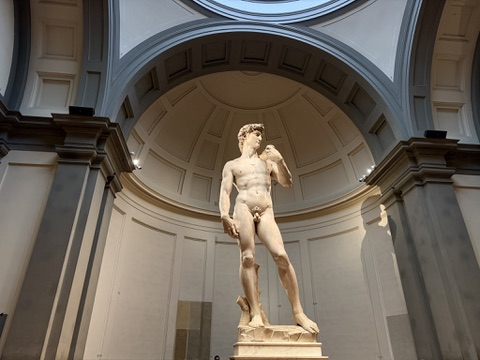
The museum’s undisputed star is Michelangelo’s David.
You’ve probably seen hundreds of photos of it, but seeing the sculpture in person is completely different. David stands more than five metres tall, and the level of detail is incredible.
I’d give yourself around 1–1.5 hours at the Accademia.
Stop at Mercato Centrale for Lunch
By this point, you’ll probably be ready for a break from museums.
Head toward Mercato Centrale for lunch. The market is a great place to try different Florentine and Tuscan foods without committing to another long sit-down meal.
Downstairs you’ll find traditional market stalls, while the upper level has a collection of food vendors.
If you’re feeling adventurous, look for lampredotto, one of Florence’s classic street foods.
It’s a sandwich made with slow-cooked beef stomach, usually served with salsa verde.
I know. Stay with me.
It’s been eaten in Florence for generations and is about as local as street food gets. If tripe isn’t your thing, there are plenty of significantly less adventurous options.
Explore the Duomo Complex
After lunch, make your way back toward Florence’s unmistakable Duomo, officially the Cathedral of Santa Maria del Fiore.
Yesterday you saw it from the outside. Today, you can properly explore the complex.
Depending on which ticket you choose, you can visit the cathedral, Baptistery, Giotto’s Bell Tower, Opera del Duomo Museum, and the remains of Santa Reparata beneath the cathedral.
And then there’s Brunelleschi’s Dome.
If you want to climb it, book ahead. The climb involves more than 400 steps and gets narrow near the top, but you’ll get an incredible close-up look at the interior frescoes before emerging above Florence.
Pro Tip: Dome tickets sell out, be sure to book 2 months ahead via GetYourGuide link above or official Duomo site.
Go Gelato Hunting
You deserve gelato after climbing all those stairs.
We ate a lot of gelato in Italy, but two places in Florence really stood out to me: La Sorbettiera and Edoardo.
Both are worth adding to your Florence wanderings rather than simply stopping at the first gelato shop you see near a major attraction.
And keep an eye out for Buontalenti, a rich Florentine cream flavour named after Bernardo Buontalenti.
Pro Tip: One of the easiest ways to spot better gelato is to look at how it’s stored. Be wary of enormous, brightly coloured mountains piled high above the containers. Traditional gelaterias often keep their gelato level with the tubs or covered inside metal pozzetti.
Wander Through Oltrarno
fter the major attractions, give yourself some time without a reservation.
Cross the Arno into Oltrarno and wander through its artisan workshops, boutiques, and quieter streets.
Florence has a long tradition of leatherworking, bookbinding, jewellery, paper marbling, and other crafts, so this is a great area to look for souvenirs that feel a little more special than the mass-produced stands around the major attractions.
Grab a spritz, browse some shops, and slow down for a while.
Find Florence’s Wine Windows
While you’re wandering, keep an eye on the walls.
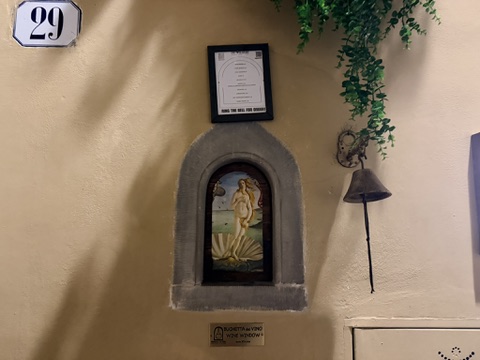
You may notice tiny arched openings built into some of Florence’s historic buildings. These are buchette del vino, or wine windows.
Centuries ago, wealthy Florentine families who owned vineyards used these little openings to sell wine directly from their palaces to customers on the street.
Visiting in November? Look for the Christmas Markets
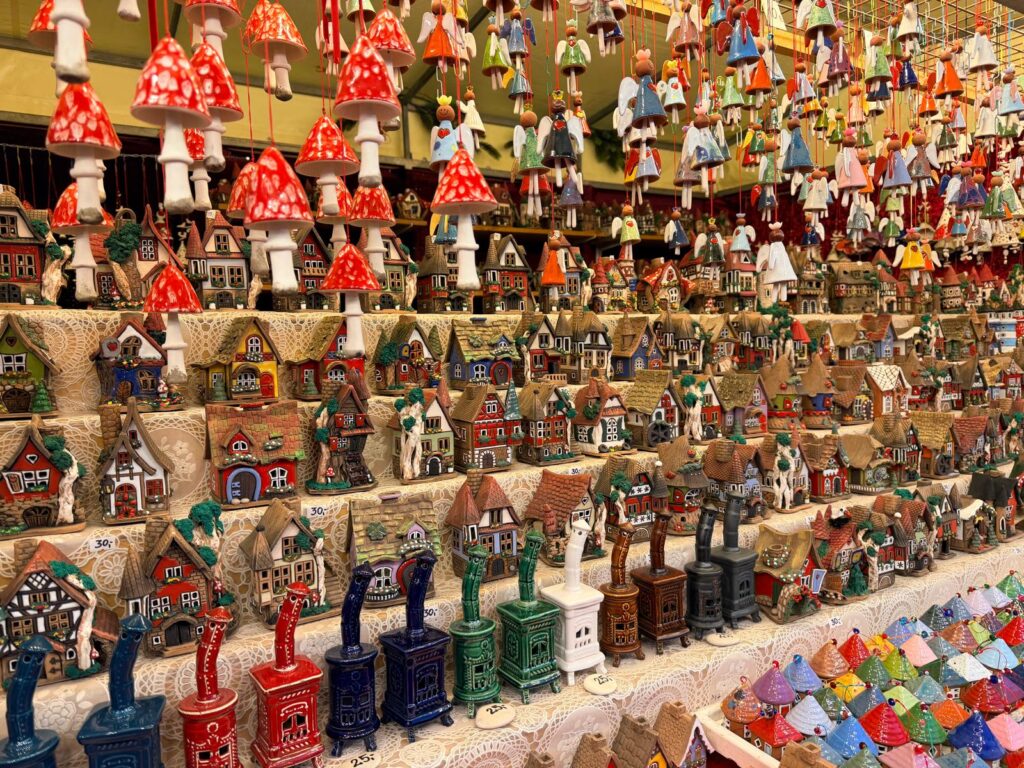
One unexpected bonus of visiting Florence in November was getting to experience the start of the Christmas season.
Several Christmas markets had started popping up around the city while we were there, with little wooden stalls selling food, drinks, gifts, and Christmas decorations. After spending the day surrounded by Renaissance art and architecture, wandering through a Christmas market with the city lit up for the holidays was a completely different side of Florence.
If you’re visiting in late November or December, keep an eye out for seasonal markets and events happening around the city. Dates and locations can change each year, so check what’s running during your trip rather than building your itinerary around a specific market.
For us, it was one of those unexpected perks of travelling Italy in the off-season that I hadn’t really considered when planning the trip.
Dinner in Florence:
For dinner, start working your way through Tuscan food.
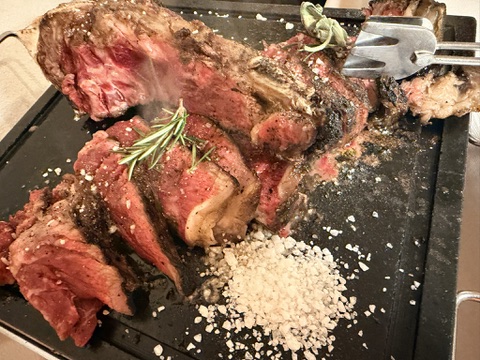
If you’re hungry, bistecca alla fiorentina is Florence’s famous thick-cut steak and very much designed for sharing. We ate at Trattoria da i Bigi e i Birghe, and the steak was unreal.
Or keep things more casual with pasta, ribollita, or a glass of Chianti and a collection of smaller dishes.
We ate at Osteria Vini e Vecchi Sapori, a tiny, no-frills restaurant serving traditional Florentine food, and it was exactly the kind of place I wanted to find in Florence.
If you want to eat somewhere specific, I’d make a reservation rather than leaving dinner completely to chance.
Then take one last slow walk through the city.
Tomorrow, you’re leaving Florence behind for one of the parts of this road trip I was most excited about: the Tuscan countryside, Siena, Brolio Castle, and San Gimignano.
Day 11: Florence → Brolio Castle → Siena → San Gimignano
Today, leave Florence behind and head into the Tuscan countryside.
This ended up being one of my favourite days of the entire road trip. Between a private wine tour and long Tuscan lunch at Brolio Castle, a few hours exploring Siena, and finally arriving in San Gimignano, this day felt like the Tuscany I had pictured before the trip.
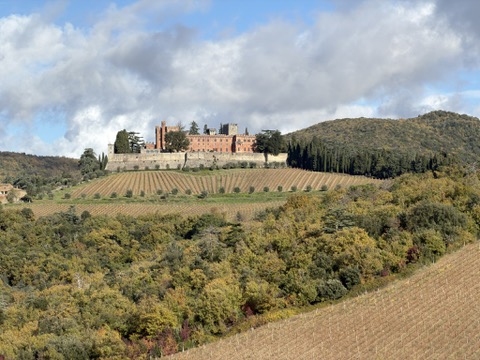
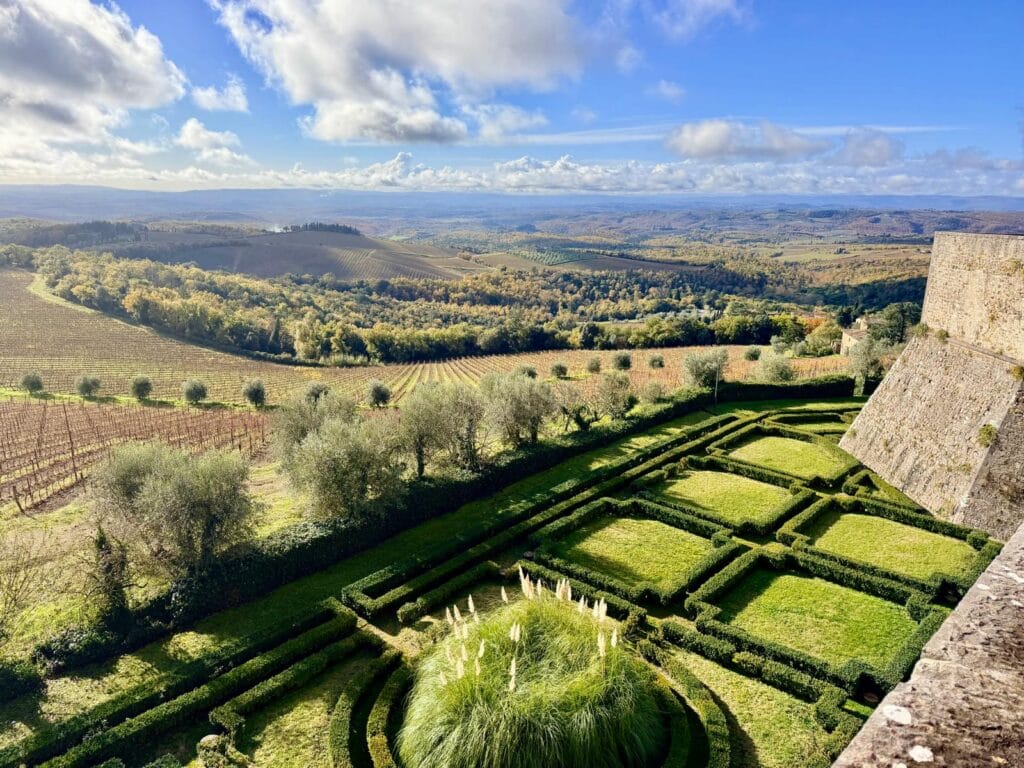
Give yourself time for the drive, too. Once you’re outside Florence, the scenery becomes part of the experience, with rolling hills, vineyards, olive groves, cypress-lined roads, and tiny hilltop towns appearing along the way.
Start at Brolio Castle & Barone Ricasoli
Our first stop was Brolio Castle, home to Barone Ricasoli and one of the places I was most excited to visit in Tuscany.
Rather than doing a standard winery tasting, we splurged on a private tour, and it ended up being completely worth it.
The experience included a private tour of the castle and winery, wine tastings, and a three-course lunch with wine pairings. We learned so much about the Chianti region, how the wines are produced, and the history behind the Ricasoli family and their estate.
The lunch was another highlight. Each course featured traditional Tuscan food paired with wines from the estate, turning what could have been a quick wine tasting into an entire afternoon experience.
This was definitely one of the more expensive activities we booked in Italy, but it’s also one I would happily do again.
Fun Fact: The Ricasoli family has been associated with Brolio Castle since the 1100s, making Barone Ricasoli one of the oldest continuously operating wine businesses in the world. The estate also played an important role in the history of Chianti wine: Baron Bettino Ricasoli developed an influential early formula for Chianti in the 19th century.
That history made the tour so much more interesting. We weren’t simply tasting wine in Tuscany. We were learning about it in a place that has been part of the region’s wine story for centuries.
The experience we booked: Ricasoli Private Tour
I’ll be writing a complete guide to our experience, including the tour, wine tasting, lunch, and whether I think the splurge is worth it.
Read next: Brolio Castle Wine Tour & Lunch: Is It Worth It? [Coming soon]
Drive to Siena
After a very good lunch and probably more Chianti than necessary, continue toward Siena.
We only had a couple of hours here, and the main reason I wanted to visit was to see the Siena Cathedral, or Duomo di Siena.
By this point in the trip, we’d seen a lot of Italian churches and cathedrals.
Siena’s still managed to surprise me.
Visit the Siena Duomo
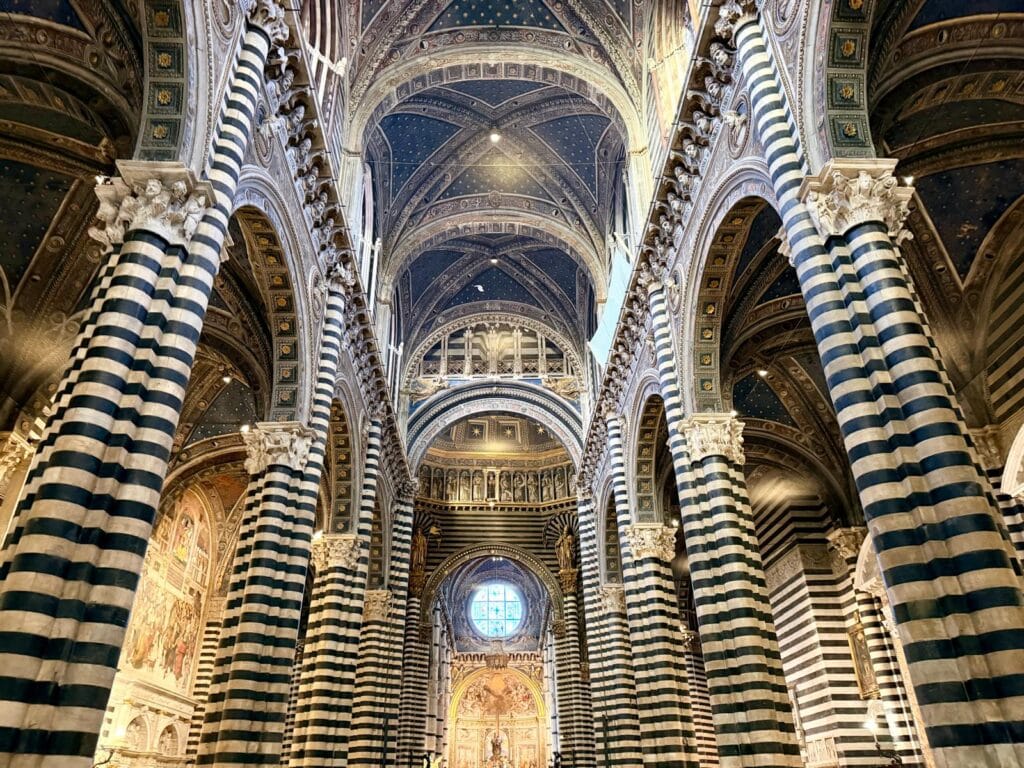
The first thing that stood out was how different it looked from the other cathedrals we’d visited.
Instead of the lighter interiors we’d become used to seeing, Siena’s Duomo is filled with dramatic black-and-white striped marble, from the towering columns to the walls throughout the cathedral.
It’s incredibly striking.
Fun Fact: Siena’s black and white aren’t just decorative choices. They’re the traditional colours of the city and appear throughout Siena’s history and heraldry.
If you’re visiting when the cathedral’s marble floor is fully uncovered, consider yourself lucky. Parts of it are protected for much of the year and revealed during specific periods.
Even after seeing St. Peter’s Basilica, Milan’s Duomo, and Florence’s cathedral, Siena felt completely different.
Wander Through Siena
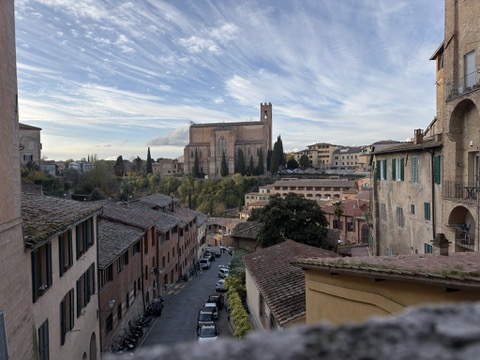
After visiting the Duomo, give yourself whatever time you have left to wander.
Siena is built across rolling hills, so expect plenty of sloping streets as you make your way through the historic centre.
Walk toward Piazza del Campo, the huge shell-shaped square at the heart of the city. It’s surrounded by warm brick buildings and dominated by Palazzo Pubblico and Torre del Mangia.
Siena is built across rolling hills, so expect plenty of sloping streets as you make your way through the historic centre.
Walk toward Piazza del Campo, the huge shell-shaped square at the heart of the city. It’s surrounded by warm brick buildings and dominated by Palazzo Pubblico and Torre del Mangia.
Drive to San Gimignano
From Siena, continue through the Tuscan countryside toward San Gimignano.
The drive itself is beautiful, with rolling hills, vineyards, olive groves, and medieval towns scattered across the landscape.
By the time we arrived, we were more than ready to slow down.
We checked into our hotel, explored the grounds, and called it a night rather than immediately rushing into town. After a private winery tour, three-course lunch, Siena, and a full day on the road, it was exactly what we needed.
And that’s something I’d keep in mind when planning this itinerary: not every evening needs another attraction.
Sometimes checking into a beautiful property in the Tuscan countryside, pouring a glass of wine, and enjoying where you’re staying is enough.
Where to Stay in San Gimignano
We stayed at Mormoraia, just outside/in San Gimignano.
I loved staying here due to the rustic spa retreat. It was extremely nice to enjoy on one of our slower days.
Tonight, settle in and enjoy the Tuscan countryside. Tomorrow, you’ll have a full day to properly explore San Gimignano.
Where we stayed: Mormoraia
Day 12: Explore San Gimignano
After a busy day of wine tasting, Siena, and driving through Tuscany, today is intentionally slow.
Spend the day wandering San Gimignano, stopping for coffee, climbing a tower if you feel like it, browsing the little shops, and enjoying one of Tuscany’s most beautiful medieval towns.
Wander San Gimignano’s Medieval Streets
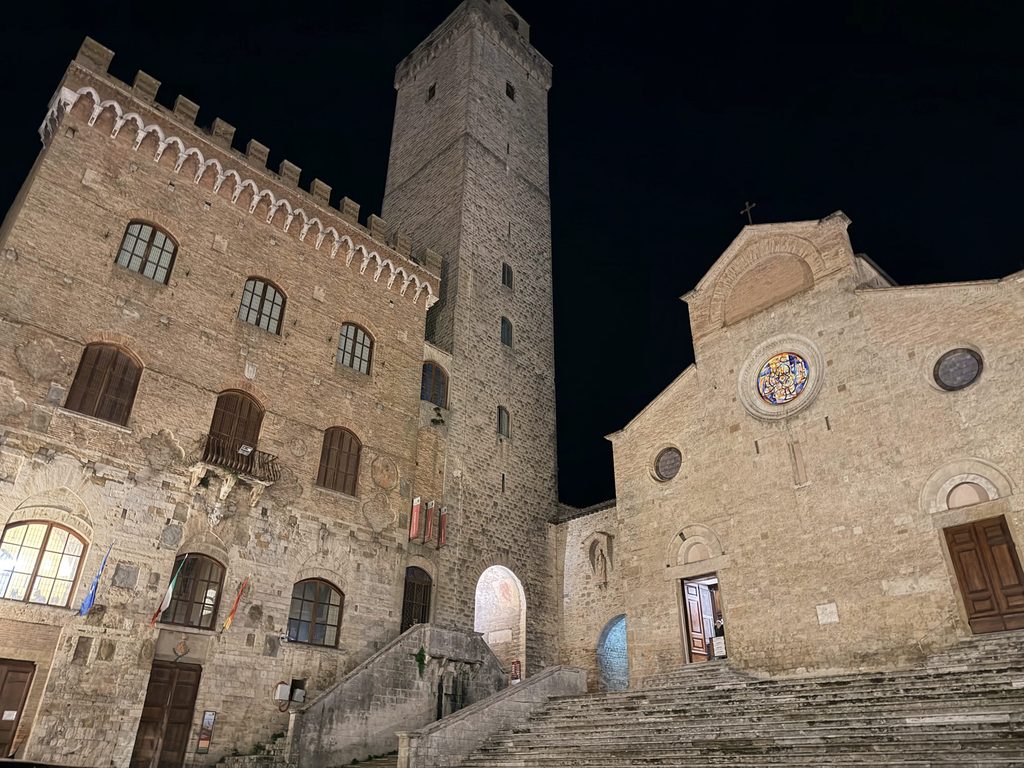
San Gimignano is instantly recognizable by the medieval towers rising above its skyline.
During the Middle Ages, wealthy families built towers throughout the town as symbols of their power and status. The taller the tower, the more impressive the family.
At its peak, San Gimignano had dozens of towers. Only 14 remain today, but that’s still enough to give the town a skyline unlike almost anywhere else in Tuscany.
Piazza della Cisterna
Eventually, you’ll find yourself in Piazza della Cisterna, one of the main squares in the historic centre.
The triangular piazza is surrounded by medieval buildings and takes its name from the stone cistern sitting in the middle of the square.
Grab a coffee, find somewhere to sit, and spend some time people-watching.
Climb Torre Grossa
If you’re going to climb one tower in San Gimignano, make it Torre Grossa.
It’s the tallest tower in town and gives you beautiful views over San Gimignano’s rooftops and the rolling Tuscan countryside surrounding it.
After seeing Tuscany mostly from the road over the past couple of days, it’s pretty incredible to see just how far those hills and vineyards stretch from above.
If you’ve already climbed enough towers in Italy by this point, though, I won’t blame you for skipping it.
Try Vernaccia di San Gimignano
You’ve been drinking plenty of Chianti in Tuscany, but San Gimignano has a wine of its own worth trying.
Vernaccia di San Gimignano is a crisp white wine produced from grapes grown in the countryside surrounding the town.
Browse the Local Shops
Leave some time for browsing the little shops scattered throughout the historic centre.
You’ll find local wine, olive oil, ceramics, leather goods, saffron, and plenty of Tuscan food products.
San Gimignano is particularly known for its saffron, which has been cultivated in the area for centuries.
This is a much better day for souvenir shopping than trying to squeeze it between timed museum reservations in Florence.
After almost two weeks of moving between some of Italy’s biggest cities and most famous sights, having an entire day to wander a medieval hill town, drink local wine, eat gelato, and enjoy Tuscany is kind of the point.
Tomorrow, you’ll make your way back to Rome for one final day in the city before flying home.
Day 13: San Gimignano → Rome
Today, it’s time to leave Tuscany behind and make your way back to where the road trip started: Rome.
After nearly two weeks of moving through Italy, keep your final afternoon fairly simple. We booked a more in-depth tour of the Colosseum, revisited the Pantheon, and then spent the rest of the day doing one of my favourite things in Rome: wandering without much of a plan.
Drive from San Gimignano to Rome
Leave San Gimignano in the morning and begin the drive south toward Rome.
This is one of the longer stretches of driving on the itinerary, so give yourself plenty of time and avoid booking your Colosseum tour too close to your expected arrival.
Take an In-Depth Colosseum Tour
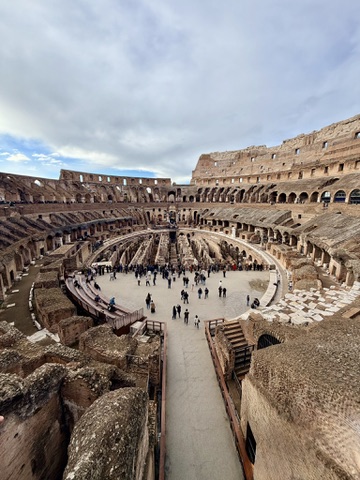
For our final afternoon in Rome, we booked a more in-depth tour of the Colosseum, including access to areas that aren’t included with every standard ticket.
If you’re deciding between simply visiting the Colosseum and booking one of the more complete tours, I’d recommend the tour we did.
One of the biggest advantages was being able to access sections of the Colosseum where there were significantly fewer people. After almost two weeks of visiting some of Italy’s most popular attractions, having a little space to actually look around and take everything in was incredibly refreshing.
We were also able to walk onto the arena floor, which gives you a completely different perspective of the Colosseum.
Standing where gladiators once entered the arena and looking up at the enormous tiers of seating surrounding you makes it much easier to appreciate just how massive this place would have felt when it was filled with spectators.
Would I pay extra for the more complete tour again? Absolutely.
The smaller crowds alone made it worth it, but the additional access gave us a much better understanding of how the Colosseum actually functioned.
The tour we booked: Colosseum and Roman Forum Guided Tour
Visit the Pantheon
After the Colosseum, make your way back toward the Pantheon.
We’d already enjoyed aperitivo outside it on our first day in Rome, but this time, take the opportunity to properly explore it.
The Pantheon is one of those buildings that becomes more impressive once you understand just how old it is.
Walk inside and look up at the enormous concrete dome and the circular opening at its centre, known as the oculus.
Did You Know? Nearly 2,000 years after it was built, the Pantheon’s dome is still the world’s largest unreinforced concrete dome.
The oculus is also the building’s only source of natural light. And yes, when it rains, water actually comes through the opening. The slightly sloped marble floor and drainage system were designed to deal with it.
After seeing so many elaborate churches throughout Italy, I loved how different the Pantheon felt.
Spend Your Final Afternoon Getting Lost in Rome
After that, stop sightseeing.
You’ve already visited the Vatican, Trevi Fountain, Colosseum, Pantheon, and many of Rome’s major sights. You don’t need to spend your last few hours racing around trying to check another attraction off the list.
We just started walking.
Wander down whatever street looks interesting. Duck into a shop. Stop for an espresso. Find another gelato. Sit in a piazza for a while.
By this point in the trip, you’ll probably feel much more comfortable doing that than you did when you first arrived in Rome.
And I think that’s a pretty perfect way to end the road trip.
On Day 1, Rome was completely new and we were trying to figure everything out. Two weeks later, we were back in the same city with nowhere in particular we needed to be.
Day 14: One Last Morning in Rome & Fly Home
And just like that, two weeks in Italy are over.
If your flight isn’t until later in the day, use your final morning for one last wander through Rome rather than trying to squeeze in another major attraction.
We happened to leave on a Sunday, which gave us one last unexpected stop before heading to the airport.
Browse Porta Portese Market
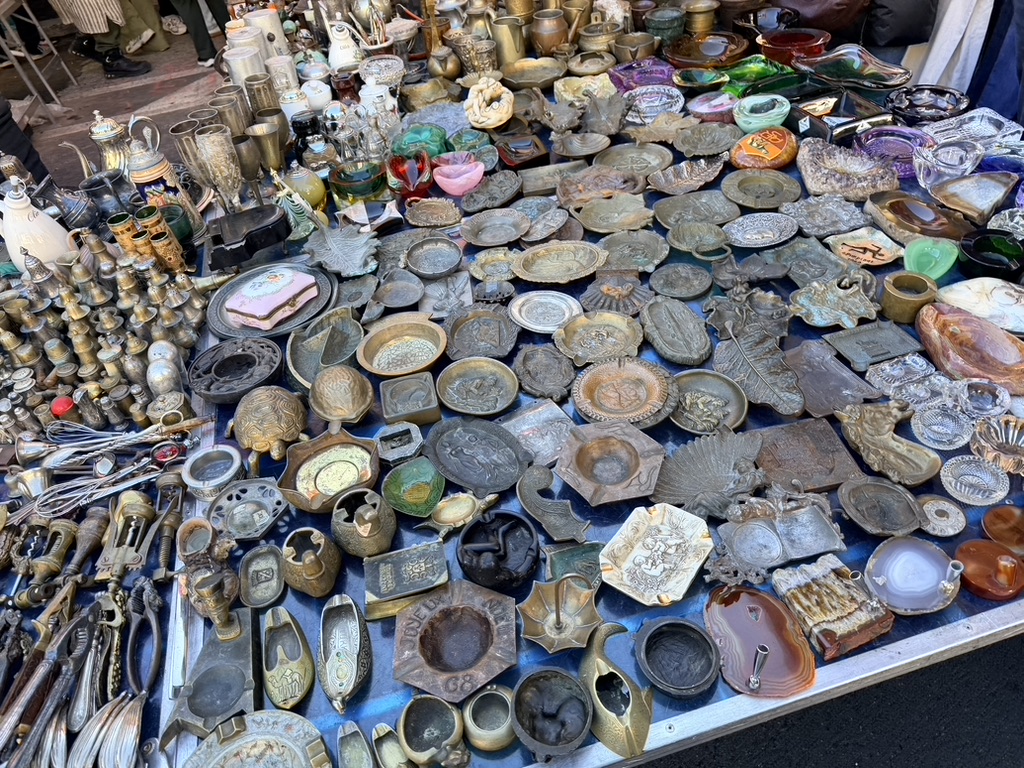
If your final morning falls on a Sunday, check out Porta Portese Market.
The sprawling outdoor market takes place every Sunday and is packed with stalls selling everything from vintage clothing and antiques to leather goods, household items, and souvenirs.
We stopped here for some last-minute shopping before leaving Rome and ended up being really glad we did. It’s busy, a little chaotic, and completely different from the polished boutiques and souvenir shops we’d browsed throughout the trip.
If you’re looking for a perfectly curated Italian market, this probably isn’t it. But if you enjoy digging through stalls and seeing a more everyday side of Rome, it’s worth a wander.
One Last Tour Through the Streets of Rome
Before leaving the city we took one last tour through the streets and made sure we had all the photos and souvenirs we wanted.
There’s something pretty fitting about ending the trip here.
Over the past two weeks, you’ve gone from ancient Rome to colourful fishing villages, Milan’s fashion district, the mountains of Lake Como, Venice’s canals, Renaissance Florence, and the vineyards and medieval hill towns of Tuscany.
Then, somehow, you end up right back where you started.
Return Your Rental Car & Fly Home
From Rome, make your way back to Fiumicino Airport (FCO), return the rental car, and head inside for your flight home.
Give yourself plenty of extra time for the rental car return, especially if you need to refuel before dropping it off.
And that’s it.
Fourteen days, one rental car, and a pretty incredible loop through Italy.
Final Thoughts on Our 2-Week Italy Road Trip
Two weeks gave us enough time to experience a surprising amount of Italy without feeling like we spent the entire trip racing from one place to the next. We explored some of Italy’s biggest cities, hiked along the coast, stayed on a farm near Lake Como, wandered the canals of Venice, tasted wine in the Tuscan countryside, and still had days where the only real plan was to walk around and see where we ended up.
Would I change anything? I’d probably add an extra night to Cinque Terre if time allowed. Having another day would give you more flexibility for hiking, especially since weather affected some of our plans in November.
Otherwise, I really liked the pace of this route.
Having a rental car was also a huge part of what made the trip work for us. We could stop in places like Pisa and Siena, stay outside the major cities, visit Brolio Castle, and explore the Tuscan countryside at our own pace. At the same time, we parked the car whenever we reached cities where it wasn’t useful and explored on foot or by public transportation instead.
If this is your first trip to Italy and you want a mix of major sights, smaller towns, incredible food, wine, history, and a little room for spontaneity, I think this route gives you a bit of everything.
My biggest advice is don’t try to see everything.
Italy rewards slowing down. Some of my favourite memories from this trip weren’t the attractions we’d booked months ahead. They were wandering the streets of Venice after our food tour, sitting down for a long farm-to-table dinner at our agriturismo, talking to an artist while buying a piece of his work, or simply driving through the Tuscan countryside.
Use this itinerary as a route, not a checklist.
Pick the experiences that matter most to you, leave a little space for the unexpected, and don’t worry if you don’t see absolutely everything.
You’ll probably be planning your next trip to Italy before you’ve even left.
FAQ
Is two weeks enough for an Italy road trip?
Yes! Two weeks is plenty of time for an Italy road trip, especially if you want to experience a mix of major cities, smaller towns, and the countryside.
We were really happy with the pace of this itinerary, but if you prefer slower travel, you can easily cut out a few stops and add extra nights to major hubs like Rome, Venice, or Florence. You don’t need to see everything in one trip.
How many kilometres is this Italy road trip?
Depending on the detours and optional stops you make along the way, this road trip covers roughly 1,200 km (745 miles).
Your total will vary if you add extra stops, scenic detours, or day trips, so use that as a general estimate rather than an exact distance.
Do you need a rental car for this itinerary?
For this specific itinerary, I’d recommend having a rental car.
The car gave us the flexibility to make stops along the way, stay at an agriturismo, visit Brolio Castle, and explore smaller towns throughout Tuscany without having to plan around train schedules.
That said, if you’re not comfortable driving in Italy, you can absolutely adapt this itinerary to public transportation. Italy’s major cities are well connected by train, and you can use guided day trips to reach wineries, hill towns, and other places that are more difficult to visit independently.
There are plenty of day trips available through GetYourGuide from major hubs like Rome and Florence, which would let you experience many of the same places without renting a car.
Is driving in Italy difficult?
I wouldn’t say driving in Italy is particularly difficult as long as you’re a confident driver and do a little research before your trip.
The biggest things to understand beforehand are ZTL zones, toll roads, parking, speed cameras, and the general rules of the road. Driving within the major cities can feel hectic, but once we were outside them, we found driving around Italy much easier than expected.
For everything I wish we’d known before picking up our rental car, read my complete guide:
Driving in Italy: Everything You Need to Know Before Your Road Trip
How much does a 2-week Italy road trip cost?
This one varies a lot depending on how you like to travel.
We spent approximately $5,000 USD for two people, not including flights or souvenirs. We stayed in a mix of more affordable accommodations and luxury hotels, including a splurge at The Gritti Palace in Venice, and also spent money on experiences like our private Brolio Castle wine tour and food tour in Venice.
You could easily make this itinerary more budget-friendly by choosing less expensive hotels, eating more casual meals, and limiting paid tours. On the other hand, Italy makes it very easy to turn this into a luxury trip with high-end hotels, private tours, and fine dining.
I’d use our $5,000 as an example of what our version of the trip cost, rather than a budget everyone should expect to follow.
What is the best month for an Italy road trip?
The best month really depends on what you want from your trip.
For a balance of pleasant weather and manageable crowds, I’d choose May, September, or October.
We travelled in November and were pleasantly surprised by how much we enjoyed it. There were fewer crowds, temperatures were generally comfortable for sightseeing, and we even caught the beginning of the Christmas market season in Florence. The trade-offs were shorter days, less predictable weather, and some trail closures in Cinque Terre.
If warm weather and long days are your priority, summer may suit you better, but you’ll also be travelling during Italy’s busiest season.
Can you do this Italy itinerary by train instead?
Yes, absolutely.
Rome, Cinque Terre, Milan, Lake Como, Venice, and Florence can all be incorporated into a train-based version of this itinerary.
The biggest difference would be the Tuscany portion. Without a car, you lose some of the freedom to spontaneously drive through the countryside, visit wineries, or stop in smaller towns.
But that doesn’t mean you have to miss those experiences. You can base yourself in Florence and join organized day trips to wineries, Siena, San Gimignano, and other Tuscan towns instead.
So if the thought of driving in Italy is the only thing stopping you from doing this trip, don’t let it. Take the trains between the major cities and use tours for the harder-to-reach places.