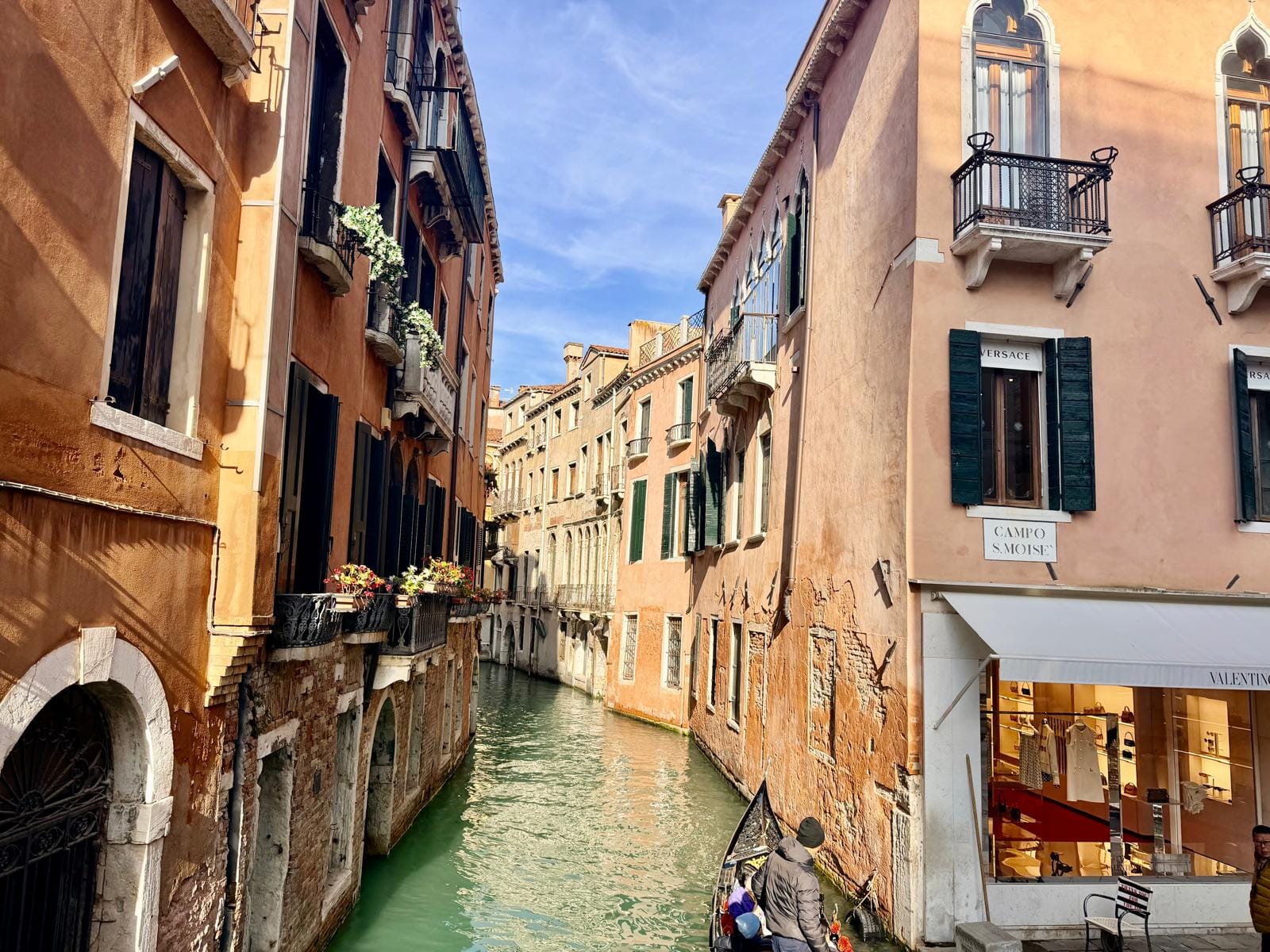
I loved Venice way more than I expected to. Before visiting, I honestly thought it might feel like one giant tourist trap. Instead, I completely fell in love with it, from the narrow streets and canals to the history, local traditions and, of course, the food.
On our first night in Venice, we joined a local food tour, and it ended up being one of the most useful things we did during our trip. We didn’t just learn what to eat. Our guide taught us how to recognize traditional Venetian food, what to look for when choosing a restaurant, how to spot authentic local products, and some of the telltale signs of places catering almost entirely to tourists.
A lot of what we learned was useful throughout the rest of our 2-week Italy road trip, too.
So rather than just sharing a list of restaurants, I’ve put together the tips that actually helped us: what to eat in Venice, how to find a good bàcaro, what to look for when choosing a restaurant, how to spot good gelato, and even how to shop for authentic Murano glass.
Think of this as a guide to eating and shopping a little smarter in one of Italy’s most visited cities.
Short on Time? Here’s What to Look For in Venice
If you only remember a few things from this guide, make it these:
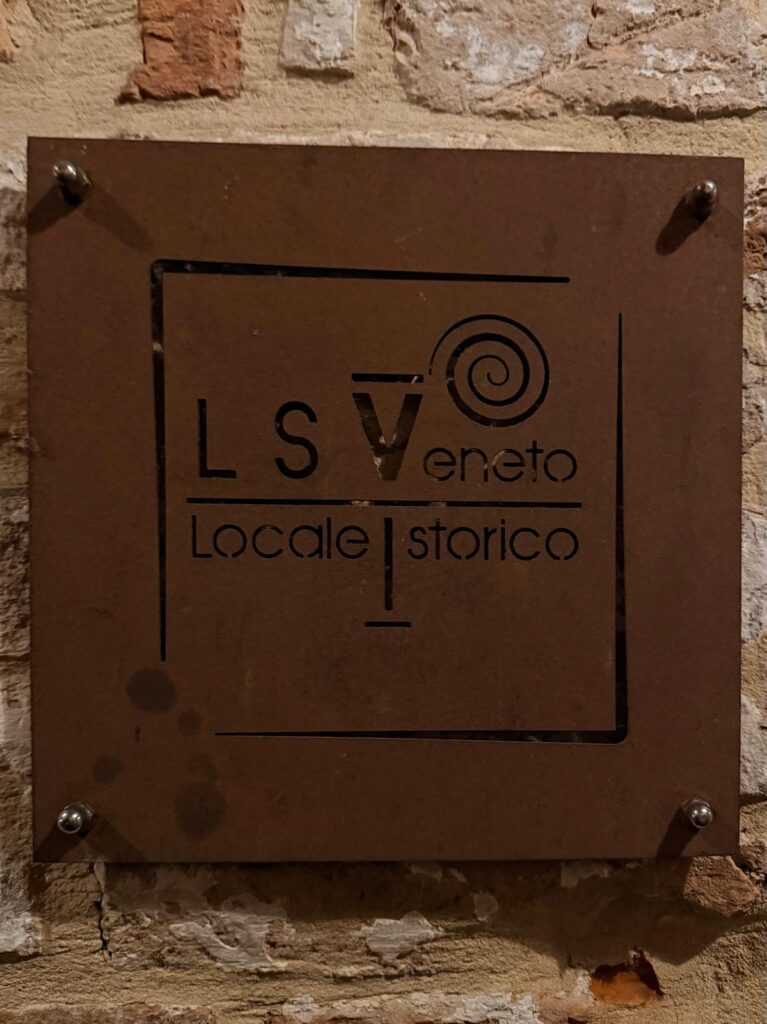
- Look for Locale Storico Veneto plaques. These identify businesses officially recognized as historic places of commerce in the Veneto region. One of the requirements is being open to the public for at least 40 years.
- Choose restaurants with smaller menus. Shorter, seasonal menus can be a good indication that a kitchen is working with fresh ingredients rather than trying to serve every Italian dish imaginable.
- Be cautious of huge menus covered in photos and translated into several languages. They’re often designed primarily for tourists.
- Avoid restaurants aggressively trying to pull you inside. Some of our favourite places were tiny bàcari you could easily walk straight past.
- Don’t judge gelato by how impressive it looks. Natural colours, seasonal flavours and covered metal containers are better signs to look for than giant mountains of brightly coloured gelato.
- Don’t assume all “Murano glass” is actually made in Murano. Look for the official Vetro Artistico® Murano trademark when shopping for authentic pieces.
- Wander away from Venice’s busiest streets. You don’t have to go far before the atmosphere completely changes.
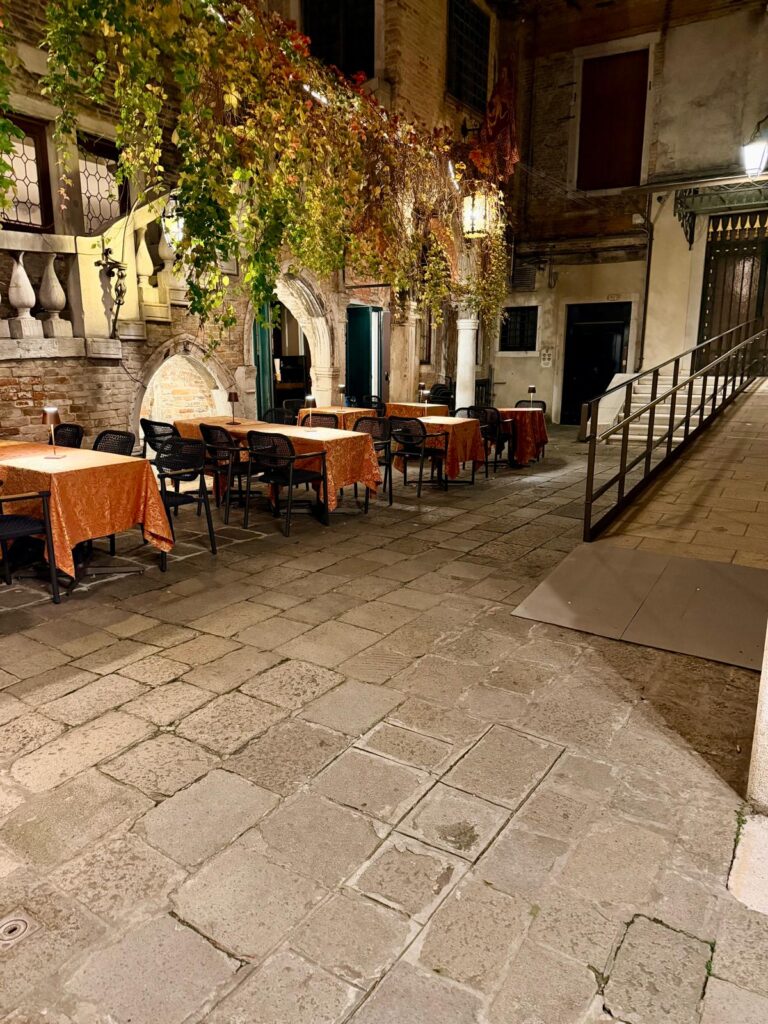
What to Look For When Choosing Restaurants or Shops in Venice
If you don’t know where to start or you’re overwhelmed by the sheer number of restaurants, bars and shops in Venice, there’s one little detail worth watching for.
Look for the Locale Storico Veneto Plaque
Our food tour guide pointed out small plaques displayed outside certain businesses identifying them as Luoghi Storici del Commercio, or historic places of commerce in the Veneto region.
Once we knew what we were looking for, we started noticing them throughout Venice.
Businesses on the register can include restaurants, bars, shops, artisan businesses, hotels and other establishments considered to have historical or artistic value.
One of the requirements for recognition is that the business has been open to the public for at least 40 years.
That doesn’t automatically mean every restaurant without a plaque is a tourist trap, and I definitely wouldn’t limit yourself to only visiting historic businesses. But when you’re wandering around Venice with no idea where to start, spotting one is a pretty good reason to take a closer look.
How to Avoid Tourist Trap Restaurants in Venice
Venice receives millions of visitors, so restaurants catering almost exclusively to tourists aren’t hard to find. That doesn’t necessarily make them bad, but if you’re looking for a more local experience, there are a few things our guide taught us to watch for.
Look for smaller menus.
A restaurant doesn’t need to offer every Italian dish you’ve ever heard of. Smaller menus often allow restaurants to focus on seasonal and fresh ingredients and the dishes they actually specialize in.
Be cautious of menus covered in photos.
A few pictures don’t automatically make a restaurant bad, but giant menus covered in photos of pizza, pasta, seafood and every other Italian dish imaginable are usually a clue that tourists are the target customer.
Watch the number of translations.
An English translation is completely normal in a city as international as Venice. A menu translated into five or six languages, however, can be a sign that the restaurant caters primarily to tourists.
Watch for people standing outside trying to convince you to come in.
Some of the best restaurants and bàcari we visited were tiny places you could easily walk straight past.
Look at what’s actually on the menu.
Seasonal dishes and local Venetian specialties are generally more interesting than a menu trying to represent every region of Italy.
And remember: you don’t have to walk kilometres away from St. Mark’s Square to find something good. Sometimes turning down a quieter side street is enough.
Visiting in the off-season? We travelled through Italy in November and loved experiencing places like Venice with cooler weather and fewer peak-season crowds. Read my guide to visiting Italy in November for what the weather was actually like, what to pack, crowds, closures and whether I’d recommend it.
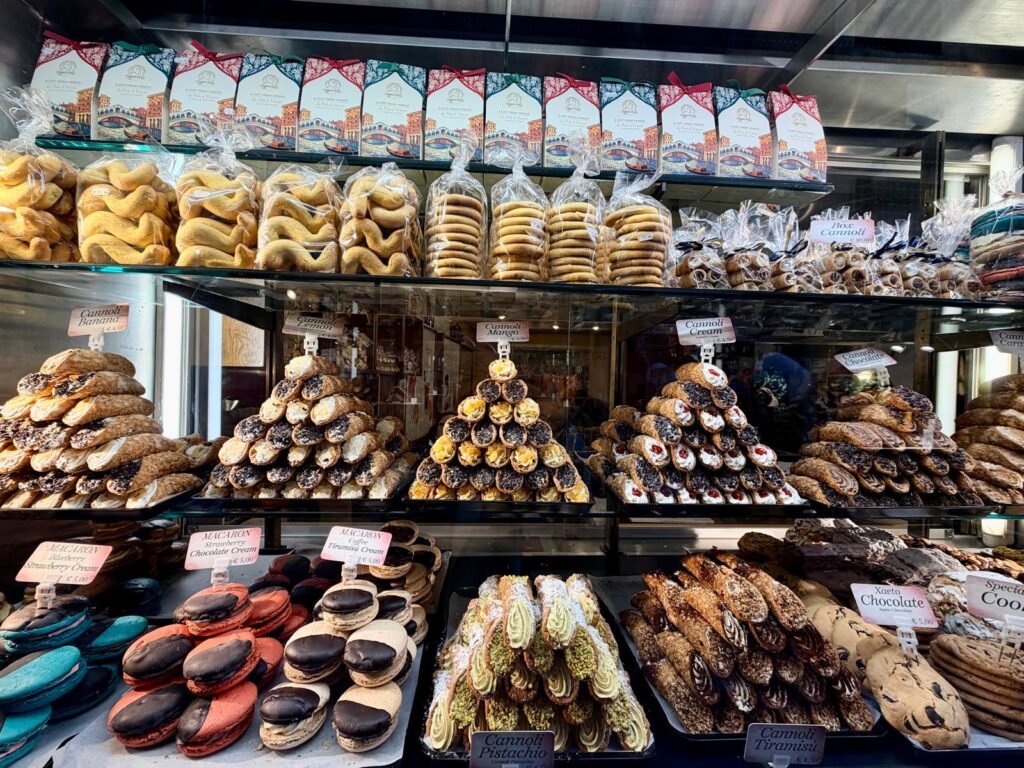
What Is Traditional Venetian Food?
Venice’s location on the Venetian Lagoon and its long history as a major trading city have had a huge influence on its cuisine. Seafood plays a major role, along with simple seasonal ingredients, polenta, rice and small dishes meant to be enjoyed with wine.
One of the most important foods to know before visiting Venice is cicchetti, small snacks or bite-sized dishes traditionally served in Venetian wine bars known as bàcari.
You’ll find plenty of them below, along with some of the other traditional Venetian foods worth trying during your trip.
10 Must-Try Foods in Venice
Wondering what to eat in Venice? Venetian cuisine is heavily influenced by the lagoon, so you’ll find plenty of seafood alongside cicchetti, pasta, risotto and simple dishes built around seasonal ingredients.
We tried quite a few of these on our Venice food tour, while others are traditional Venetian dishes worth keeping an eye out for as you explore the city.
1. Cicchetti
If you only try one thing in Venice, make it cicchetti.
Cicchetti are small snacks or bite-sized dishes traditionally served in Venetian wine bars called bàcari. You’ll usually find an assortment displayed behind the counter, with everything from slices of bread topped with seafood and cheese to fried snacks, meatballs and baccalà mantecato.
One of the best ways to experience them is to create your own little bàcaro crawl. Order one or two cicchetti and a small glass of wine, then wander to another spot and do it all over again.
2. Baccalà Mantecato
One of the most traditional Venetian cicchetti to look for is baccalà mantecato, a creamy whipped salt cod commonly spread over crostini or served on squares of polenta.
You’ll see it frequently on cicchetti counters throughout Venice, and it’s a great example of the city’s strong connection to seafood.
3. Sarde in Saor
Another Venetian classic is sarde in saor, a sweet-and-sour sardine dish traditionally prepared with onions, vinegar, raisins and pine nuts.
The combination might sound a little unusual, but this is one of Venice’s most traditional dishes and a great one to try if you want to go beyond pizza and pasta.
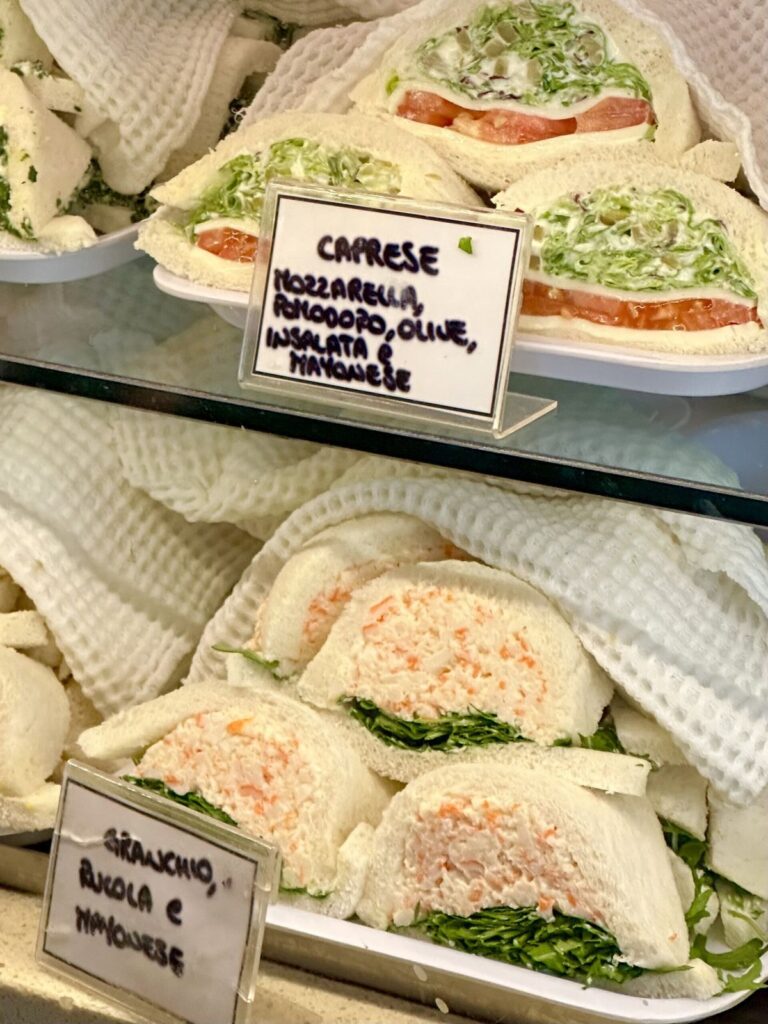
4. Tramezzini
Tramezzini are soft, crustless triangular sandwiches made with white bread and generously stuffed with all kinds of fillings, usually held together with mayonnaise or another creamy sauce.
You’ll find them in bars and cafés throughout Venice, and they’re an easy option when you want something quick between sightseeing stops.
5. Mozzarella in Carrozza
This was one of my favourites from our food tour.
Mozzarella in carrozza is essentially a mozzarella sandwich that’s breaded and deep-fried until crispy on the outside and warm and melted in the middle.
It’s definitely not the lightest snack you’ll have in Italy, but it is delicious.
6. Bigoli in Salsa
If you’re looking for a traditional Venetian pasta dish, watch for bigoli in salsa.
Bigoli are thick, spaghetti-like strands of pasta traditionally served in Venice with a simple sauce made from onions and salted fish, often anchovies.
Like so many traditional Italian dishes, it’s relatively simple and relies on a handful of ingredients rather than a complicated sauce.
7. Risotto al Nero di Seppia
You probably won’t have trouble recognizing this one.
Risotto al nero di seppia, or squid ink risotto, gets its dramatic black colour from squid ink. Seafood and risotto both play an important role in Venetian cuisine, making this one of the more distinctive dishes to look for on traditional menus.
8. Fritto Misto
With Venice built around its lagoon, seafood obviously deserves a spot on this list.
Fritto misto is a mixture of lightly battered and fried seafood, with the exact combination depending on what’s available.
This is also why visiting the Rialto Market in the morning is so interesting. You get to see some of the seafood and fresh ingredients that make their way onto menus throughout the city later that day.
9. Fried Snacks: Crocchè di Patate & Olive all’Ascolana
Not everything we tried on our Venice food tour was uniquely Venetian, but these two were too good not to mention.
Crocchè di patate, or potato croquettes, were incredibly popular with our tour group and disappeared almost immediately. They’re crispy on the outside and soft and creamy on the inside.
If you love olives, also watch for olive all’Ascolana. These are olives stuffed with meat, breaded and deep-fried, and I had never eaten anything quite like them before.
Olive all’Ascolana actually originate from the Marche region rather than Venice, so they aren’t technically a traditional Venetian food. Still, we tried them on our food tour and they were one of the most memorable snacks of the night.
10. Tiramisù
And obviously, we need something sweet.
Tiramisù originated in the Veneto region, although its exact origins are associated with Treviso rather than Venice itself.
Made with layers of coffee-soaked ladyfingers, mascarpone and cocoa, it’s one of Italy’s most famous desserts and a fitting way to finish a meal while travelling through Veneto.
And if you’re not ready for dessert just yet, there’s always gelato. I’ll get into how to spot the good stuff below.
What to Drink in Venice
Try a Venetian Spritz
You’ve probably heard of an Aperol Spritz, but if you want something with an even stronger connection to Venice, look for a Select Spritz.
Select was created in Venice and is traditionally served as a spritz with Prosecco and soda water, usually garnished with a green olive.
It’s slightly more bitter than Aperol and a fun alternative to try while you’re in the city, especially during aperitivo.
Prosecco
Of course, you can’t visit Veneto without having a glass of Prosecco.
One thing I didn’t know before our trip was that Prosecco is a protected designation.
Prosecco DOC can only be produced within a defined area of northeastern Italy spanning parts of Veneto and Friuli-Venezia Giulia. So unlike the way we sometimes casually use “prosecco” to describe sparkling wine at home, authentic Prosecco comes from a specific geographic area.
Try an Ombra
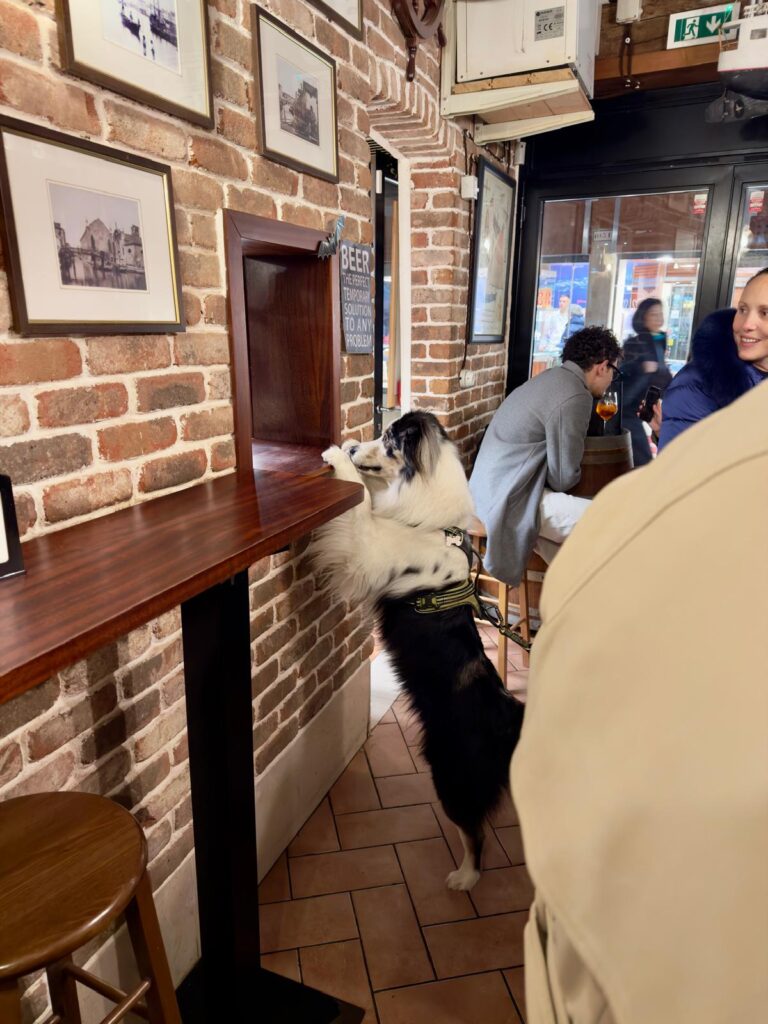
If you’re doing a cicchetti crawl, you may also come across the term ombra, which refers to a small glass of wine traditionally enjoyed alongside cicchetti.
Order a couple of cicchetti and an ombra and you’ve basically mastered one of my favourite ways to eat in Venice.
Learning about Italy’s regional food and wine traditions ended up being one of my favourite parts of the trip. If you’re heading to Tuscany, we also visited Castello di Brolio for a private Ricasoli wine tour and tasting, which was one of our biggest splurges of the trip but absolutely worth it.
How to Find Good Gelato in Venice
There are gelato shops practically everywhere in Venice, but one of the most useful things we learned was that the prettiest display doesn’t necessarily mean the best gelato.
What to Avoid
Be cautious of:
- Bright, neon colours
- Huge mountains of gelato piled high above the containers
- Open-air tubs with gelato sitting exposed all day
Good artisanal gelato shouldn’t need fluorescent colouring or enormous decorative swirls to get your attention.
Those giant mountains might look amazing in photos, but appearance isn’t necessarily an indication of quality.
What to Look For Instead
Some good signs include:
- Natural, muted colours
- Seasonal flavours
- Metal containers with lids, known as pozzetti
- Simple ingredients
- Classic Italian flavours like pistachio, hazelnut, crema, fior di latte, stracciatella and gianduia
Pistachio is one of the easiest examples. Rather than looking for something bright green, good pistachio gelato will generally have a much more muted, natural colour.
And don’t be disappointed if you can’t even see the gelato!
Some traditional gelaterias store their gelato in covered metal pozzetti. It might not create the dramatic window display that draws people in from the street, but that’s not necessarily a bad thing.
How to Tell if Murano Glass Is Authentic
One of the most surprising things we learned on our food tour had absolutely nothing to do with food.
Not everything being sold as “Murano glass” in Venice is necessarily authentic Murano-made glass.
Murano has centuries of glassmaking history, and genuine Murano glass is still produced by skilled glassmakers on the island today.
If you’re planning on buying a piece, one of the things you can look for is the official Vetro Artistico® Murano trademark.
The trademark was established by the Veneto Region to identify artistic glass produced on Murano according to the area’s traditional production criteria. Authorized producers can use the official label, which includes an identifying code associated with the producer.
So rather than simply trusting a souvenir shop because a sign says “Murano Glass,” look more closely at what you’re actually buying.
And if you’re investing in an expensive piece, ask the seller about the maker and where it was produced.
If you’d like to see more traditional and artistic glasswork while you’re in Venice, a few of my favourite studios were:
- Berengo Studio 1989
- Cesare Toffolo Glass Master
- Vetreria Artistica Fornasier Luigi
Visit the Rialto Market in the Morning
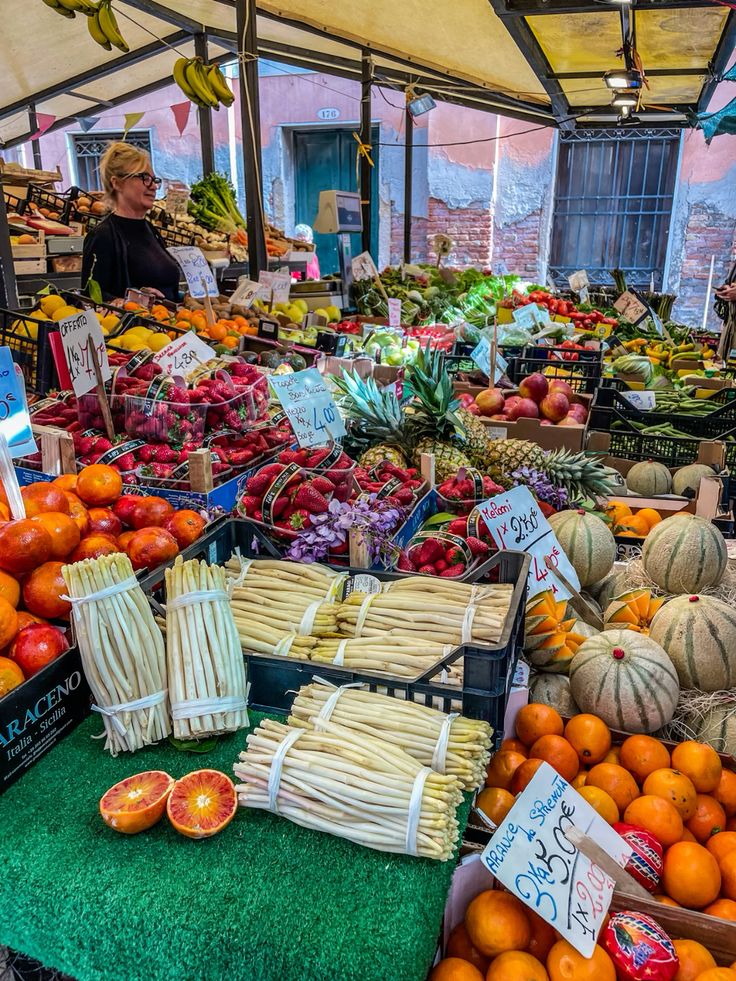
One of my favourite non-eating stops on our food tour was the Rialto Market, particularly the historic fish market.
If you take a morning food tour, there’s a good chance you’ll get to experience the market while it’s still bustling.
The open-air market is filled with fresh seafood, fruit and vegetables, and our guide explained how local restaurant owners visit the market to see what’s available and select ingredients for their menus.
It helped put one of the restaurant tips we’d learned into perspective: seasonal menus are a good thing.
Rather than expecting every dish to be available every day of the year, traditional cooking often revolves around what’s fresh and available at the time.
Even if you aren’t taking a food tour, I’d recommend walking through the Rialto Market in the morning. It gives you a completely different perspective on Venice from the souvenir shops and crowds surrounding the city’s major attractions.
Is a Venice Food Tour Worth It?
One million times yes.
I already love doing food tours when we travel, but our Venice food tour was particularly valuable because it taught us so much more than where to eat.
Connecting with a local guide gives you a completely different perspective on a city. Along with trying traditional Venetian food, we learned about Venice’s history, local traditions, how to recognize authentic products, what to look for when choosing restaurants, and even how to avoid some of the tourist traps we’d otherwise never have known about.
Book Your Venice Food Tour Early in Your Stay
If you’re going to do a food tour in Venice, book it near the beginning of your trip.
We did ours on our very first night in Venice, and I’m so glad we did.
The things we learned helped us make better choices not only for the rest of our time in Venice, but throughout our trip around Italy.
Here is the exact Venice food tour we did, and I couldn’t recommend it enough:
Self-Guided Venice Food Tour: 5 Places to Try
If a guided food tour isn’t in your budget, you can still create your own self-guided Venice food tour. These are five of the stops we visited and would recommend:
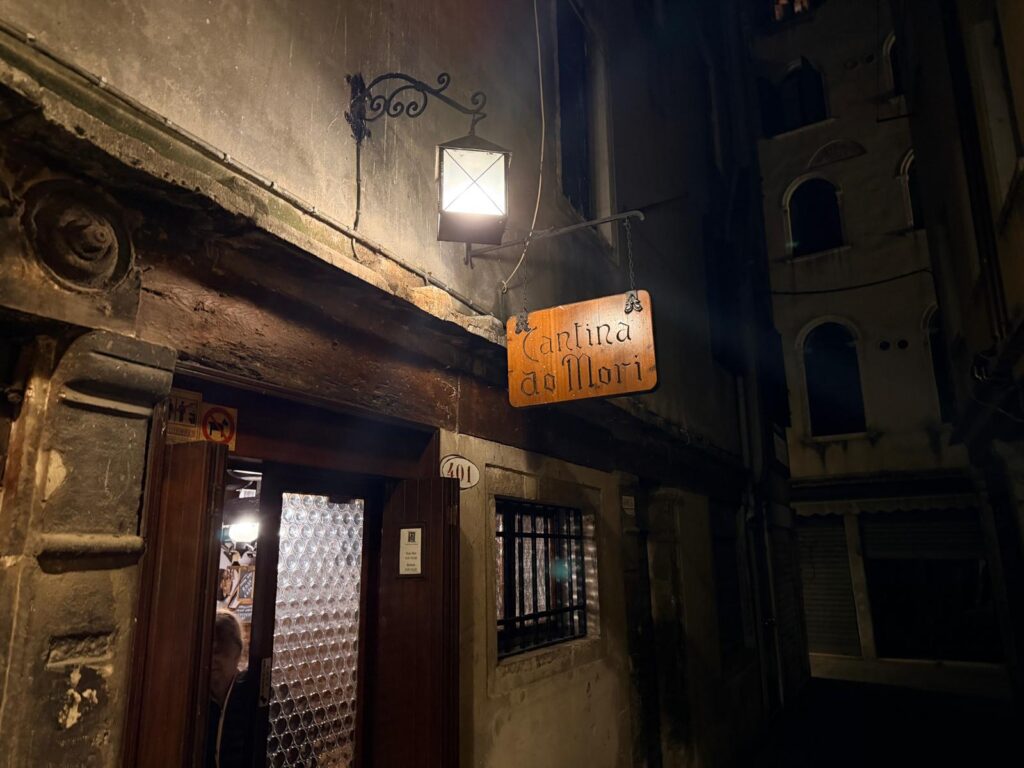
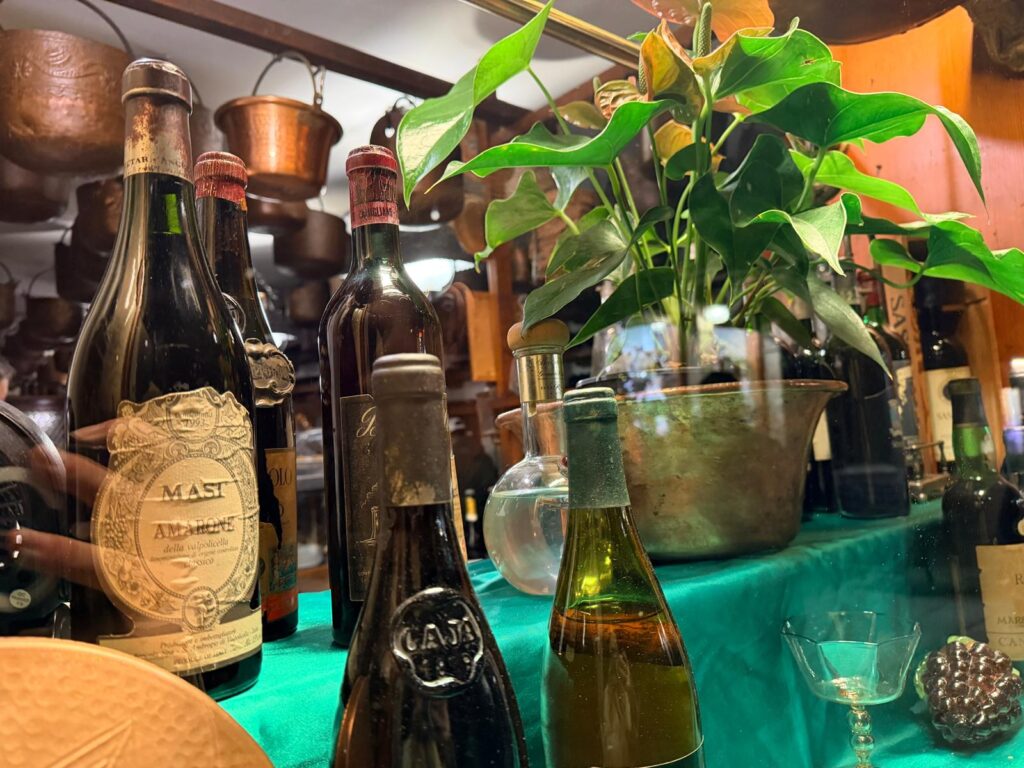
1. Cantina Do Mori
Dating back to 1462, Cantina Do Mori is widely considered the oldest bàcaro in Venice.
The interior is worth seeing in itself, with old copper pots hanging from the ceiling and an atmosphere that feels worlds away from some of Venice’s more modern tourist restaurants.
It’s a great place to grab a glass of wine and choose a few different cicchetti from the counter.
2. Cantina Do Spade
Another of Venice’s historic osterie, Cantina Do Spade is a great stop for traditional cicchetti.
It’s also close to the Rialto area, making it easy to combine with a morning visit to the market.
3. Osteria Trattoria Al Nono Risorto
If you’ve had enough small bites and you’re ready for a full meal, Al Nono Risorto is a great place to sit down and slow things down a little.
It offers a more traditional restaurant experience with larger Italian dishes.
4. Birraria La Corte
Located in Campo San Polo in a former brewery, Birraria La Corte is a great stop if you’re craving pizza.
Alongside pizza, you’ll find a selection of Italian dishes in a rustic setting.
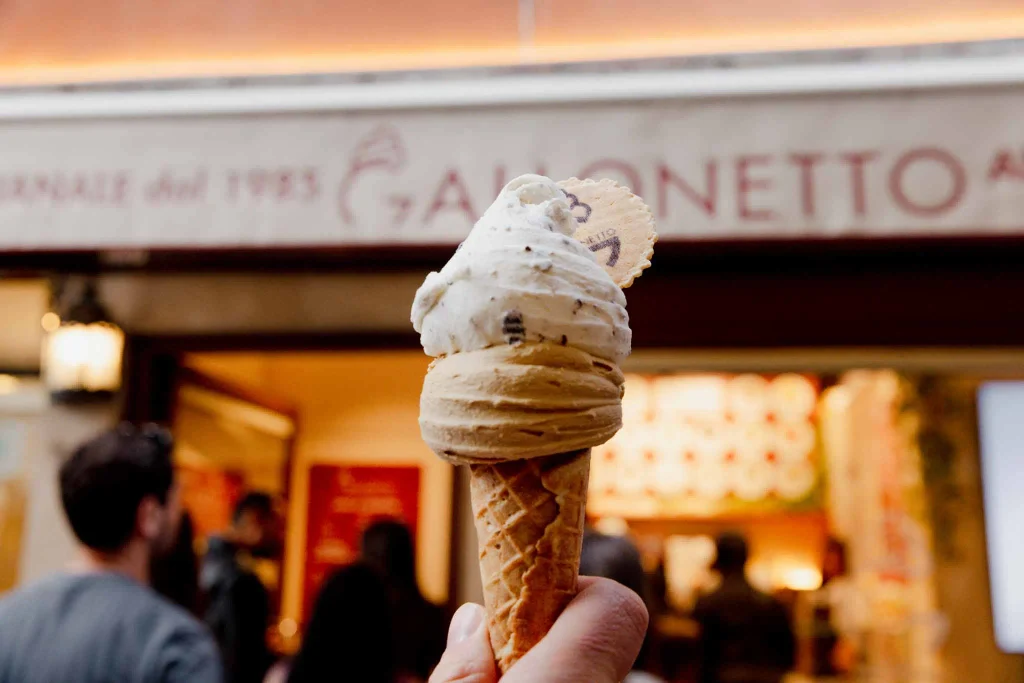
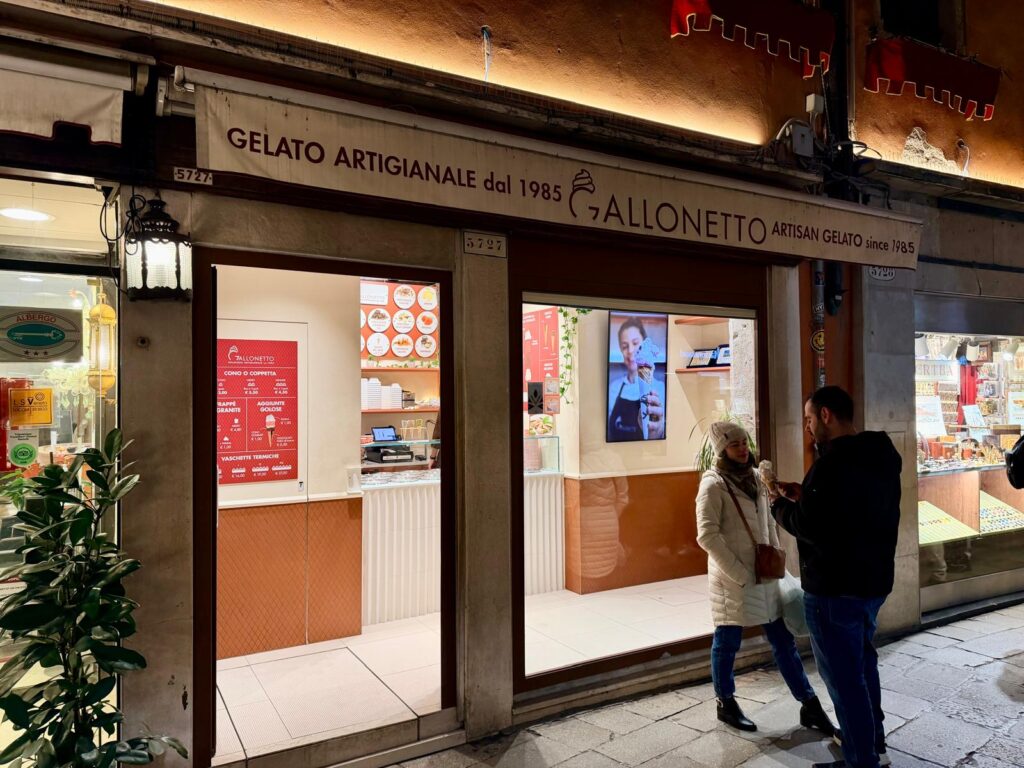
5. Gelateria Gallonetto
And obviously, we have to finish with gelato.
Gelateria Gallonetto specializes in gelato artigianale and traces its family’s gelato-making tradition back to 1985.
This is a great place to put everything you’ve just learned about finding good gelato to the test.
Planning an Italy road trip? Venice was one of the stops on our 2-week road trip through Italy. If you’re renting a car, make sure you also read my guide to driving in Italy, which covers ZTL zones, parking, toll roads and everything I wish I’d known before our trip.
Final Thoughts: Eating & Shopping in Venice
Final Thoughts: Eating & Shopping in Venice
Venice is touristy. There’s really no getting around that. But that doesn’t mean everything in Venice is a tourist trap.
Some of my favourite experiences were hidden behind tiny doors, down narrow side streets and inside businesses that have been serving Venetians for generations.
That same approach ended up shaping a lot of our trip, from seeking out local food and wine to finding some of the more unique things to do in Tuscany beyond the usual sightseeing stops.
Try the cicchetti. Drink the Prosecco. Wander through the Rialto Market. Look for those little historic plaques. Ask questions before buying Murano glass. And don’t be afraid to turn down a quiet alley simply because you don’t know what’s around the corner.
Venice ended up being one of the biggest surprises of our Italy trip. Learning what to look for helped us get beyond some of the city’s most touristy experiences and discover the food, traditions and local businesses that made me fall in love with it in the first place.