The Hike That Defines Guatemala
If there’s one experience that truly defines adventure travel in Guatemala, it’s hiking Volcán Acatenango. It was actually the whole reason I started looking into traveling to this Central American gem – and I’m so glad I did.
I’ll be honest, it’s a challenging hike. But the moment you reach the top and watch Volcán de Fuego erupt beside you, it makes every steep step completely worth it.
If you’re wondering what to expect hiking Acatenango, from the altitude and cold nights to the once-in-a-lifetime views – here’s my honest guide to everything you need to know before you book.
✈️ Planning a full trip to Guatemala? Check out my full 12-day Guatemala travel guide or just the Highlights for more adventures and itinerary ideas.
Acatenango Volcano
I had no idea what to expect hiking Acatenango before booking this trip, I just signed up on a whim because I knew I had to do it. But looking back, there are definitely a few things I wish I’d known first. Here’s what I learned, so you don’t make the same mistakes I did.
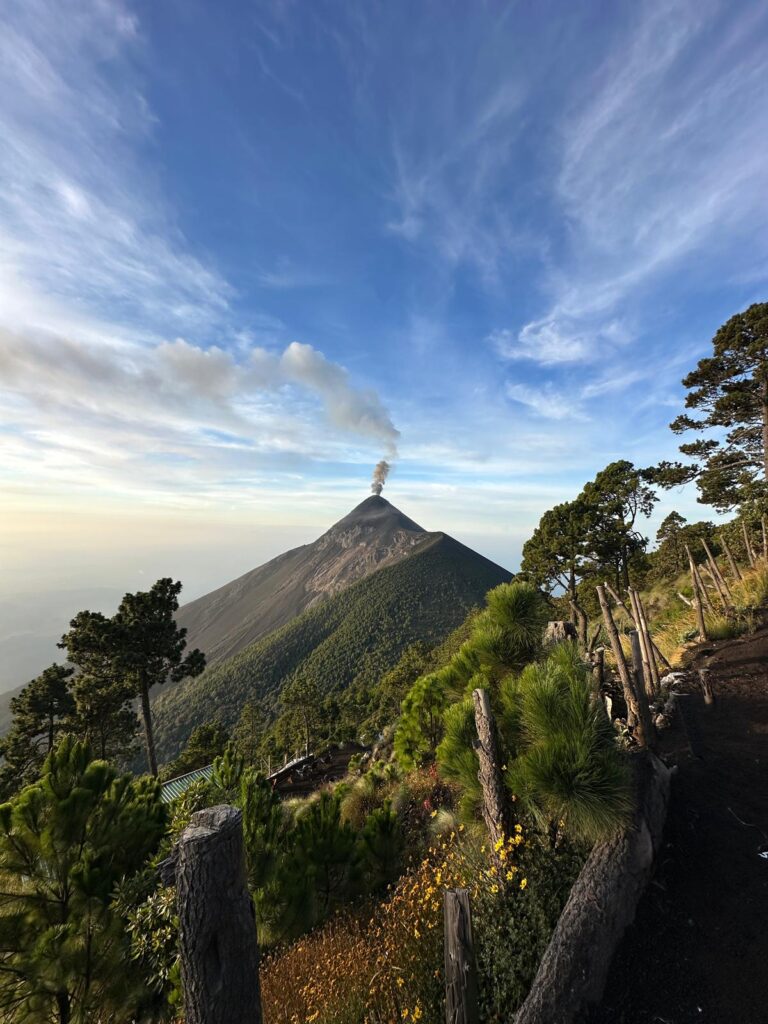
Firstly, if you choose to do this hike, you’ll be climbing Acatenango Volcano, which hasn’t erupted since the early 20th century (last recorded eruption: 1972). This is the volcano you’ll spend the night on, but it’s not the one that’s actively erupting.
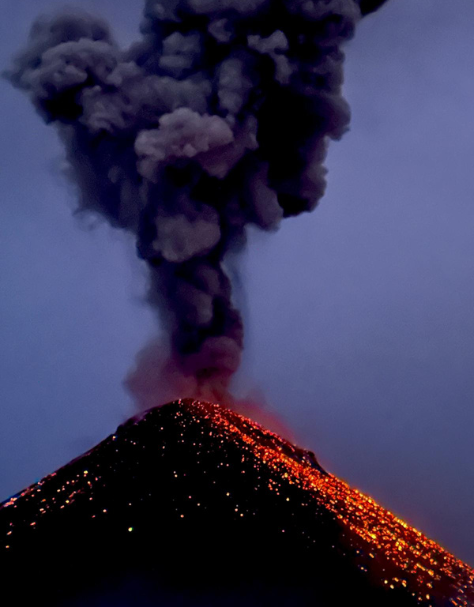
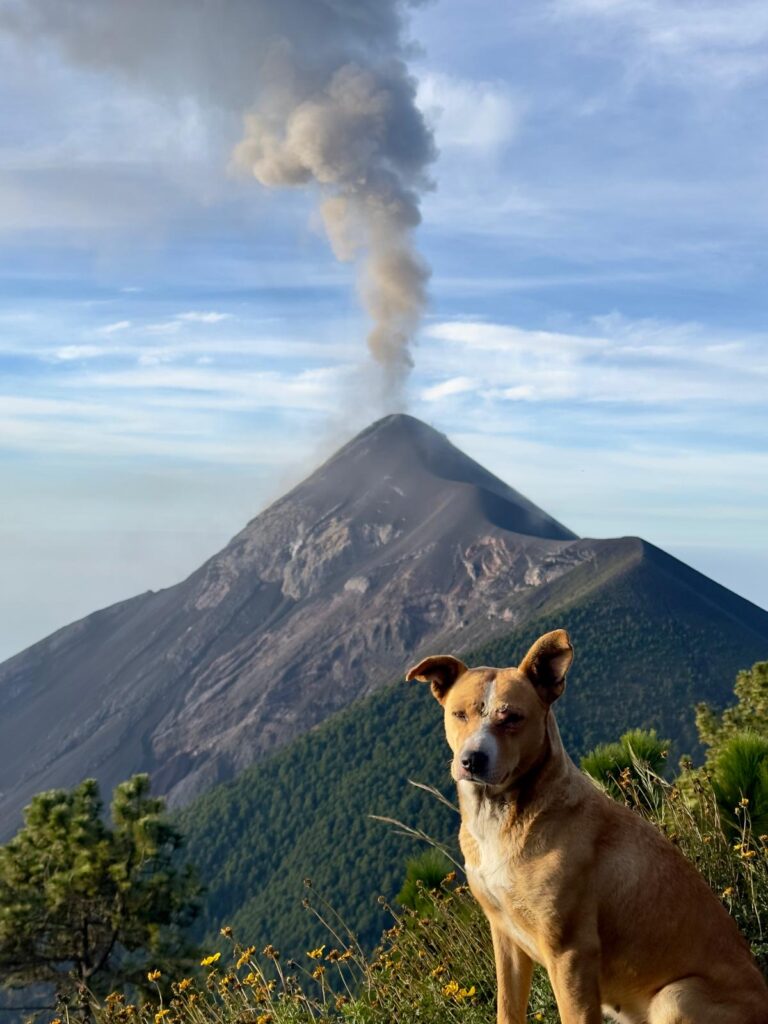
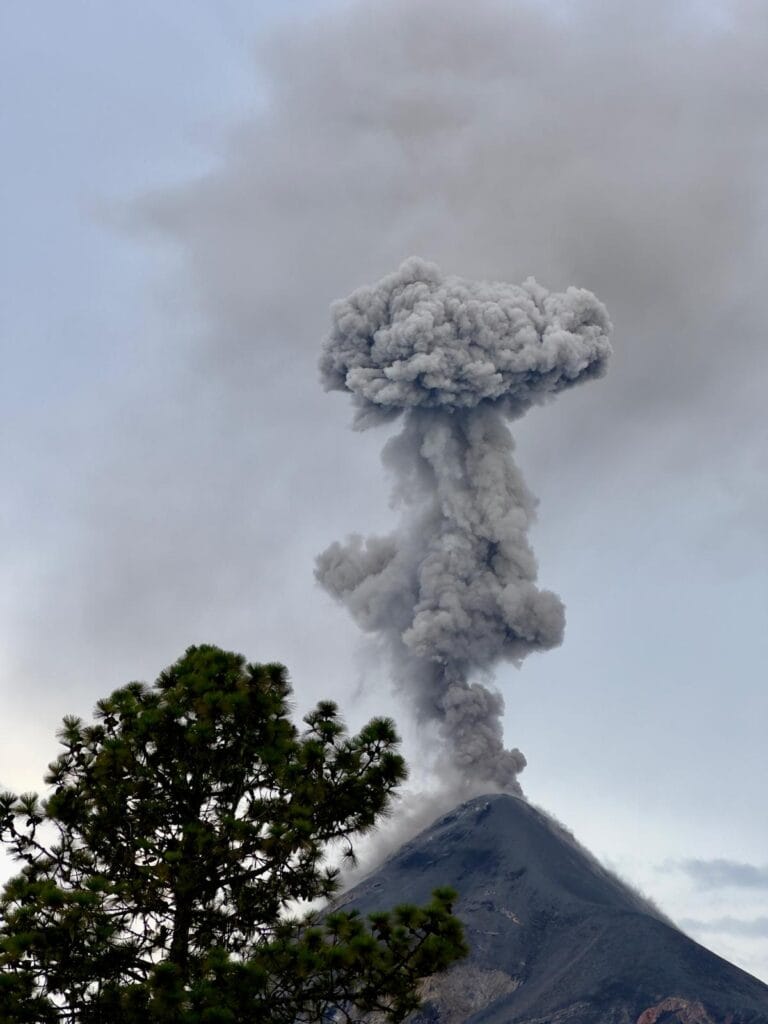
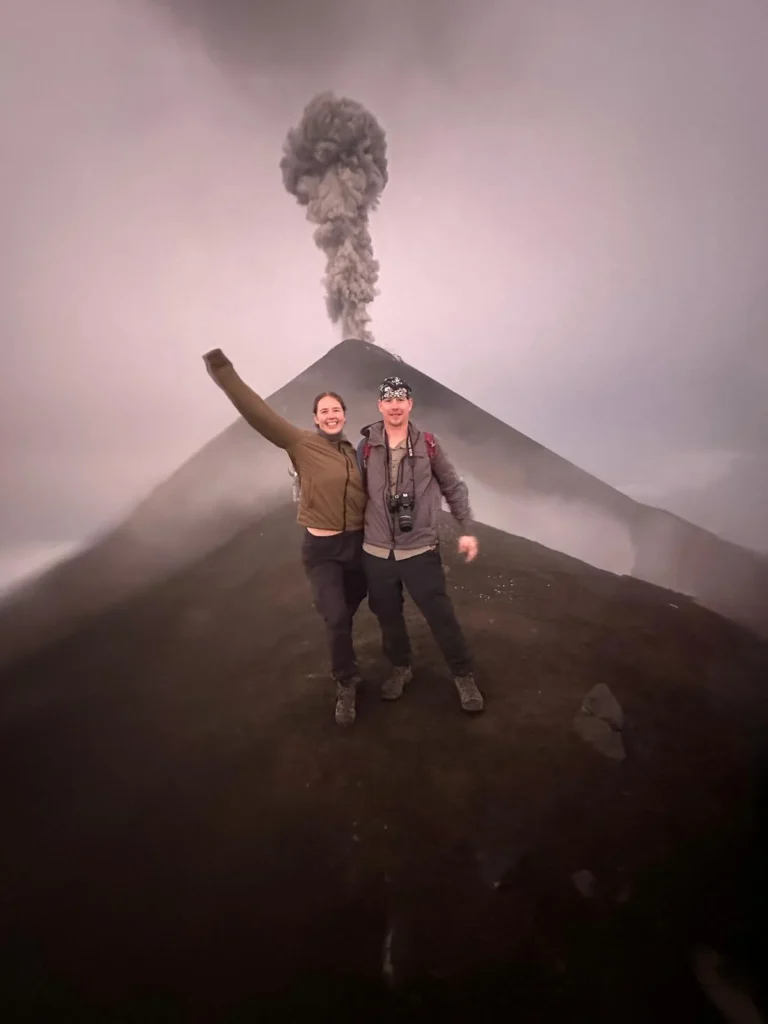
The real show comes from Volcán de Fuego, Acatenango’s fiery twin that sits just across a narrow ridge. Fuego is one of the most active volcanoes in the world, erupting every 15–30 minutes with bursts of lava and ash. Many tours offer the option to hike closer to Fuego, if you’re up for the challenge. But you can make that choice once you get to the top, it just costs a bit extra.
Quick Facts About Acatenango:
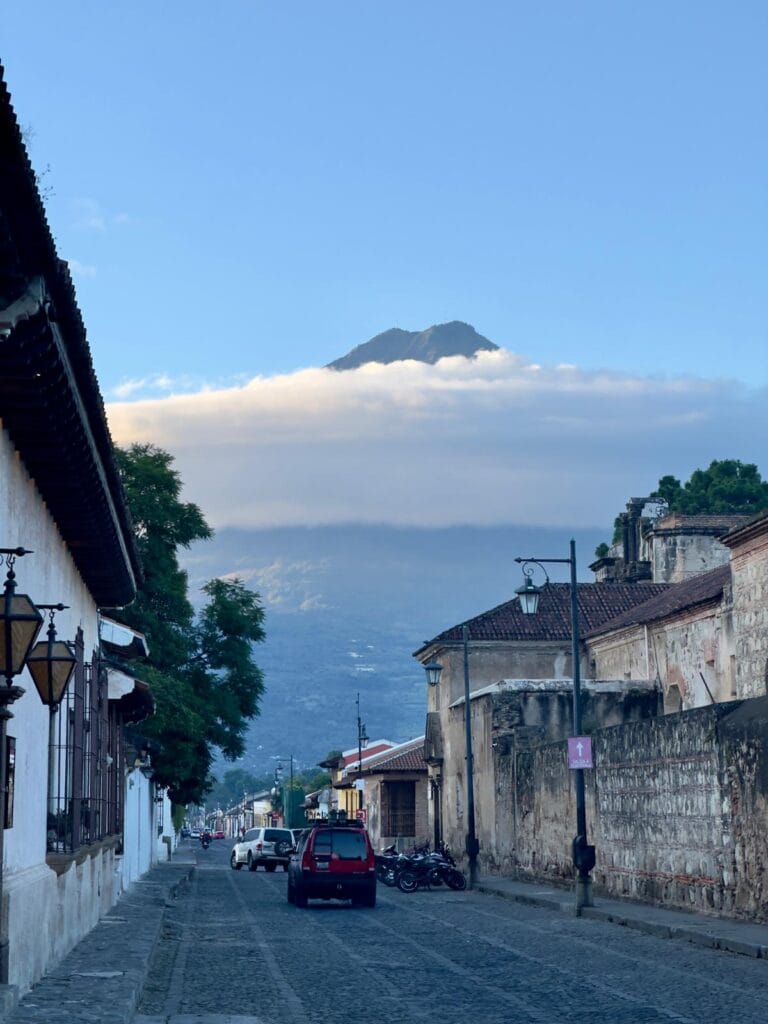
- Location: 45 minutes from Antigua, Guatemala
- Elevation: 3,976 m / 13,044 ft
- Hike distance: ~15 km (9 miles) round trip
- Duration: 4–7 hours up, 2–4 hours down
- Typical itinerary: 2 days / 1 night (overnight at base camp)
- Difficulty: Challenging but doable with moderate fitness
For many travelers, hiking Acatenango is a bucket-list experience. One that perfectly captures Guatemala’s wild, volcanic beauty and adventurous spirit.
Where Is Acatenango Volcano
Acatenango is a massive stratovolcano located just outside Antigua, Guatemala, a colonial city surrounded by lush valleys, coffee farms, and mountains. Standing at 3,976 meters (13,044 feet), it’s the third-highest volcano in Central America and easily one of the most breathtaking hikes in the region.
Why It’s Famous
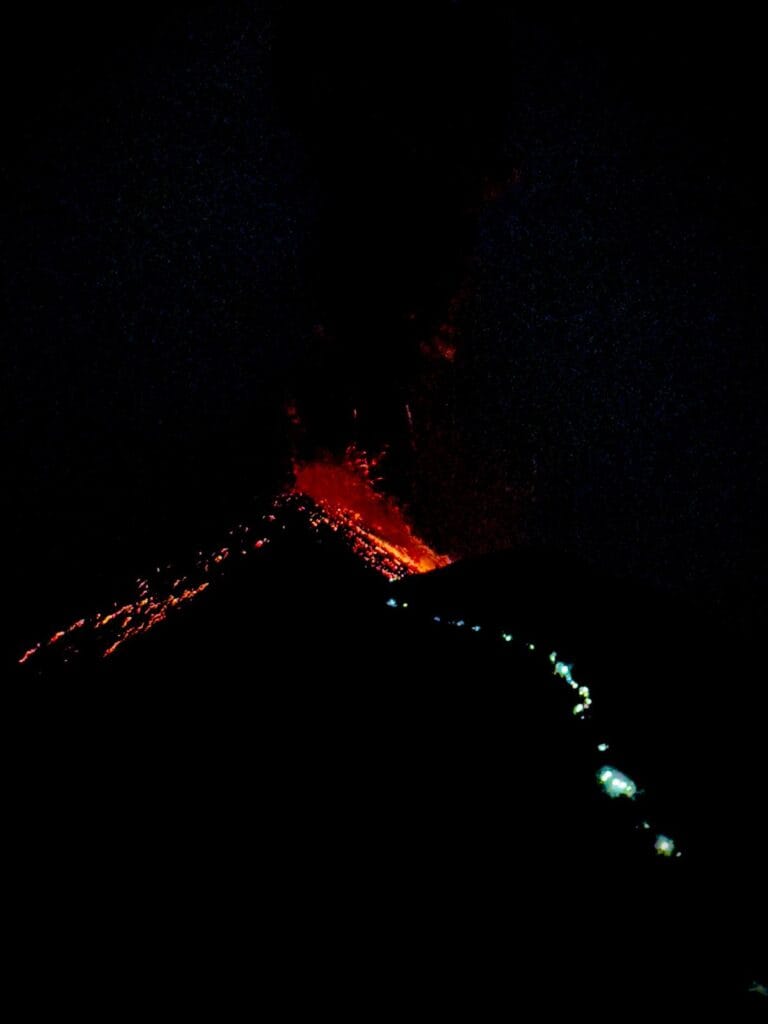
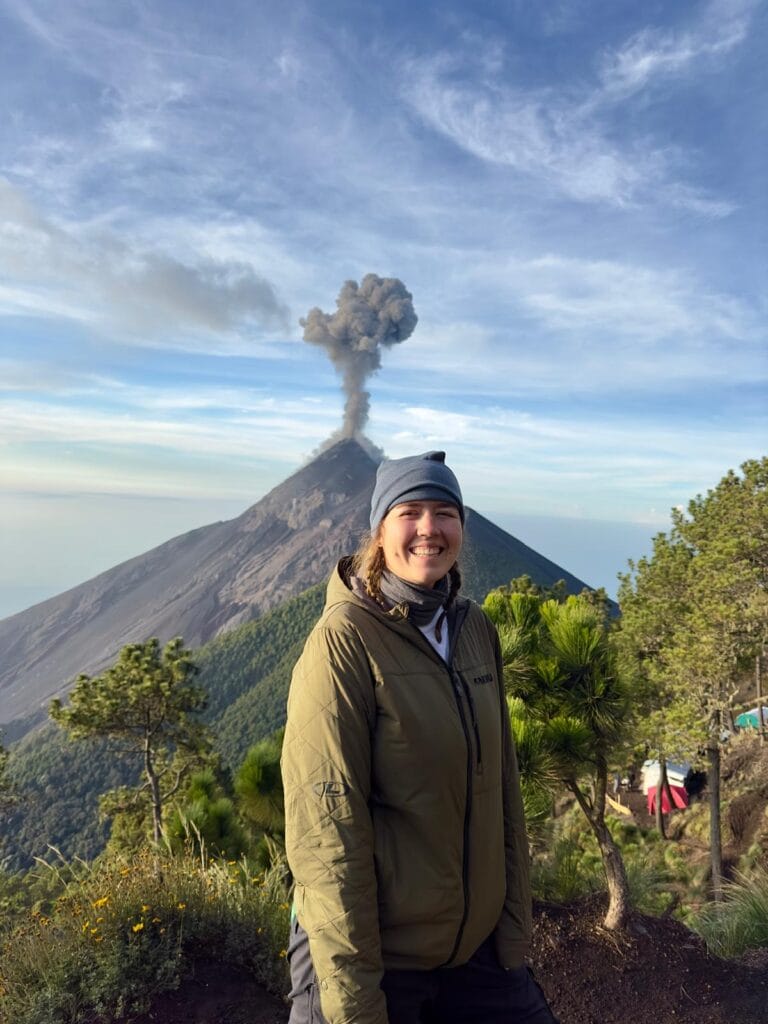
What makes the Acatenango hike so cool isn’t just its height or difficulty, it’s the fact that you can watch an active volcano erupt right from your campsite. Across the valley, Volcán de Fuego sends glowing lava bursts into the sky every half hour or so, rumbling like thunder and lighting up the night.
At night, those fiery explosions light up the sky, glowing orange against the stars, and it’s honestly one of the most surreal sights you’ll ever witness.
What to Expect on the Trail
The Acatenango hike is no joke – it’s steep, dusty, and long. But it’s also one of the most rewarding experiences you’ll ever have. Whether you’re chasing that fiery view of Fuego or just testing your limits, here’s what to expect on the trail from start to finish.
The Ascent: Steep, Scenic, and Surprisingly Cold
Like most Acatenango tours, ours started early in the morning from Antigua. We had a quick breakfast, hopped on the bus, winding through the streets of Antigua for about an hour until we arrived at the trailhead. This is where the climb begins, and it’s uphill right from the start.
Here’s how the trail unfolds, and what you can expect along the way.
First half of the hike
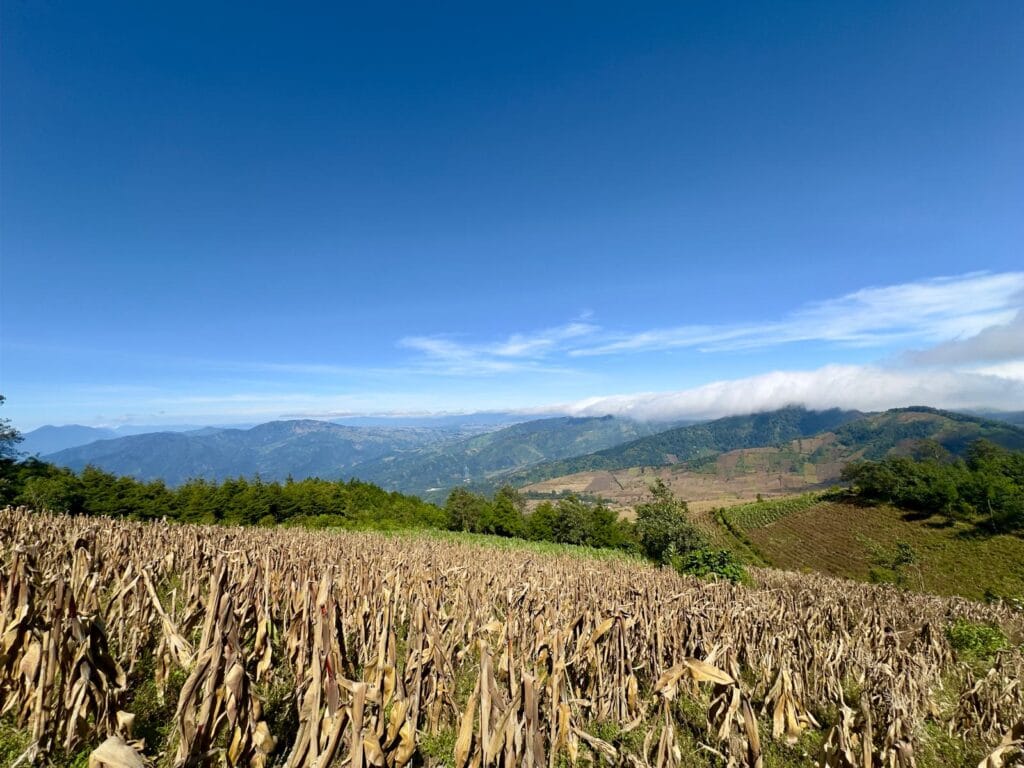
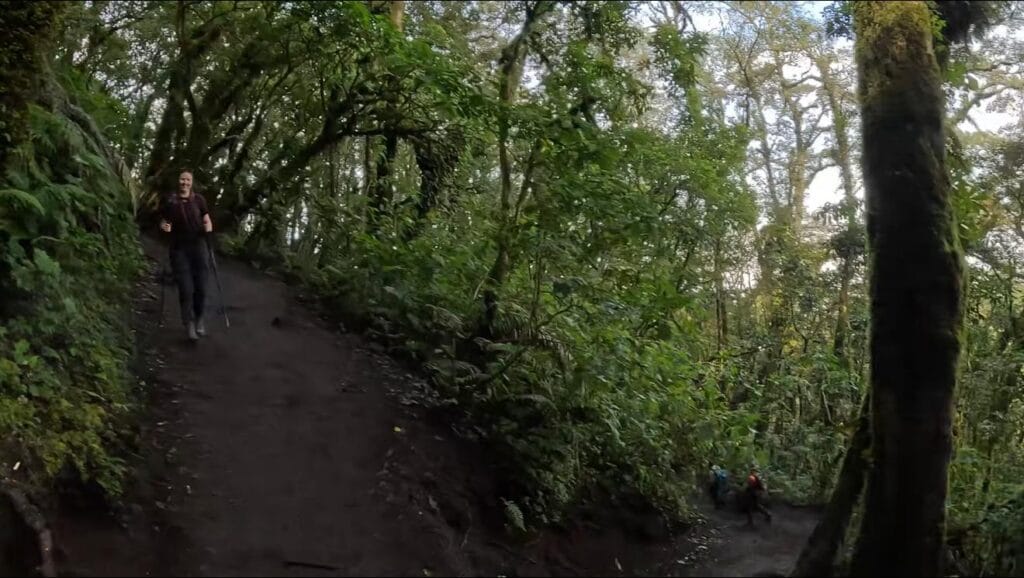
The first section winds through farmland and small villages, with locals passing by carrying bundles of wood on their backs (which really puts your backpack struggle into perspective). This part of Guatemala was a side I hadn’t seen yet.
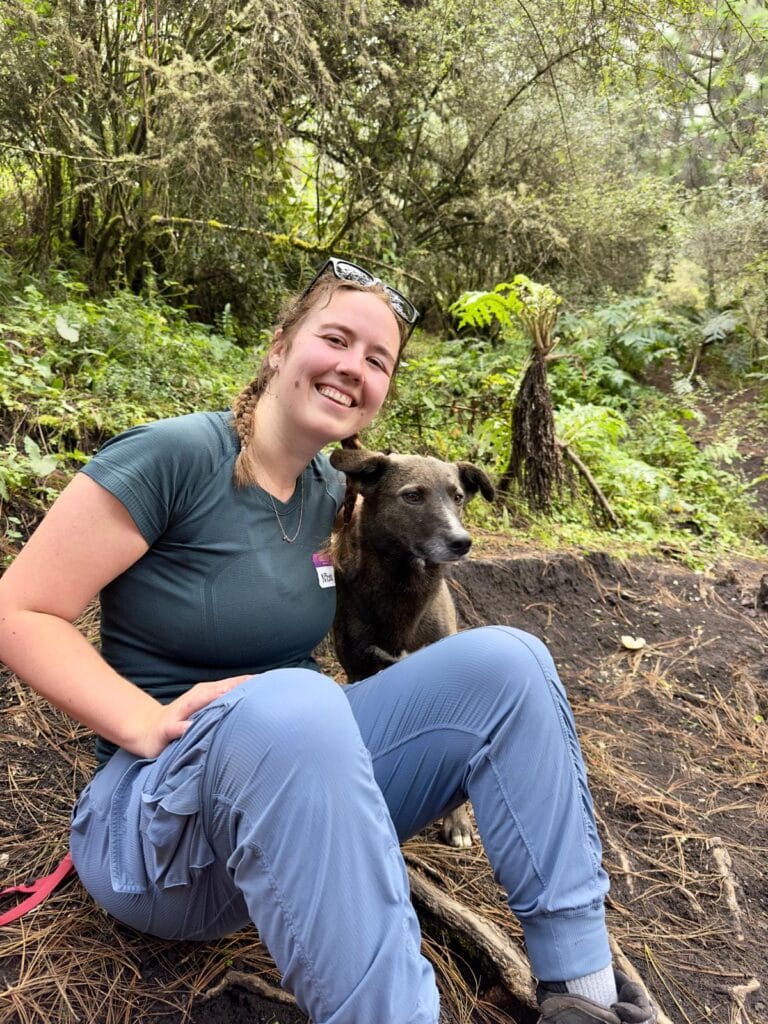
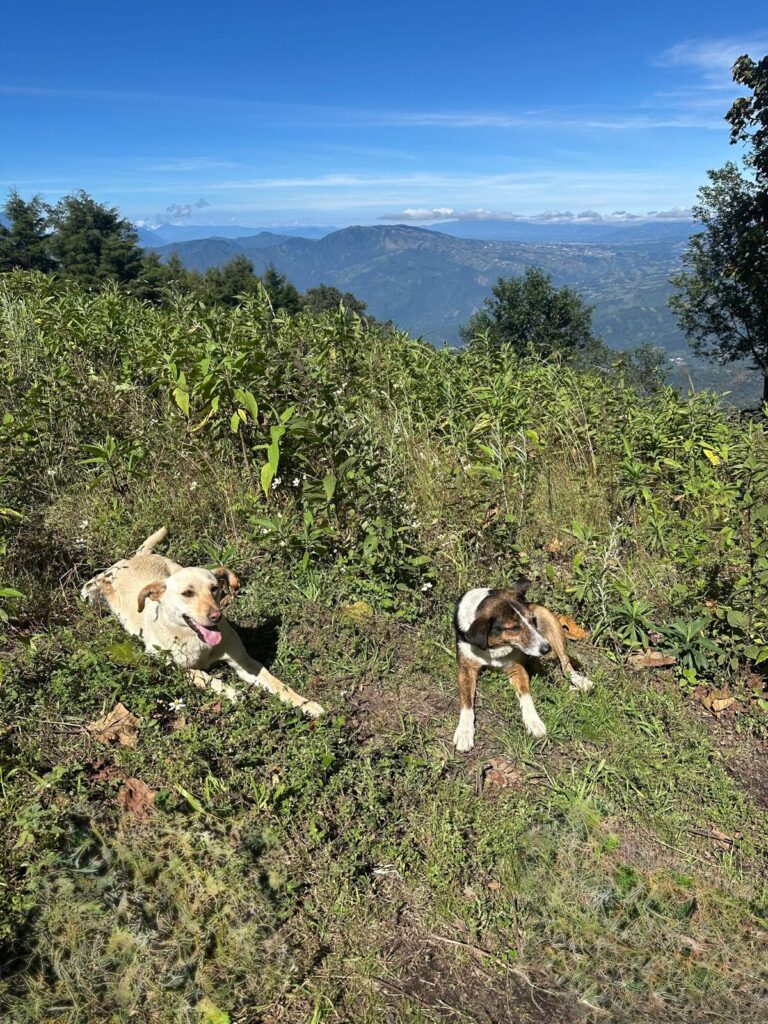
We took lots of breaks, one about every 15 minutes as the first half of the trail was pretty steep. Even though it was tough, it was a lot of fun, pushing through the struggle with the tour group, and all the local dogs that join the hike.
The trail itself is mostly dirt and volcanic gravel, which makes every step a bit slippery, especially on the steeper sections. It’s a slow, steady climb with plenty of short breaks for snacks and water. Don’t be surprised if you’re out of breath early on, the altitude kicks in fast.
Second half of the hike
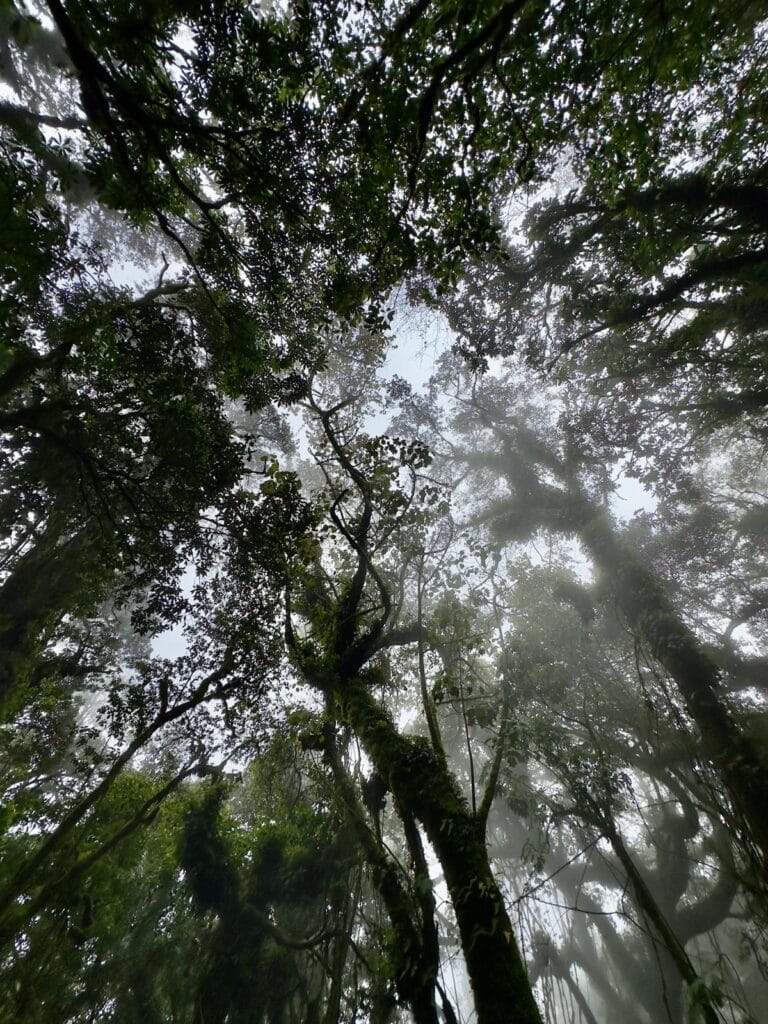
After the countryside, you’ll then enter the cloud forest, where the temperature drops, the air gets damp, and mist rolls through the trees. It’s magical, but it also means you’ll be shedding layers one minute and bundling up the next.
Every few minutes, the clouds would drift apart to reveal the valleys below, then close in again like a foggy curtain. This part of the hike is a lot less steep, making it a bit easier.
Fin del Camino
Good news, if you’re seeing this sign that means you’re almost at the top! From here it’s about 45 more minutes of mostly flat terrain before reaching base camp. If you hired a porter, here is where you’ll grab your packs and carry them the rest of the way up.
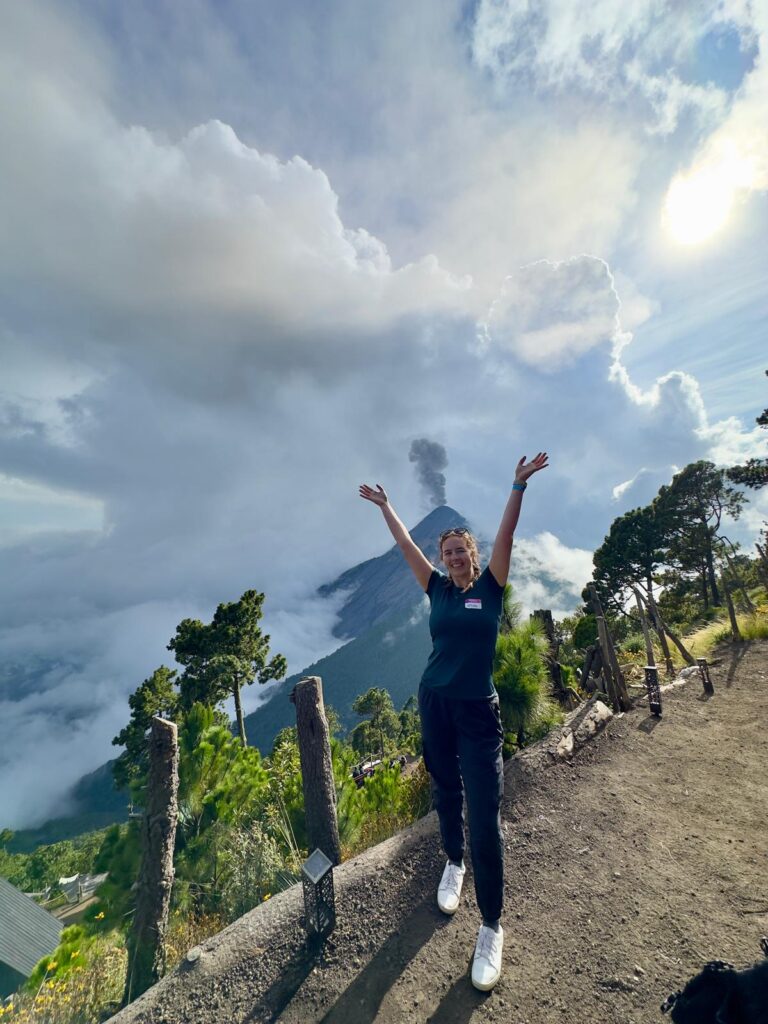
By the time you emerge above the tree line, the views start to open up, and you’ll catch your first glimpse of Volcán de Fuego puffing in the distance. That’s when it really hits you.
Base Camp: Watching Fire and Stars
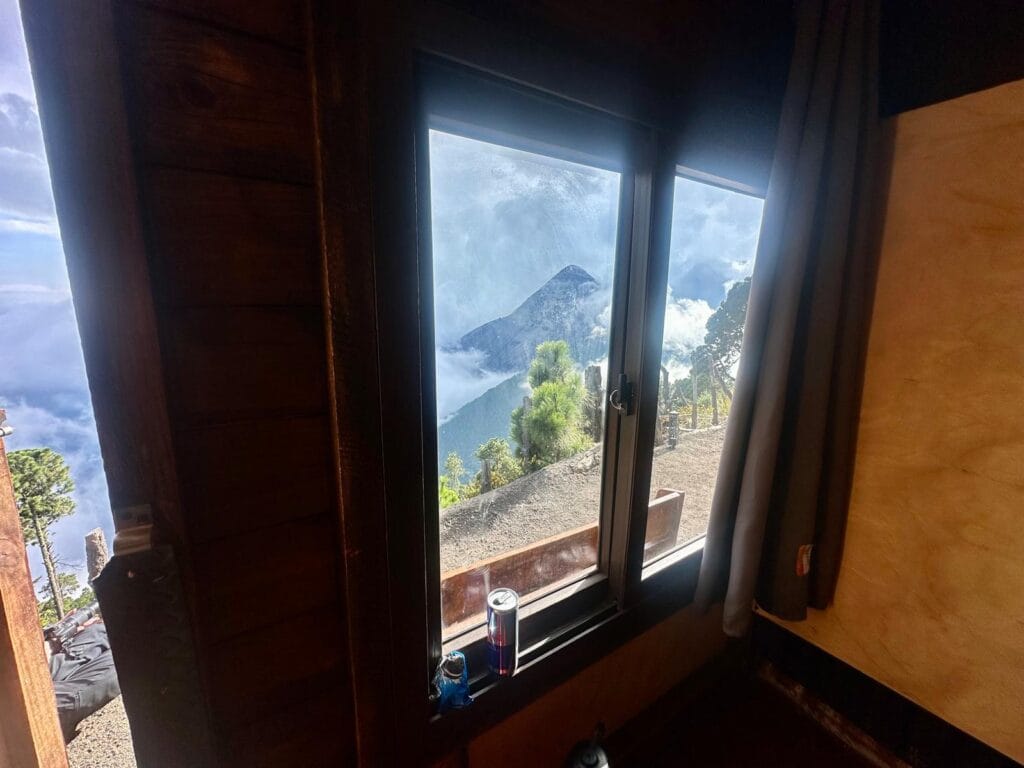
Arriving at base camp felt like crossing into another world. After hours of steady climbing, the trail suddenly leveled out, and the sound of distant rumbles grew louder. You’ll know you’ve made it when you finally step out of the trees and see a sea of colorful tents and cabins scattered along the mountainside, all facing Volcán de Fuego.
Our guides greeted us with warm drinks and helped us find our cabin while we watched the smoky eruptions.The air was thin, cold, and buzzing with excitement.
Optional: Fuego Hike
Some tours offer an optional hike to Fuego’s saddle, where you can get even closer to the action. It’s a tough 4–5 hour round trip, with steep and rocky terrain, but if conditions are good and you’re up for it, the reward is watching lava bursts up close – something you’ll never forget.
We finished the main Acatenango hike in just under 4 hours, so we decided to go for it. It was amazing. This part of the trek was incredibly hard, and honestly, it felt even tougher than Acatenango itself. That’s partly because you do it right after summiting, when your legs are already exhausted.
About one-third of our group chose to do the Fuego hike, while the rest stayed back at base camp. Those who skipped it didn’t regret their choice. They had a great evening around the fire, watching eruptions from a distance with hot drinks in hand.
🔥 Tip: Don’t underestimate how cold it gets up here. Temperatures can drop to 0°C (32°F) or below at night. Bring every warm layer you own — thermals, puffer jacket, gloves, toque, and thick socks. Most people huddle around the campfire with hot cocoa or instant noodles just to stay warm. This goes for both the base camp and the Fuego hike.
By the time we made it back to camp, night had fully set in. We sat under a sky packed with stars, watching lava shoot into the darkness. It’s loud, wild, and absolutely magical. One of those rare moments where you’re reminded just how alive our planet really is.We drifted off to sleep still watching the fiery glow through the window of our cabin.
The Summit Push: A Sunrise You’ll Never Forget
After doing the Fuego hike, we chose to enjoy our cabin and sleep in to the sound of Fuego’s eruptions echoing through the night. But for those who made the sunrise climb, the experience was nothing short of incredible.
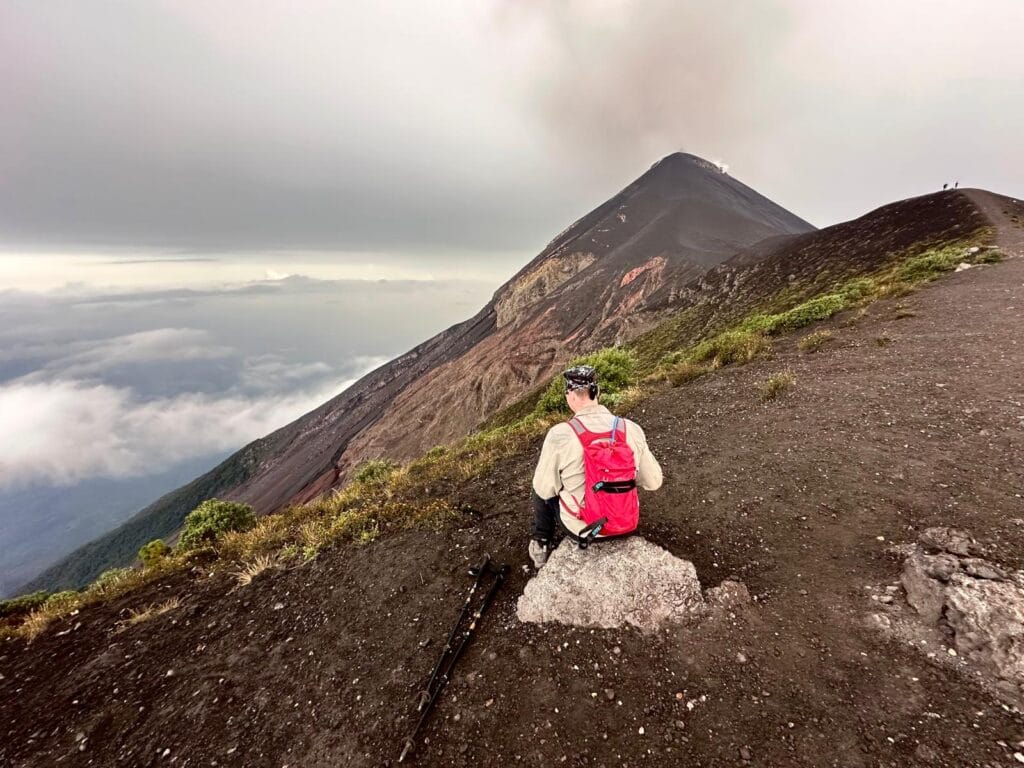
They woke up around 4 a.m. for the final stretch, the Acatenango summit push. The air was freezing, the stars still bright above, and the mountain eerily quiet except for the occasional rumble from Fuego.The climb to the top isn’t long, but it’s brutal. The loose volcanic gravel means every step forward slides half a step back. Between the altitude, cold air, and steep grade, it’s as much a mental challenge as a physical one.
When you finally reach the summit of Acatenango, you’re standing above the clouds, watching the horizon turn gold while Fuego erupts beside you, sending plumes of ash and bursts of fire into the morning sky. If you’re lucky and the skies are clear, you can see Guatemala’s volcanic chain stretching endlessly into the distance – Agua, Fuego, Pacaya, and more all lined up across the landscape.
After the sun rises, hikers begin the descent back to camp for breakfast. The way down is fast but tough on the knees. The loose gravel makes it easy to slip, so trekking poles come in handy here.By the time you reach the bottom, you’ll be dusty, tired, and completely exhilarated. Hiking Acatenango is challenging, humbling, and absolutely unforgettable. It’s the kind of adventure that stays with you long after your boots are cleaned and packed away.
The Reality: How Tough Is It Really?
Hiking Acatenango is no walk in the park. It’s steep, it’s high, and the extra hike to Fuego’s saddle tested me physically and mentally. But it’s also 100% doable with the right mindset. If you are worried about your fitness level, there are options to make it easier – I’ll go through those below.
Altitude
The biggest challenge isn’t just the distance, it’s also the altitude. You’ll start around 2,400 meters (7,800 ft) and climb to nearly 4,000 meters (13,000 ft). That’s a big jump in oxygen levels, and you’ll likely feel it. Your heart will race faster than usual, your legs will burn, and you’ll be catching your breath even on the “easy” parts.
Some hikers take altitude pills to help reduce the effects. Just do your research beforehand to find what works best for you. I didn’t take any since I live at a fairly high elevation already, but I definitely still felt the effects.
The Trail
The trail itself is steady but demanding. It’s comprised of long, dusty switchbacks that seem to never end, followed by slick volcanic gravel that makes you slide back half a step with every stride. Add in a heavy backpack and the cold, thin air, and it becomes a true endurance challenge.
Take your time, pace yourself, and remember that slow and steady really does win here. Most groups take frequent breaks, and the guides are excellent at keeping everyone moving at a manageable pace.
Mentally, expect a few moments where you’ll question why you signed up for this, but that’s part of what makes reaching base camp (or the summit) so rewarding. You’ll push through discomfort, share laughs with your group, and realize just how far your determination can take you.
Other Options
Hiring a Porter
If you’re worried about carrying your pack, you can hire a local porter before starting the trek, and it’s worth every penny. Many travelers say it made the difference between a miserable hike and an enjoyable one.
We booked our tour through Wicho & Charlie’s, and they brought up our big packs and all our water. We only had to carry small daypacks with the essentials. It was a little more expensive than some other companies, but worth it.
4×4 Vehicle
If you’re still nervous about the hike, there are tours that drive you up about 75% of the way. They take you to the Fin Del Camino sign, where you’ll hike the final (and flattest) stretch to base camp. It’s definitely more manageable, but be warned, the price is significantly higher.
🛻Here’s a 4×4 tour on GetYourGuide you can check out.
Overall Thoughts
In the end, it’s not an easy hike, but it’s one of those adventures where the struggle becomes part of the story. You’ll be proud of every step once you’re standing above the clouds, watching Fuego light up the sky.
What to Pack for the Acatenango Hike
Packing properly can make or break your Acatenango experience. Between the steep trail, the cold temperatures, and the overnight stay at base camp, being prepared is everything. Here’s exactly what to bring to make your hike as comfortable as possible.
Clothing & Layers
The weather changes drastically as you climb, from warm farmland to freezing, windy summits. Think layering for every climate:
- Moisture-wicking base layers (top + bottom)
- Insulating mid-layer (fleece or light down jacket)
- Outer shell / rain jacket – essential for wind and sudden rain
- Puffer jacket – temperatures can drop to 0°C (32°F) or below at night
- Hiking pants or leggings (don’t wear jeans)
- Warm hat / toque and gloves
- Extra pair of dry socks (you’ll thank yourself later)
🧥 Pro tip: The temperature can change 15°C (30°F) from the base to the summit. Having layers you can easily add or remove makes a huge difference.
Gear & Essentials
Lots of tours will have options to rent gear, so check before hand if you don’t want to bring all the gear.
- Hiking boots with good traction – the volcanic gravel can be slippery
- Trekking poles – life-savers on the way down. You can rent these for cheap, so I wouldn’t bring your own
- Headlamp or flashlight – for the pre-dawn hike or night bathroom runs
- Backpack (20–30L) – large enough for layers, water, and snacks
- Reusable water bottles or hydration bladder – carry at least 3–4L of water
- Snacks / energy bars – you’ll burn through calories quickly
- Lightweight gloves & buff / face covering – keeps out volcanic dust
- Sunglasses & sunscreen – high UV exposure at altitude
- Cash (quetzales) – for porter tips or snacks at the trailhead
- Portable charger – cold drains batteries fast and there’s no electricity at the top
Overnight & Comfort Items
- Sleepwear: thermal leggings + a dry shirt for night
- Toothbrush, wipes, deodorant – basic hygiene feels amazing after a long hike
- Small towel
- Earplugs: for the wind (and Fuego’s rumbles!)
- Camera or GoPro: this is a bucket-list moment worth capturing
Most tours provide tents, sleeping bags, and meals. Double-check with your company before packing duplicates.
Bonus Tips:
🥾 Rent gear in Antigua. Many hostels and tour companies rent out jackets, hiking poles, and sleeping bags for cheap – perfect if you’re backpacking light.
👕 Keep your clothes dry. Pack everything in waterproof bags or use garbage bags as liners – the cloud forest can soak gear fast.
☕ Bring instant coffee or hot chocolate. Nothing beats a warm drink at base camp while watching Fuego erupt.
If you pack right, you’ll stay warm, comfortable, and ready for whatever Acatenango throws at you. This is one of those hikes where preparation pays off tenfold.
Should You Go With a Guide or Independently?
If you take one piece of advice from this post – go with a guide.
Technically you can hike Acatenango without one, but every year there are reports of tourists getting lost, suffering from altitude sickness, or worse. The trail can be confusing in the fog, temperatures drop below freezing at night, and weather changes in minutes. Sadly, there have been fatalities from people attempting the hike alone or without proper gear. It’s just not worth the risk.
Why Go With a Guide
Safety Comes First
Guides know the trail like the back of their hand. They’ll pace the group properly, watch for signs of altitude sickness, and make sure no one’s left behind. It gives you peace of mind so you can actually enjoy the experience.
They Handle Logistics
A good tour company takes care of everything: transport from Antigua, meals, tents, sleeping bags, permits, and sometimes even the option to rent warm clothes or hiking poles. You’ll show up with your daypack, and they handle the rest.
Local Support Matters
Going with a local company means you’re supporting Guatemalan guides, cooks, and porters – the people who make this incredible experience possible.
Shared Experience
The hike is tough, and having a supportive group to laugh, struggle, and celebrate with makes it so much more rewarding. You’ll likely end the hike with new friends and unforgettable memories.
My Experience
We booked our tour through Wicho & Charlie’s, one of the most reputable companies in Antigua. They provided our gear, meals, and even transported our big packs up to base camp. The guides were fun, professional, and genuinely cared about everyone’s safety.
There are a few other good operators in Antigua too, but whichever you choose, make sure they’re licensed and experienced. Don’t just go with the cheapest option. You want a company that puts safety and sustainability first.
If you want to research options, here are a few to start with:
Weather & Best Time to Hike Acatenango
One thing that surprised me most about Acatenango is how cold it gets, especially since you start your hike in warm, tropical Antigua. By the time you reach base camp, temperatures can drop close to 0°C (32°F), and the wind can make it feel even colder.
The weather on the volcano changes constantly. You can start in sunshine, hike through misty cloud forest, and end your night above the clouds watching Fuego erupt under a clear, starry sky. But it’s equally possible to end up in fog or rain, so it’s best to be prepared for anything.
Dry Season (November–April) – Best Time to Hike
This is the best time of year to hike Acatenango, with clear skies, less rain, and higher chances of seeing Fuego erupt. Days are sunny, but nights are freezing – especially from December to February.
It’s also the most popular time, so book tours a few days ahead, especially on weekends and holidays.
Pros: Best visibility, drier trails, starry nights
Cons: Crowded base camps, colder nights
Rainy Season (May–October) – Still Possible, but Tougher
During the rainy season, the trail can get muddy and slippery, and afternoon storms are common. That said, hiking during this time has its perks: fewer crowds, lush green scenery, and sometimes dramatic views when the clouds break.
If you go during rainy season, just make sure you have waterproof layers, extra dry clothes, and realistic expectations about visibility.
Pros: Fewer hikers, greener scenery
Cons: Muddy trails, cloudy or limited views
My Experience
We hiked Acatenango in November, and we were lucky with clear skies at night – the perfect view of Fuego’s eruptions. Even then, the wind was cold and the temperature dropped fast after sunset. Layers and a good jacket were absolute lifesavers.
You can hike Acatenango year-round, but the dry season offers the best chance of clear views and unforgettable sunrises. Just pack for every season! On this volcano, you’ll probably experience them all in one day.
Final Thoughts on Hiking Acatenango
Hiking Acatenango was challenging, but was unforgettable .
It’s not just another hike; it’s an adventure that challenges you, humbles you, and completely takes your breath away (literally and figuratively). You’ll climb through farmland, cloud forest, and volcanic rock, push past moments of doubt, and then stand above the clouds watching another volcano erupt beside you. There’s nothing else like it.
If you’re wondering whether hiking Acatenango is worth it, the answer is absolutely, without question, yes. It’s raw, wild, and awe-inspiring in every sense.
So book the hike, pack your warmest jacket, and get ready for one of the most extraordinary sunrises you’ll ever see. You won’t regret it.
✨ Planning a trip to Guatemala? Check out my full 12-day Itinerary or just the Highlights: Best Attractions, Adventures & Hidden Gems for everything you need to get started planning your trip!