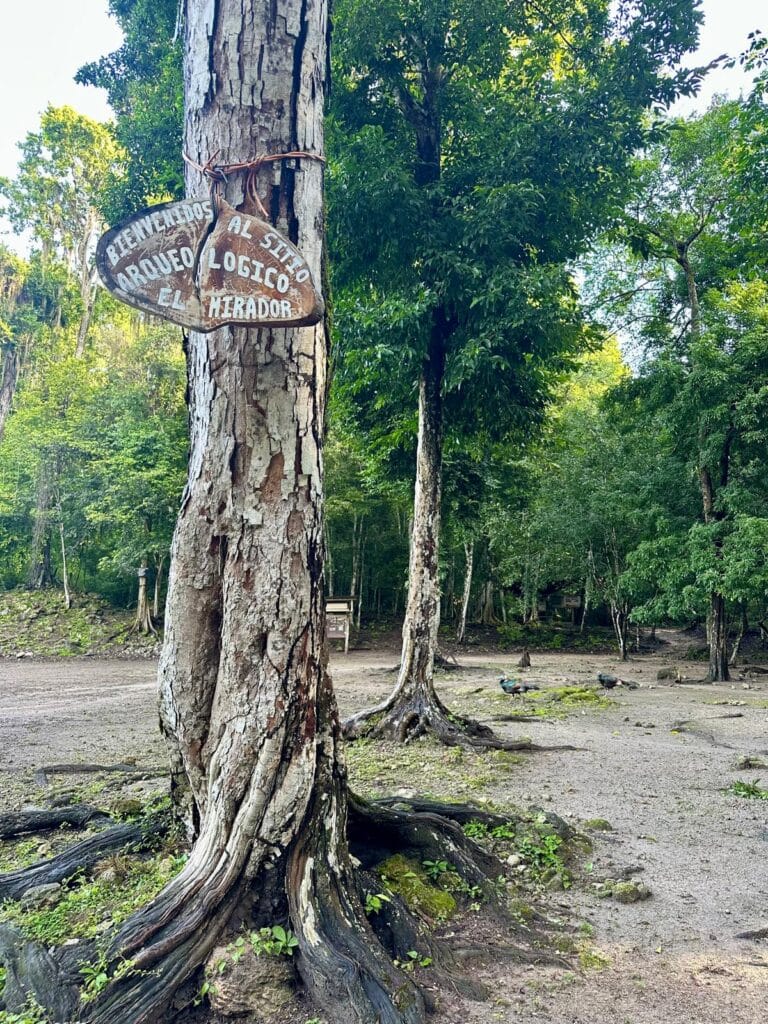
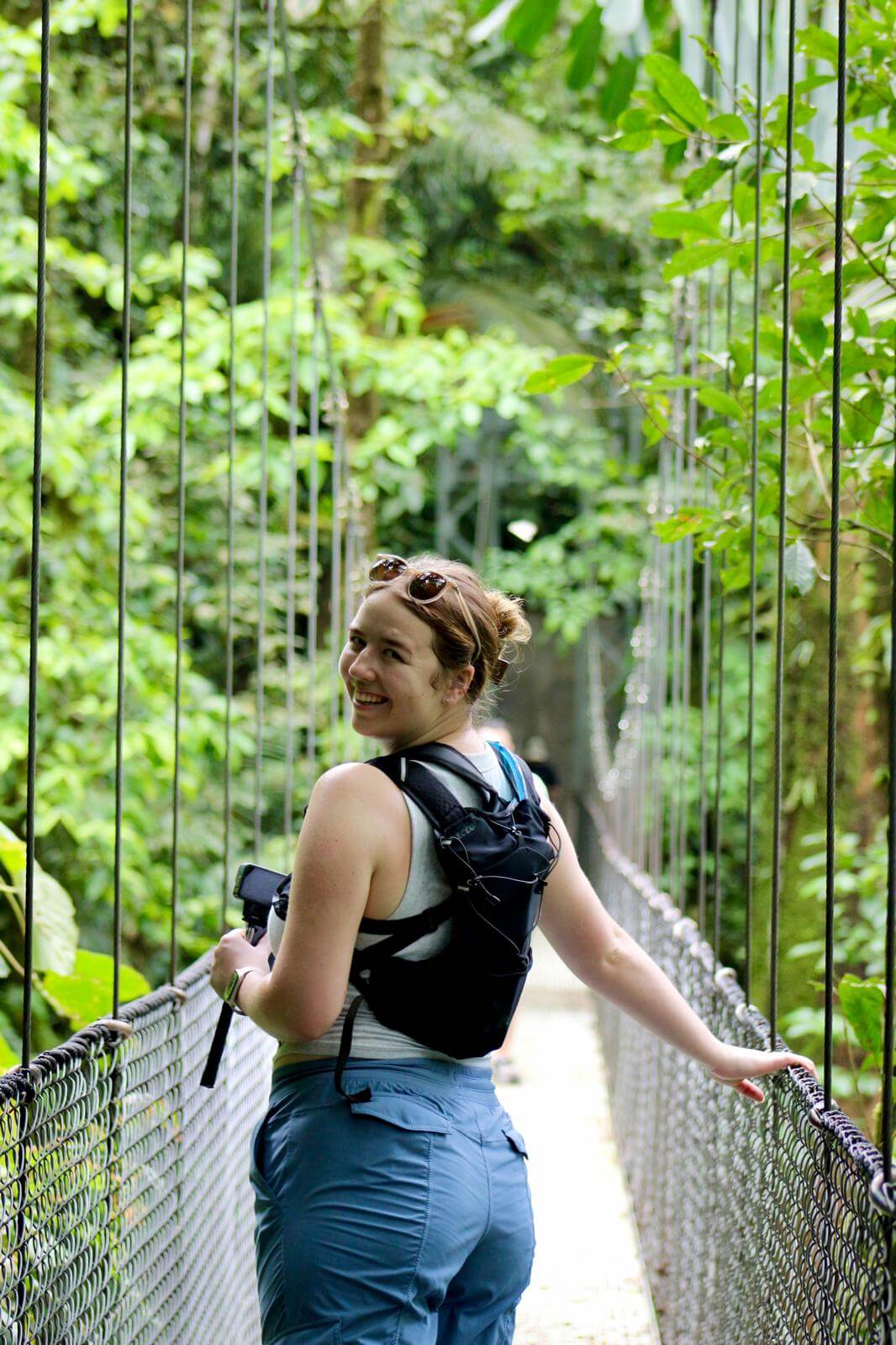
Hidden deep in the Petén jungle of northern Guatemala lies El Mirador, one of the most remote and awe-inspiring archaeological sites in Central America. It’s an ancient Mayan city so isolated that there are no modern roads leading to it. Only a rugged trail cutting through dense rainforest.
Getting there means committing to a multi-day trek through the jungle (or taking a helicopter in and out). Over several days, I walked along ancient Mayan causeways once used to connect entire cities, camped beneath the jungle canopy, and watched the sunrise over massive pyramids – that predate even Tikal. It’s raw, challenging, and completely unforgettable.
If you’ve ever wondered what it’s like to trek to one of the most isolated ruins in the world, this post breaks down my full experience: what the hike is really like, how to prepare, and why it’s one of the most rewarding adventures you can do in Guatemala. Trekking to El Mirador is the ultimate adventure for anyone looking to experience the country beyond the usual tourist trail.
✨If you’re booking a trip to Guatemala, check out my full guide on how to spend 12 days in Guatemala, or for a quick read check out my must-see highlights!
- A Brief History of El Mirador
- How to Get to El Mirador
- Choosing a Tour
- Day 1: Flores to El Tintal Camp
- Day 2: El Tintal to El Mirador
- Day 3: Exploring the Magnificent 'El Mirador'
- Day 4: Sunrise at El Mirador and Flying Out of the Jungle
- Tips for Hiking El Mirador
- What to Pack for the El Mirador Trek
- Final Thoughts
A Brief History of El Mirador
Before diving into the trek itself, it’s worth knowing a bit about what makes El Mirador so special. Once a thriving metropolis during the Preclassic period of the Maya civilization (around 600 BCE to 150 CE), El Mirador was one of the earliest and largest cities in the Mayan world. At its peak, it’s believed to have housed tens of thousands of people and served as a major political and cultural center.
The city is home to La Danta, one of the largest pyramids in the world by volume – even bigger than Egypt’s Great Pyramid of Giza. From its summit, you can see nothing but endless rainforest stretching to the horizon.
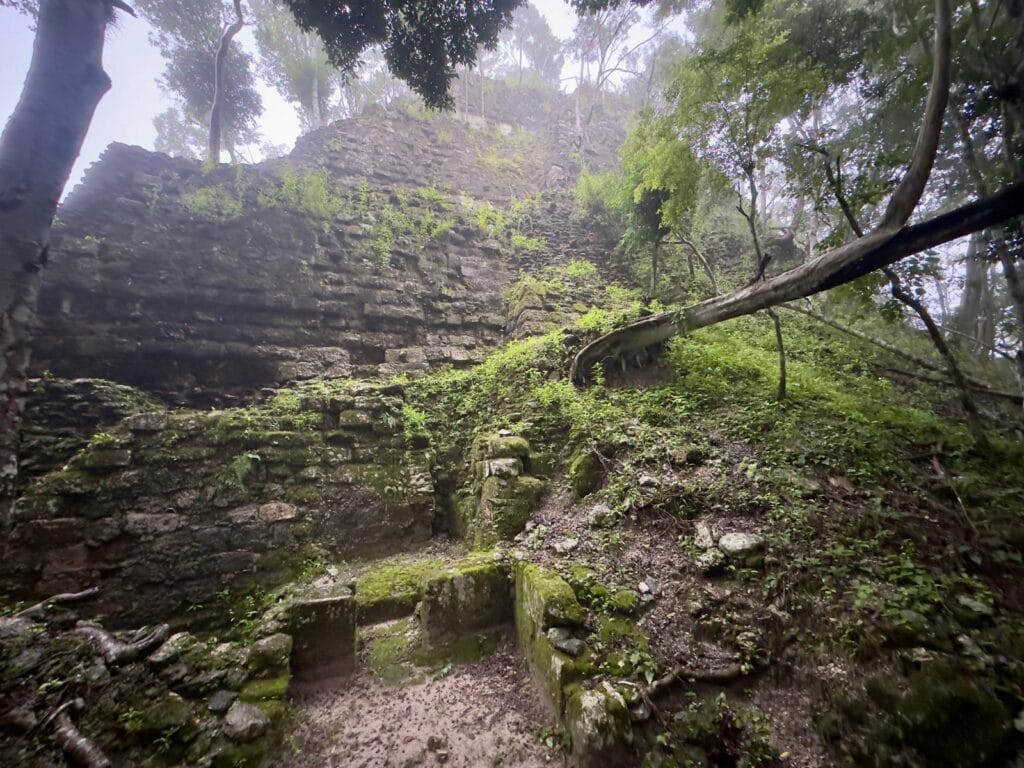
Today, El Mirador remains one of Guatemala’s most remote archaeological sites. Excavations continue under challenging conditions, as access is limited to hikers, mules, and helicopters. Its isolation is part of its magic. It feels untouched, wild, and suspended in time.
Quick Facts About El Mirador
- 📍 Location: Petén region, northern Guatemala
- 🕰️ Period: Preclassic Maya (600 BCE – 150 CE)
- ⛰️ Elevation: ~230 meters above sea level
- 🏛️ Highlight: La Danta pyramid – one of the largest in the world by volume
- 🚶 Access: 5–6 day round-trip trek (or by helicopter) from the town of Carmelita
- 🌿 Fun Fact: La Danta’s base platform is massive, measuring around 260 meters x 307 meters – covering an area of about 45 acres
A Few Things to Know Before You Go
- There are no roads to El Mirador – trekking or flying are your only options.
- The trail can be muddy, hot, and buggy, especially during the rainy season (May–October).
- The terrain to El Mirador is mostly flat, with slight elevation gains of 10 to 30 meters
- Dry season (November–April) offers the best conditions for hiking.
How to Get to El Mirador
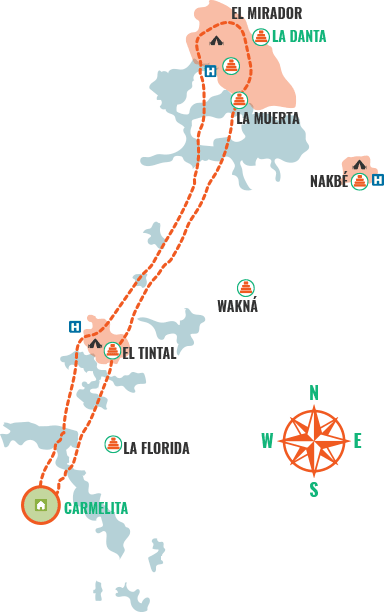
Reaching El Mirador is an adventure in itself. The journey starts in Flores, the main travel hub for northern Guatemala and the gateway to Tikal. From there, the small jungle community of Carmelita serves as the official trailhead for the trek.
There are three main ways to visit El Mirador:
1. Trekking
Most travelers hike in with a guided expedition, which typically takes five to six days round trip. The journey is about 40–50 kilometers each way through dense jungle. You’ll need a guide, as the trail isn’t marked and passes through private and protected land. Tours include mules for carrying gear, meals, camping equipment, and park fees. During our trek we saw multiple park officers guarding the area – so ensure you have a guide!
You can arrange a tour from Flores (the easiest option) or directly in Carmelita, where community-run cooperatives organize treks with local guides. Prices vary depending on group size and tour company, but expect to pay between $350–$450 USD per person for a full package.
2. Helicopter
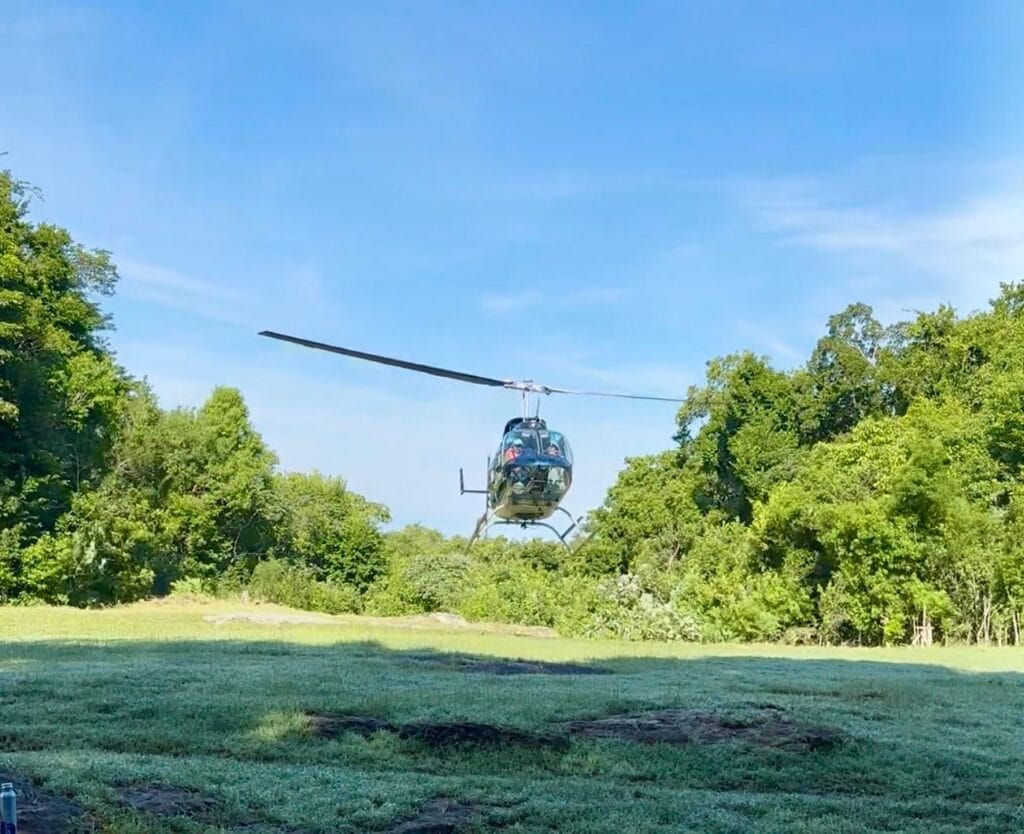
If you’re short on time or not up for a multi-day hike, helicopter tours from Flores are also available. These typically include a short guided tour of the ruins and last half a day. While you’ll miss the sense of adventure that comes with the trek, it’s still an incredible way to witness El Mirador’s scale from above.
3. Trek One Way & Helicopter the Other
This is what we chose to do, as we were short on time but still wanted to experience the trek while seeing El Mirador from above! It was a little pricier than trekking both ways, but it saved us days of hiking the same trail back – and the aerial views were absolutely worth it. This option usually takes three to four days total, giving you more time to explore the ruins while still getting a taste of the full jungle experience.
Choosing a Tour
When it comes to planning your trek, all tours have to go through the Carmelita community cooperative, so its’ really more about what additions you want to add. For example, adding an English-speaking guide was very important to us as our Spanish is not perfect. We really wanted to understand the history of El Mirador.
Main Tour Operators
- Lokal Travel
– They also offer several customization options like English-speaking guides, vegetarian meals, and the choice to helicopter in or out. - Cooperative Carmelita
– Book directly through the group
These were the main two companies I found when researching online; however, once you’re in Flores, you’ll see plenty of tour offices offering this trek as well.
How to Choose a Tour Operator
When comparing tours, keeping these factors in mind may help:
- Duration & Difficulty: Some treks are 5 days, some 6, and the one-way hike & helicopter option is shorter. Pick a timeline that fits your comfort level and fitness, especially considering the remote jungle conditions.
- What’s Included: Campsites, gear, meals, guides, mules, and park fees are typically bundled. Always confirm exactly what’s covered before booking.
- Group Size / Guide Quality: Smaller groups make for a more personal experience. Our group had 10 people, which felt perfect. If you want bilingual guides (English + Spanish), check ahead.
- Cost / Value: More remote experiences usually mean higher costs. Helicopter options increase the price, but if you’re short on time, it might be worth it.
- Logistics from Your Base: Consider how you’ll get from your hotel (likely in Flores) to the trailhead, and how your gear and supplies will be carried once on the trail.
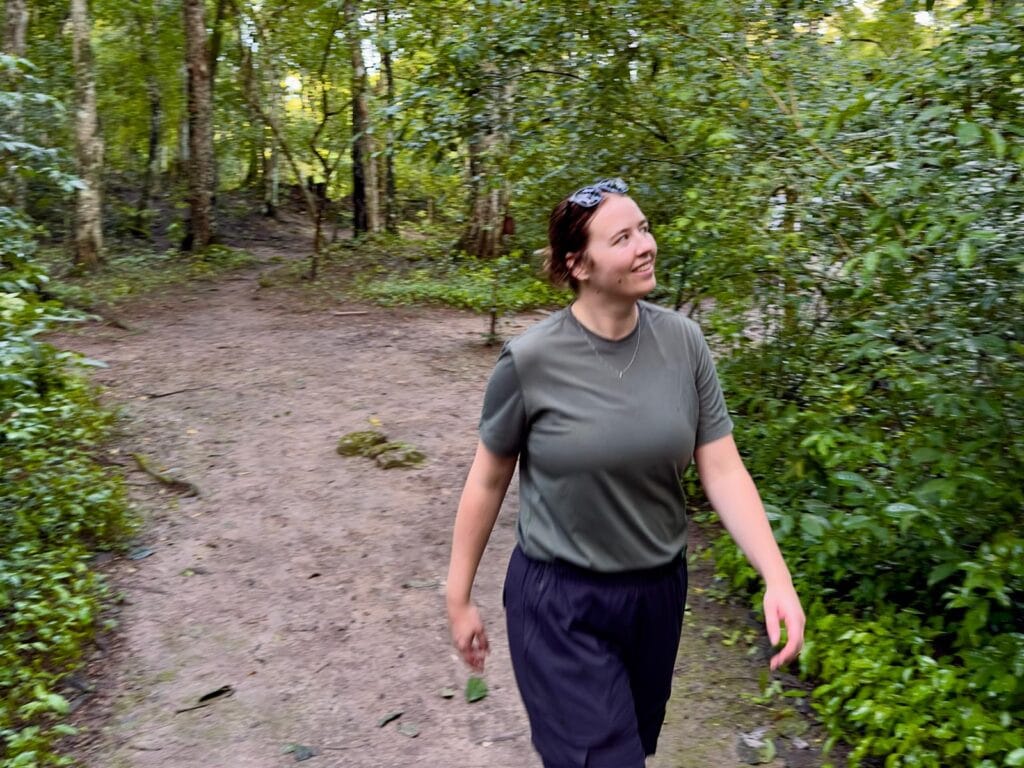
Without further ado, here is what each day of the trek looked like.
Day 1: Flores to El Tintal Camp
Getting from Flores to Carmelita
The adventure started early – 5 AM sharp. Our English-speaking guide, booked through Lokal Travel, met us at our hotel in Flores and walked us to the tour office where we met the rest of our group and packed up for the journey ahead.
We each carried a small daypack with essentials like water, snacks, and bug spray, while horses and donkeys came along to carry the heavier bags with our food, clothes and camping gear. This setup made the long days on foot much more manageable.
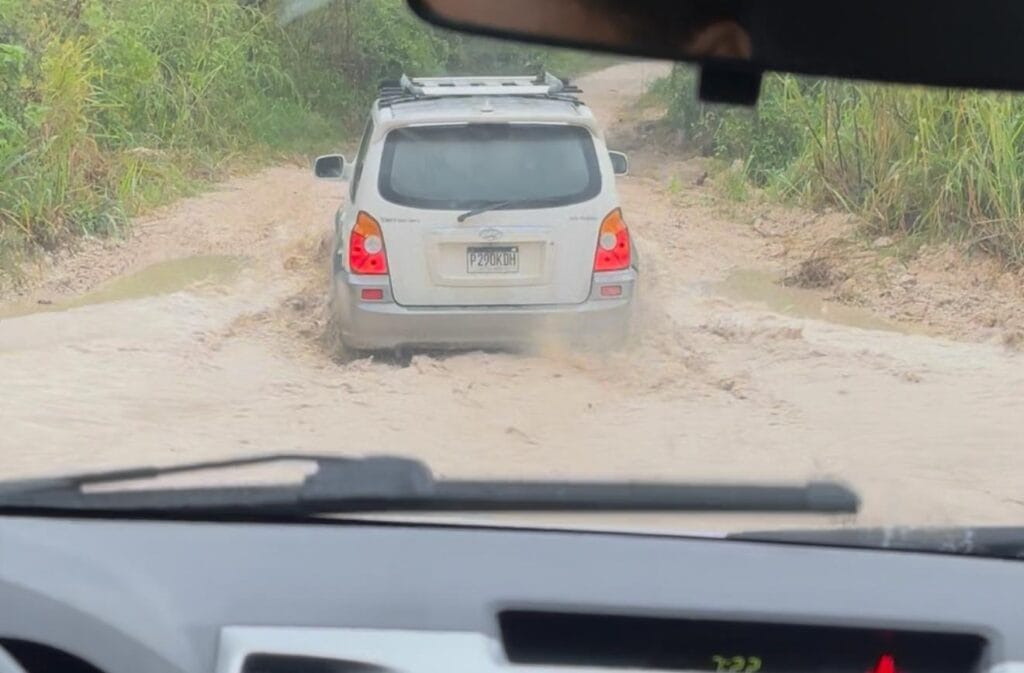
Once everyone was ready, we loaded into a couple of 4×4 trucks and started the drive to Carmelita – the small jungle community that marks the trailhead to El Mirador. The ride usually takes about 3–4 hours, but our timing wasn’t ideal. We trekked in mid-November, which normally should be a dry trek, but there was a hurricane passing through nearby. As such, the roads were rough, muddy, and flooded in places. It was a wild, bumpy ride that set the tone for the days ahead.
Carmelita
By the time we arrived in Carmelita, the rain had eased, and breakfast was waiting for us. A hearty traditional Guatemalan meal served at a small local home. After eating, we organized our gear, met the local guides and cooks who would be joining us, and began the trek around 10 AM.
The goal for the day: reach El Tintal Camp, roughly 17.5 km away. The trail was slick and swampy from the storm, but spirits were high as we set off into the jungle.
Florida Camp
Within the first hour, our boots were soaked and the humidity was thick. Every step squelched through deep mud, but the jungle around us was alive with the sound of howler monkeys and cicadas.
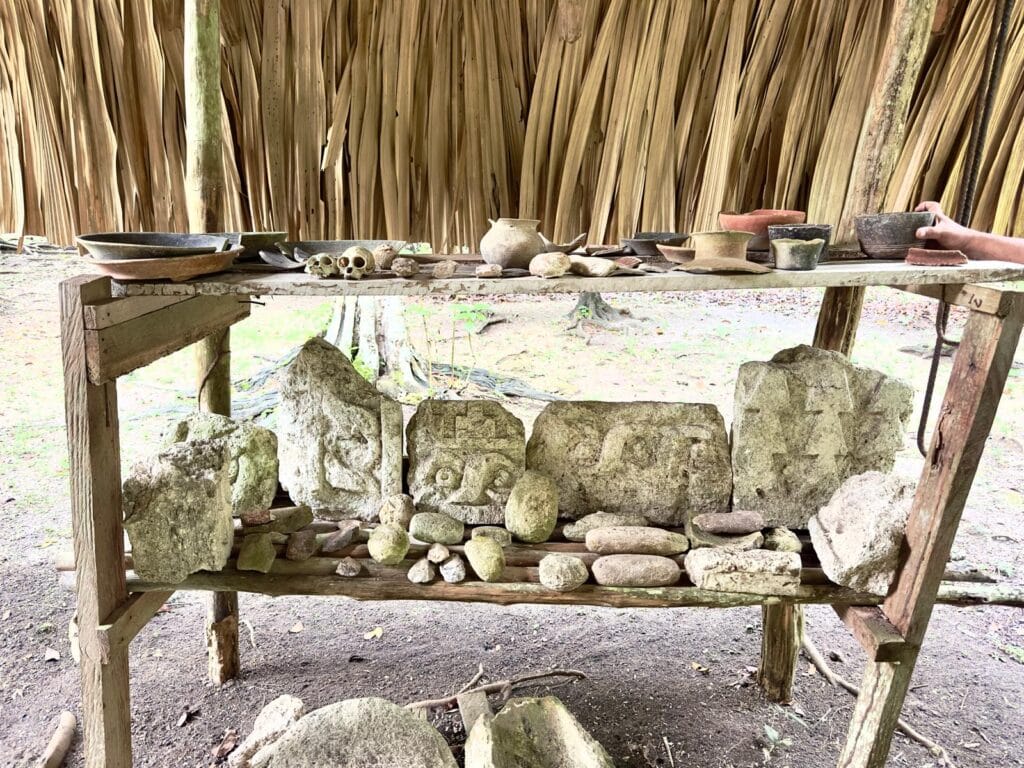
We reached Florida Camp around 1 PM and stopped for a quick packed lunch – simple sandwiches and apple juice that tasted amazing after hours of hiking. There’s a small open-air museum here displaying pottery fragments and artifacts uncovered nearby. It was actually really cool to see knowing so few people ever reach this place.
After a short rest, we laced up again for the final stretch — about 8 km to El Tintal.
El Tintal Camp
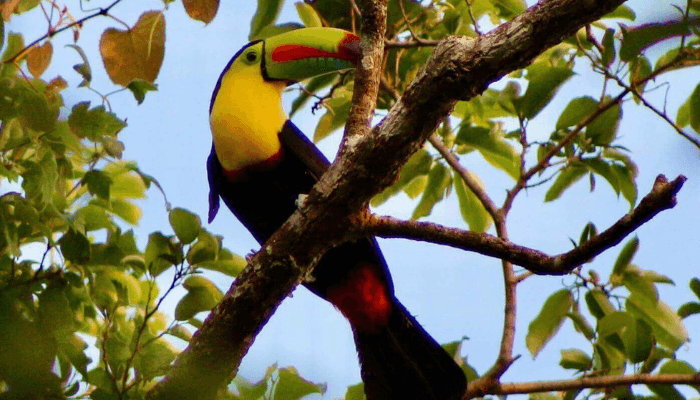
The trail was alive with movement, from lines of leafcutter ants marching across the path to toucans calling above us. Even when we couldn’t see much through the thick vegetation, the jungle never felt empty – every sound hinted at life moving just out of sight.
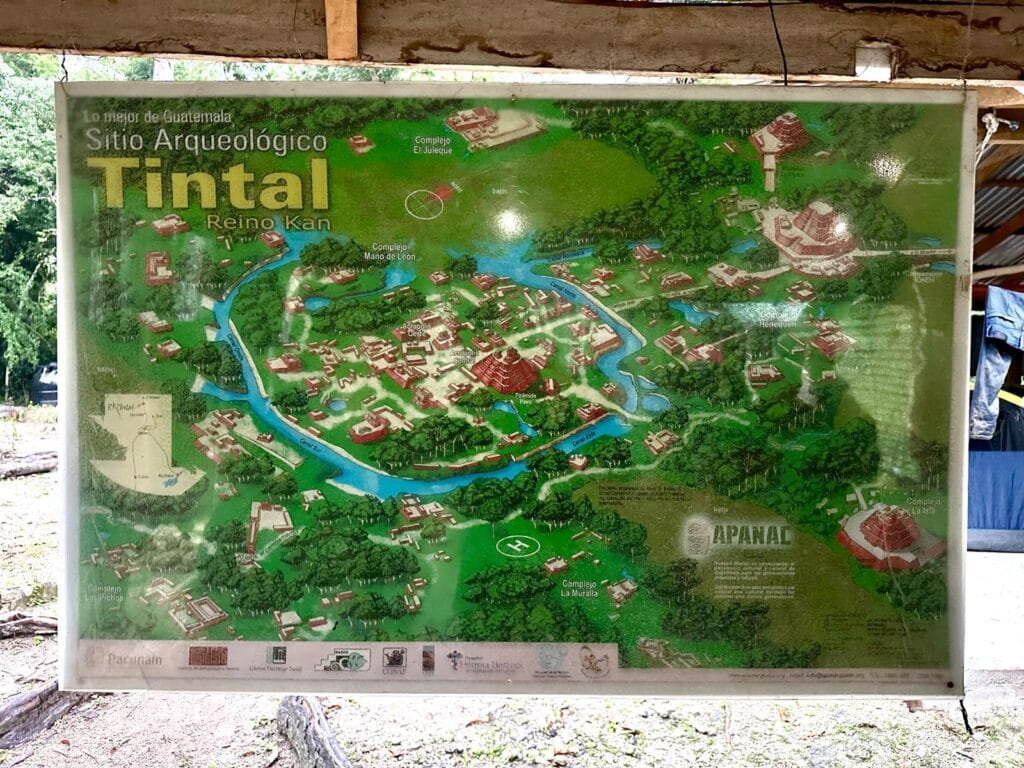
El Tintal was once a thriving Mayan city, home to more than 850 structures, including several triadic pyramids, an acropolis, and even a ball court. The inhabitants engineered an intricate hydraulic system of canals and reservoirs to manage water between the residential areas, temples, and crops. This was a remarkable feat designed to prevent flooding during the rainy season, and also acted as a useful defensce mechanisim – limiting access to the city center.
We arrived at El Tintal just after dark, around 6 PM, muddy, tired, and ready for food. Dinner was freshly cooked by the camp staff and felt like a feast after a full day on the trail.
Camp Conditions: El Tintal
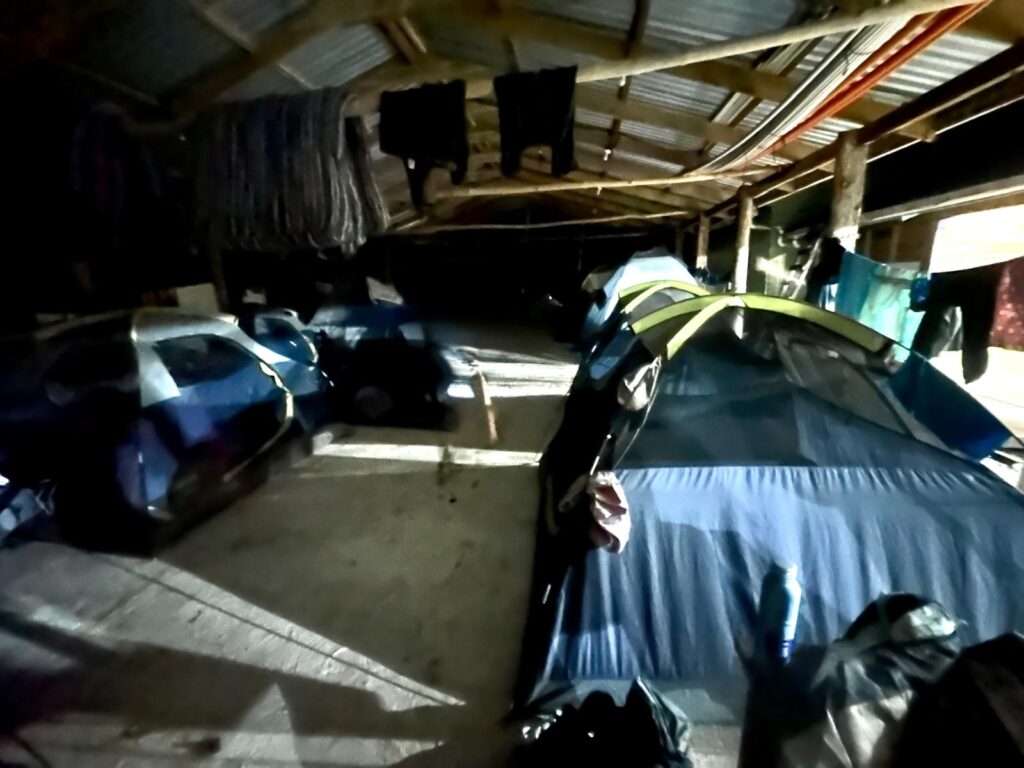
This camp was the only one on the trek with running water, so showers were a luxury, even if they were cold! The setup was simple but comfortable: tents arranged under a large, tin-roofed shelter that kept us dry from the constant drizzle.
Be aware, this isn’t a glamorous trip. we slept on thin mats in small tents, using our jackets as makeshift pillows – but after 17.5 km through the jungle, it felt perfect. We fell asleep to the sounds of the rainforest and the steady patter of rain on the roof.
💡 Pro tip: Bring lightweight rain gear, quick-dry socks and a second pair of shoes – these make evenings at camp far more comfortable.
After a long first day, we drifted off to sleep to the hum of the jungle – ready to wake up and do it all again.
Day 2: El Tintal to El Mirador
We woke up at 5 AM, still wrapped in the sound of rain on the tin roof. Today was the big one – 23.5 km through the jungle to finally reach El Mirador, the lost Mayan city we’d been dreaming about since Flores.
The rain hadn’t let up all night, and everything we owned was still damp. Pulling on wet boots and cold clothes in the dark was pure mental warfare, but the thought of standing among the ruins at sunset was all the motivation we needed.
El Tintal Main Pyramid
By 6:30 AM, we began the day with a climb up one of El Tintal’s main pyramids. It was our first chance to see the jungle from above. A sea of green stretching endlessly into the mist. From up there, we realized it wasn’t actually raining anymore. The rain we’d been feeling and hearing was just thousands of raindrops dripping from the canopy.
The Long Journey to El Mirador
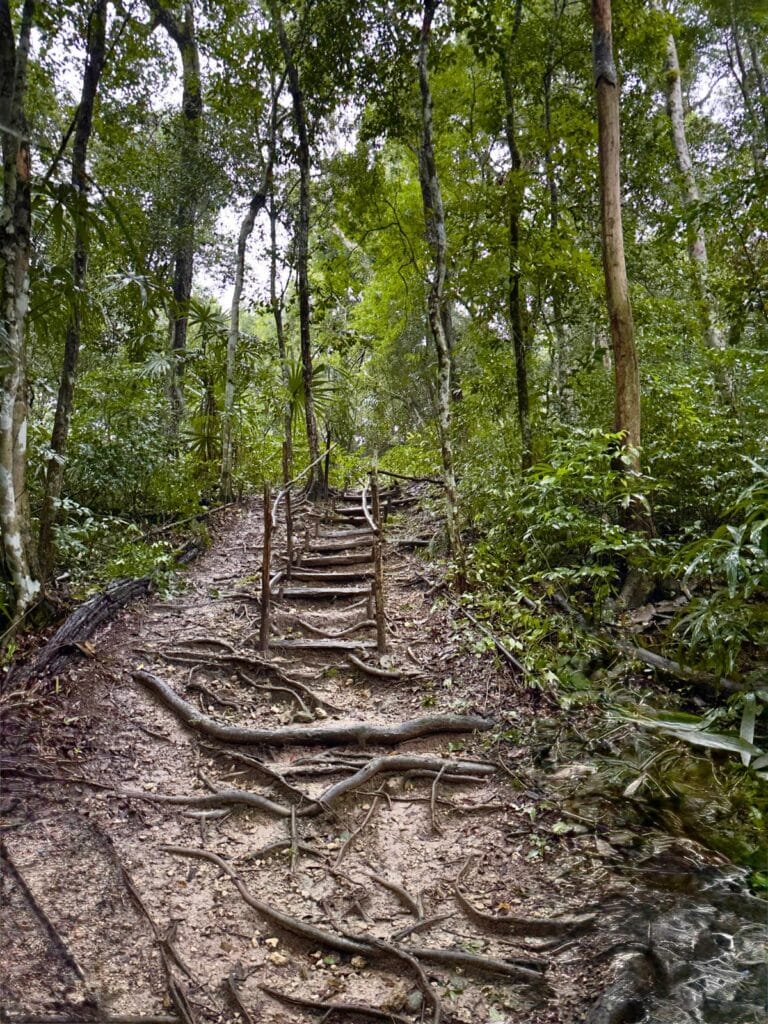
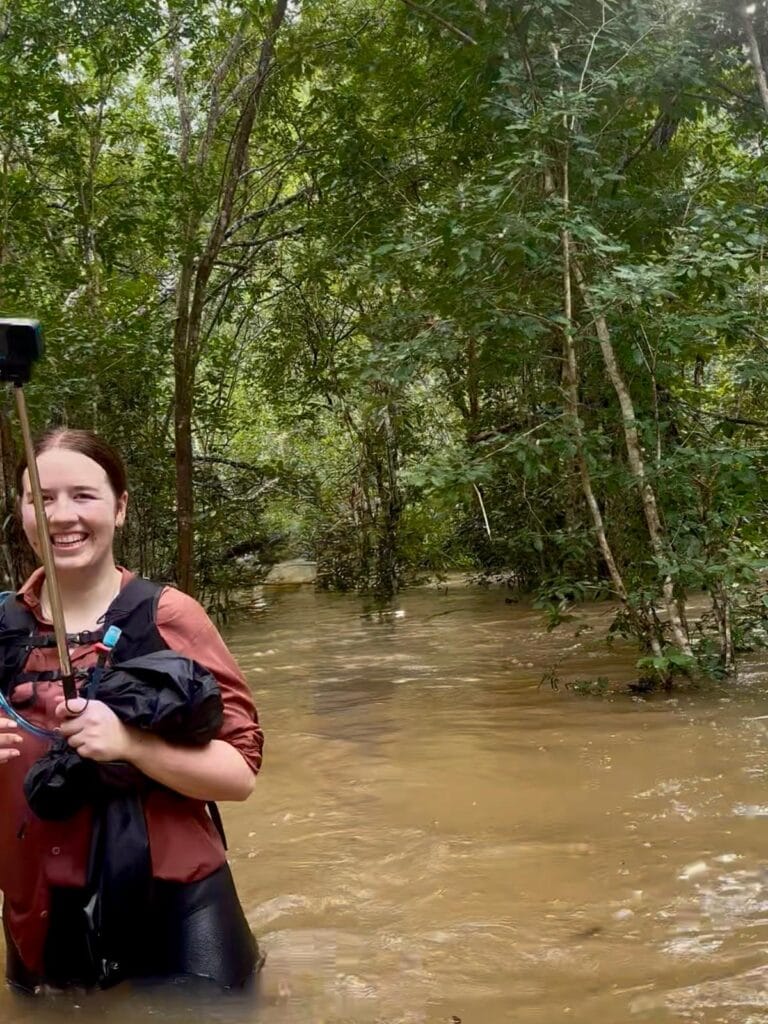
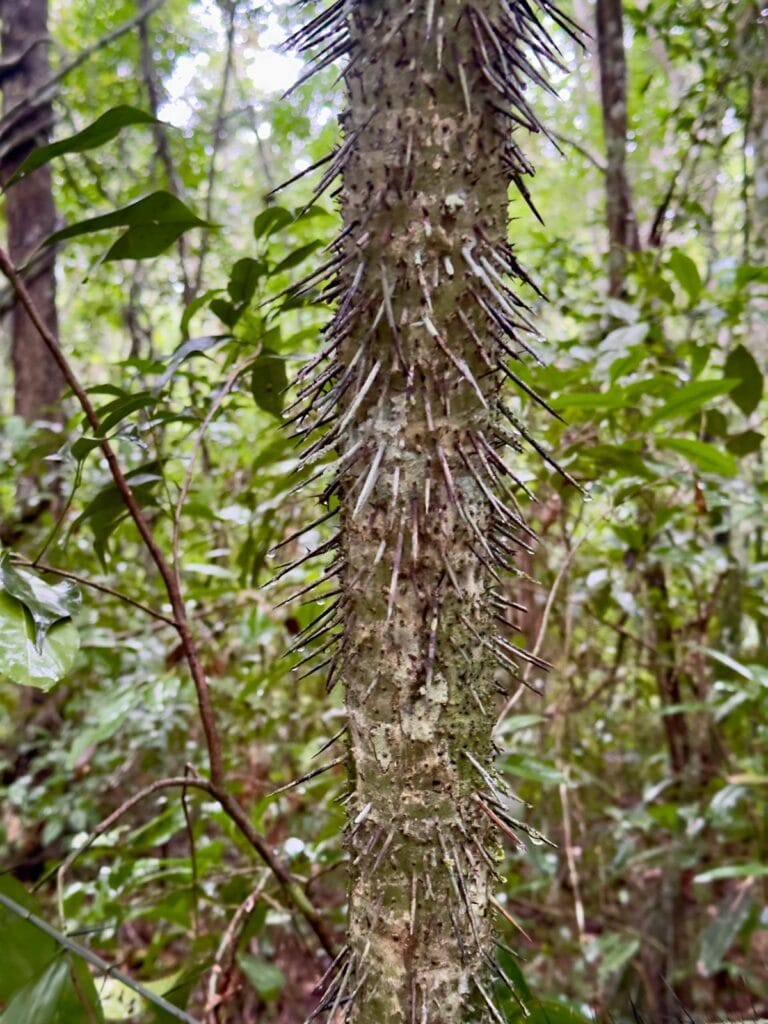
We descended, grabbed our packs, and began the long push north. Within minutes, we were back in the thick of it. Slick mud underfoot, vines catching at our boots, and massive trees lined with sharp spikes reaching out from the trail’s edge. It was a good reminder to watch every step and be careful about what you grabbed for balance. About half an hour in, the trail disappeared due to the water. The storm had carved new rivers through the forest, and our guides led us carefully off-trail through waist-deep crossings.
This is exactly why having experienced local guides is non-negotiable. They knew every bend in the jungle, every flooded section, every hidden path that would’ve been impossible to find on our own.
El Jabali Camp
We reached El Jabali Camp around midday and collapsed into our packed lunches – sandwiches, juice, and fruit that never tasted better. I wrung out my socks and changed into dry ones, though they didn’t stay that way for long.
Here’s where the trek starts to feel magical. Much of the route between El Tintal and El Mirador follows ancient Mayan causeways called sacbeob – raised limestone roads that once connected entire cities. Walking on them, surrounded by vines and centuries-old ceiba trees, you can almost imagine traders and priests traveling the same path thousands of years ago. Here, archaeologists once found skeletons with obsidian arrow points lodged in their rib cages high up on the pyramid, from battles that would’ve taken place over 2,000 years ago.
La Muerta Archaeological Site
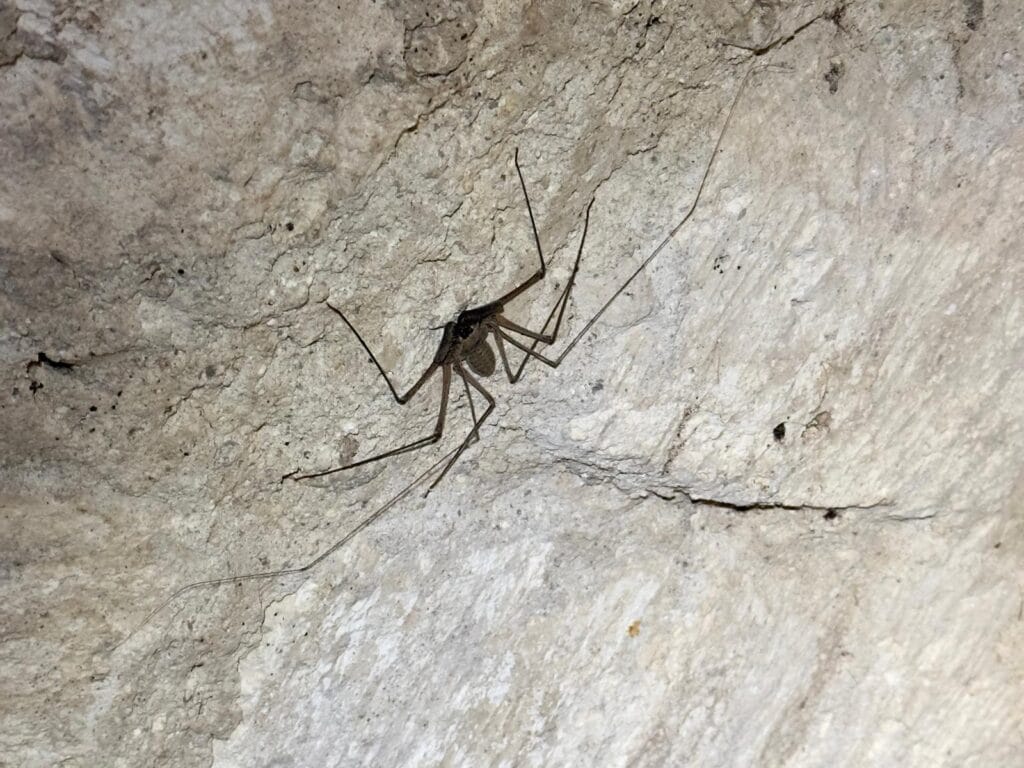
By 3 PM, we reached La Muerta, the first real sign that we were approaching El Mirador. The site is partially excavated, with overgrown temples and faint outlines of ancient structures still peeking through the roots. We spent about an hour exploring – climbing a few crumbling stairways and even ducking inside one of the excavated chambers. It was dark, humid, and silent, until we spotted three massive cave spiders on the wall that sent everyone scrambling back out.
El Mirador Camp
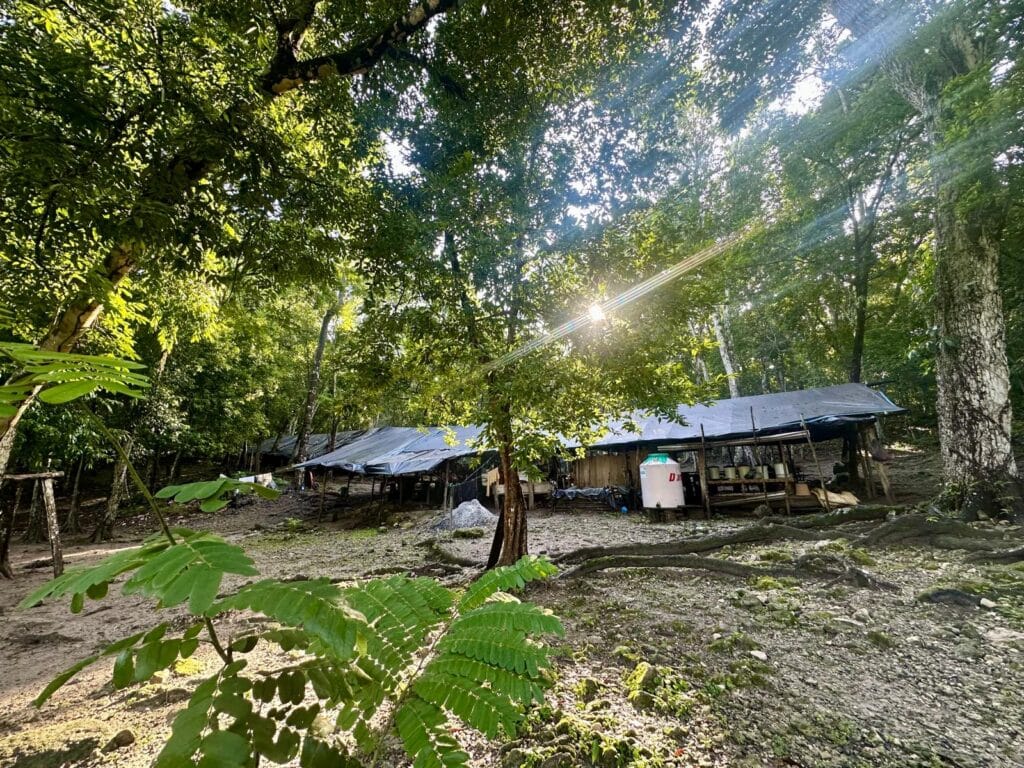
About an hour later, as the light began to fade, we finally reached El Mirador Camp. The moment we saw the clearing and the camp’s tin roofs through the trees, the exhaustion disappeared – replaced by pure relief and excitement. We’d made it.
Camp Conditions at El Mirador
Dinner that night of spaghetti and meatballs tasted better than any meal I can remember. Afterward, we took quick bucket showers with collected rainwater. Cold, refreshing, and somehow perfect. The camp was larger than El Tintal, with several covered areas for tents and a few open hammocks for the adventurous.
Lying in my tent that night, listening to the hum of insects and the distant growl of howler monkeys, it hit me: we were deep in the heart of the Maya jungle, just a short walk from one of the greatest archaeological sites in the world.
Day 3: Exploring the Magnificent ‘El Mirador’
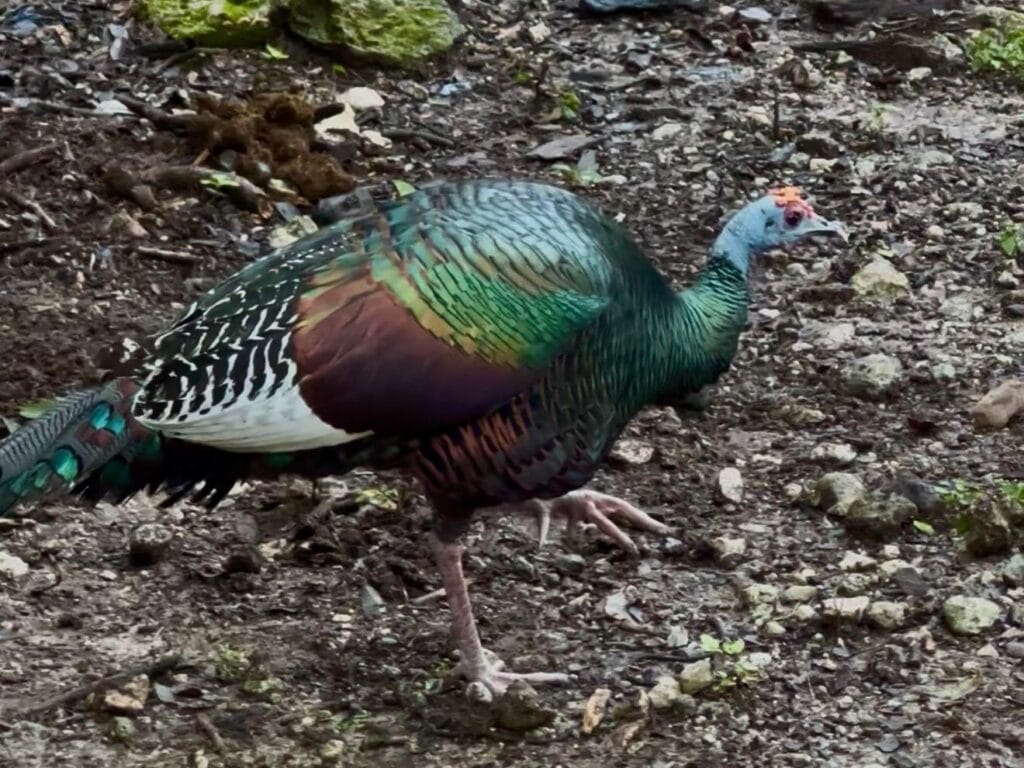
The third day was the highlight of the trek: exploring the vast, ancient remains of El Mirador. We toured active excavation sites where archaeologists are still uncovering intricate carvings, and stood beside weathered stones believed to have been used in ancient ceremonial rituals. Beyond its archaeological importance, El Mirador is also a thriving ecosystem. It’s home to more than 200 species of wildlife, including jaguars, tapirs, and the striking ocellated turkey, which we saw strutting through the jungle almost everywhere we went.
Sunrise Hike to La Danta
3 AM came far too soon, but we knew the sunrise hike would be worth every bleary-eyed step. Our English-speaking guide arranged a private sunrise tour and met us quietly outside our tent, flashlight in hand. We set off through the darkness toward La Danta, the tallest pyramid in El Mirador, and one of the largest structures ever built by the Maya.
The walk to La Danta was about 2 km, and even in the dark it felt magical. The jungle was alive with sound. The deep roars of howler monkeys echoing in the distance and the chorus of frogs and insects that never seemed to stop. Every few minutes, our headlamps caught the glinting eyes of spiders scattered along the trail, tiny sparks against the forest floor. It was incredibly eerie.
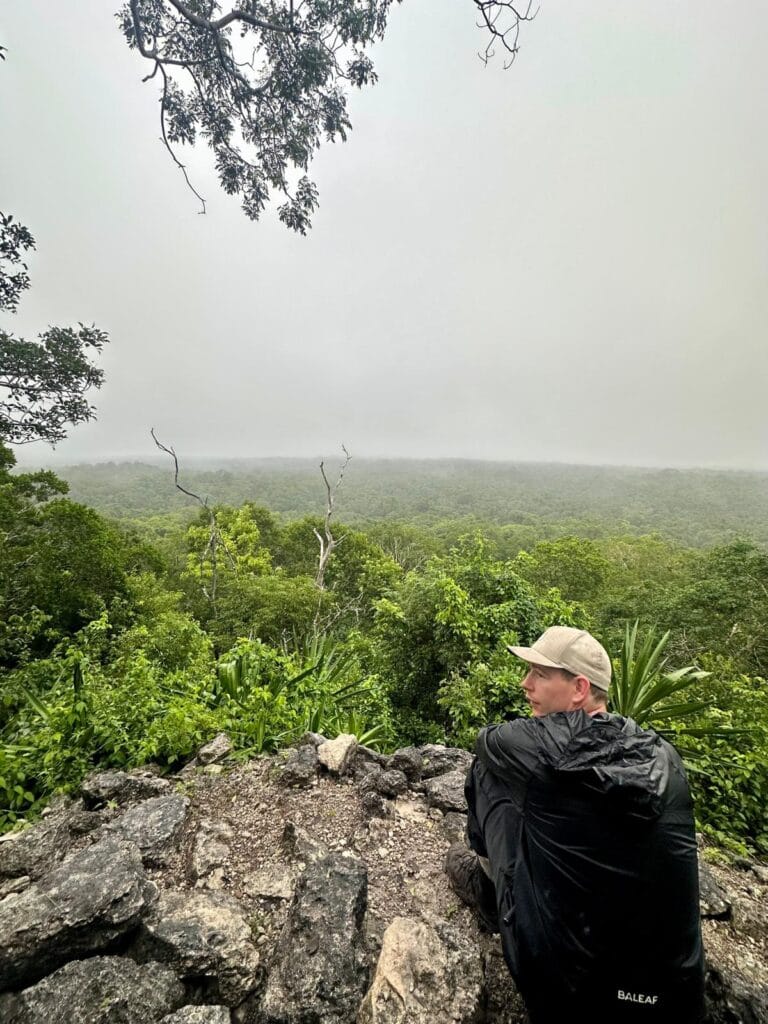
When we finally reached the base of La Danta, the air was thick with mist. We started the climb, nearly 300 vertical feet, up a series of steep, ancient stone steps. The final stretch opened onto a wide platform overlooking the endless green canopy of the Petén jungle.
As the first light broke through the clouds, the forest slowly came alive. Layers of mist began to rise, birds called from treetops, and golden light revealed the silhouettes of other pyramids poking above the jungle. It was surreal – knowing we were standing atop a structure built over 2,000 years ago, watching the same sunrise the ancient Maya once witnessed.
We sat there in silence for a while, just soaking it in. The effort, the mud, the long days of hiking – it all felt worth it.
Exploring El Mirador’s Ancient Ruins
After breakfast back at camp, we spent the rest of the morning exploring the different complexes within El Mirador, each one revealing more about the scale and sophistication of this ancient city.
La Danta Complex
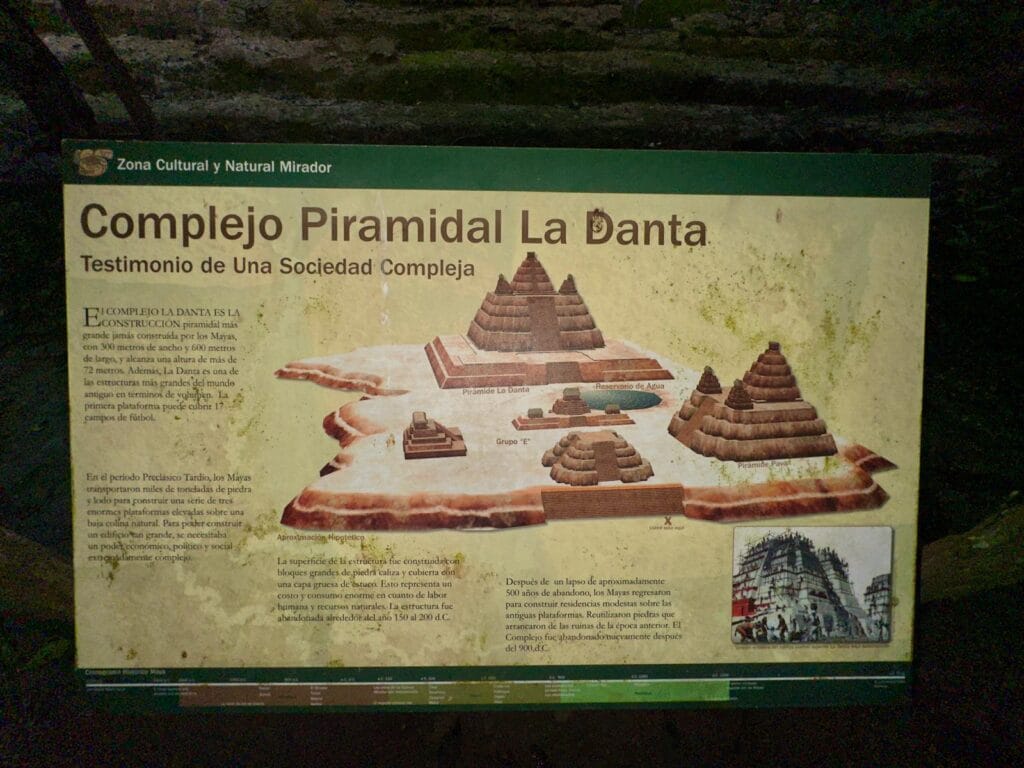
La Danta isn’t just the main pyramid, it’s actually part of a massive triadic complex consisting of three main platforms stacked on top of each other, connected by stairways and plazas. In total, it’s estimated to contain 2.8 million cubic meters of stone, making it one of the largest pyramids in the world by volume. Standing on top feels like being at the roof of the jungle.
The Central Acropolis
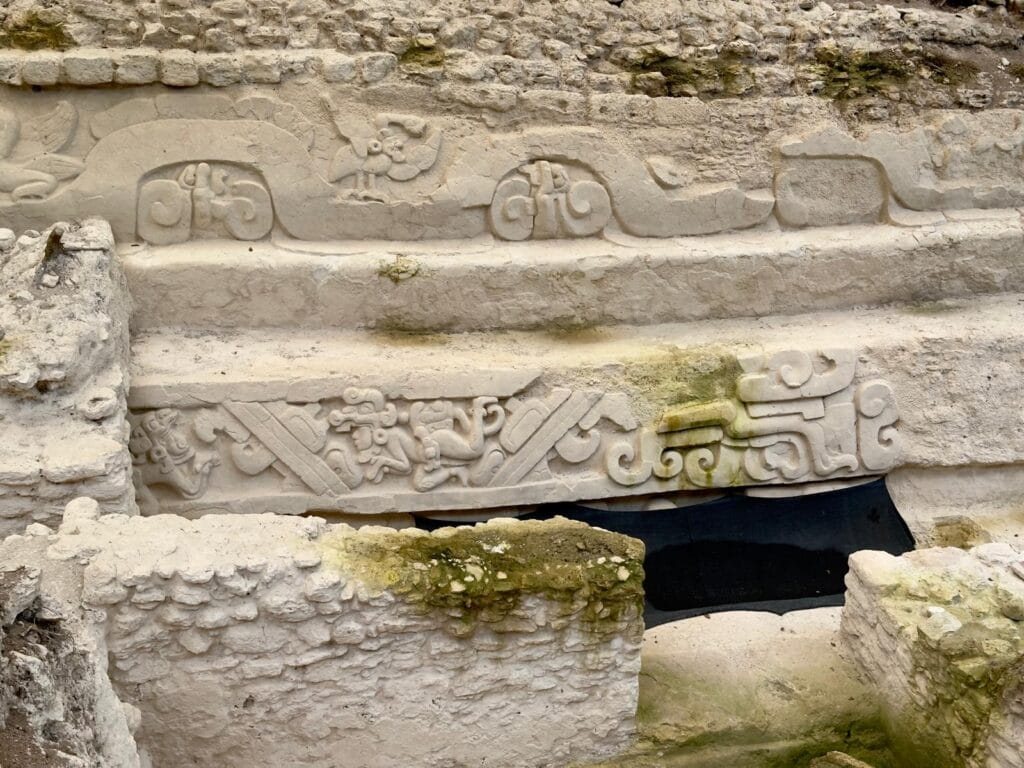
This area served as the city’s political and residential hub. Many of the structures here have partially collapsed, but archaeologists have uncovered intricate carvings and stucco masks, some depicting Mayan gods and mythological scenes.
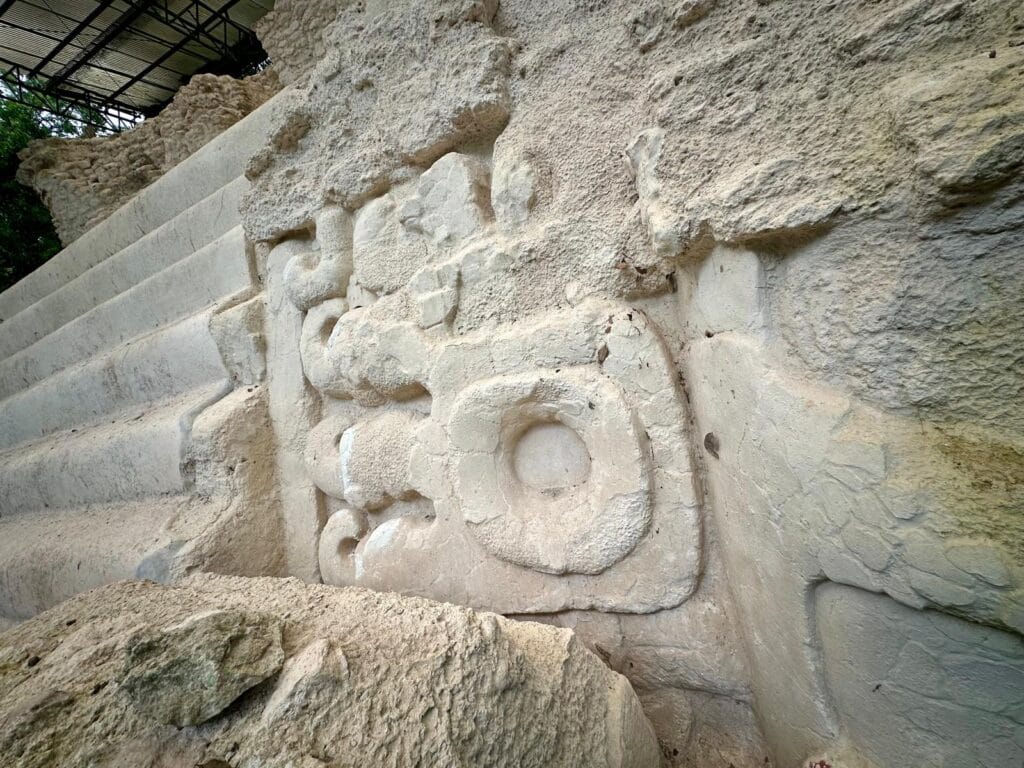
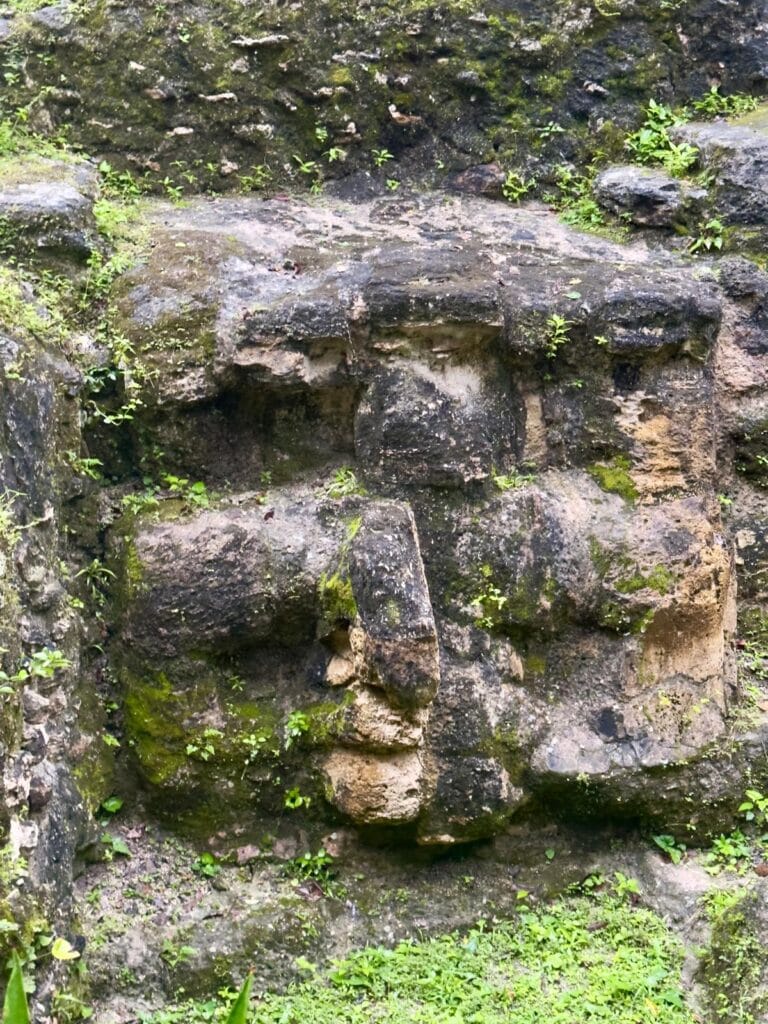
One of the most fascinating discoveries here is a massive stucco frieze (shown below) that archaeologists uncovered beneath a layer of jungle soil. The carvings tell part of the Popol Vuh, the sacred Mayan creation story. The carving features two human figures that believed to represent the Hero Twins, Hunahpú and Xbalanqué, mythological brothers who descend into the underworld to defeat the gods of death. Around them are swirling water and serpent motifs representing the primordial sea – the moment of creation. It is considered one of the best-preserved examples of Preclassic Mayan art ever found.
Temple Garra de Jaguar (Jaguar Temple)
One of the most intriguing structures within El Mirador is the Temple Garra de Jaguar, named after the large stucco reliefs that depict a jaguar’s paw emerging from swirling patterns, symbolizing strength and power in Mayan mythology. Archaeologists believe this temple may have been used for ceremonial or royal rituals tied to rulership and warfare.
Even partially excavated, it’s incredible to see the detail in the carvings. The curved lines, stylized claws, and the remnants of paint that hint at how vibrant these temples once were. Standing in front of it, surrounded by dense jungle, it’s easy to imagine how imposing this temple must have looked in its prime.
Sunset from El Tigre
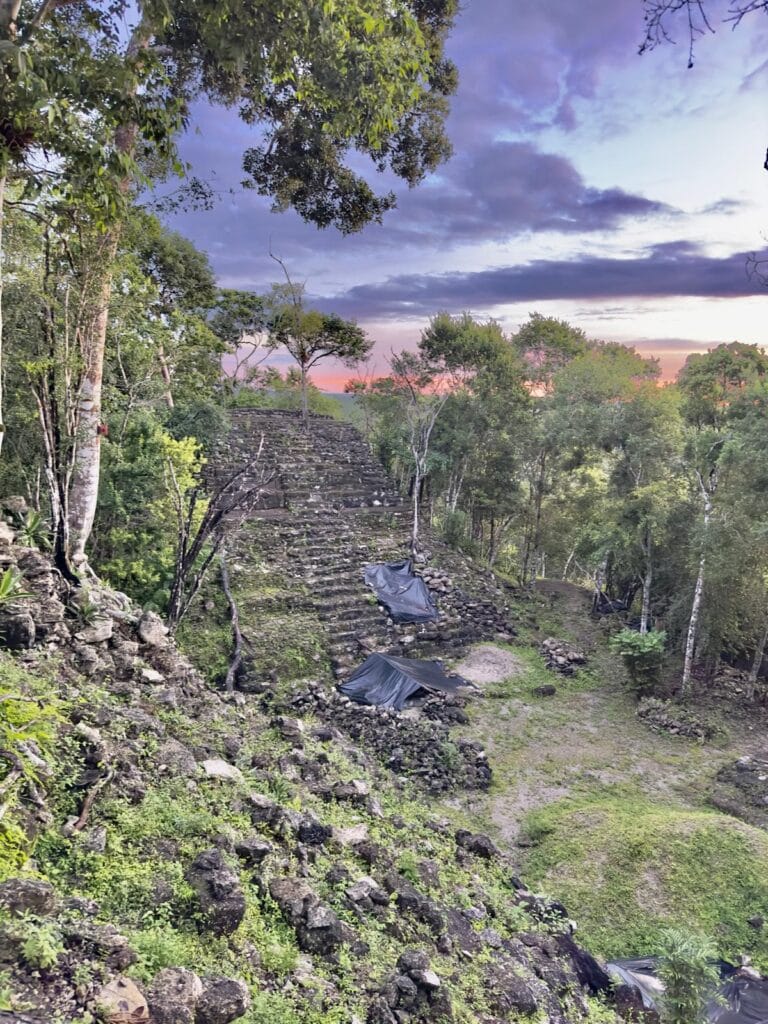
As the day came to an end, we made our way to the opposite side of the city, to the El Tigre complex. One of the largest pyramids in El Mirador, to watch the sunset. The climb was shorter than La Danta’s but still steep, weaving through scattered stones and half-excavated stairways wrapped in tarps to protect the ancient masonry.
When we reached the top, the view took our breath away. The jungle stretched endlessly in every direction, a green ocean fading into orange and violet light. From here, you could see the tips of La Danta and other distant pyramids such as Nakbé. The air was still except for the faint sounds of birds returning to their roosts.
If you chose to do the 6-day tour you actually trek to Nakbé and get to explore those ruins.
That evening, back at camp, we sat under the soft glow of headlamps, reflecting on everything we’d seen while drinking our wine we had brought with dinner. The scale of El Mirador is impossible to put into words – entire plazas and temples swallowed by jungle, yet still whispering stories of a civilization that once thrived here.
Day 4: Sunrise at El Mirador and Flying Out of the Jungle
Today was our final morning in El Mirador, and it already felt bittersweet. The exhaustion had settled in, but we wanted to make the most of every last moment in the jungle.
Sunrise Hike Over El Tigre
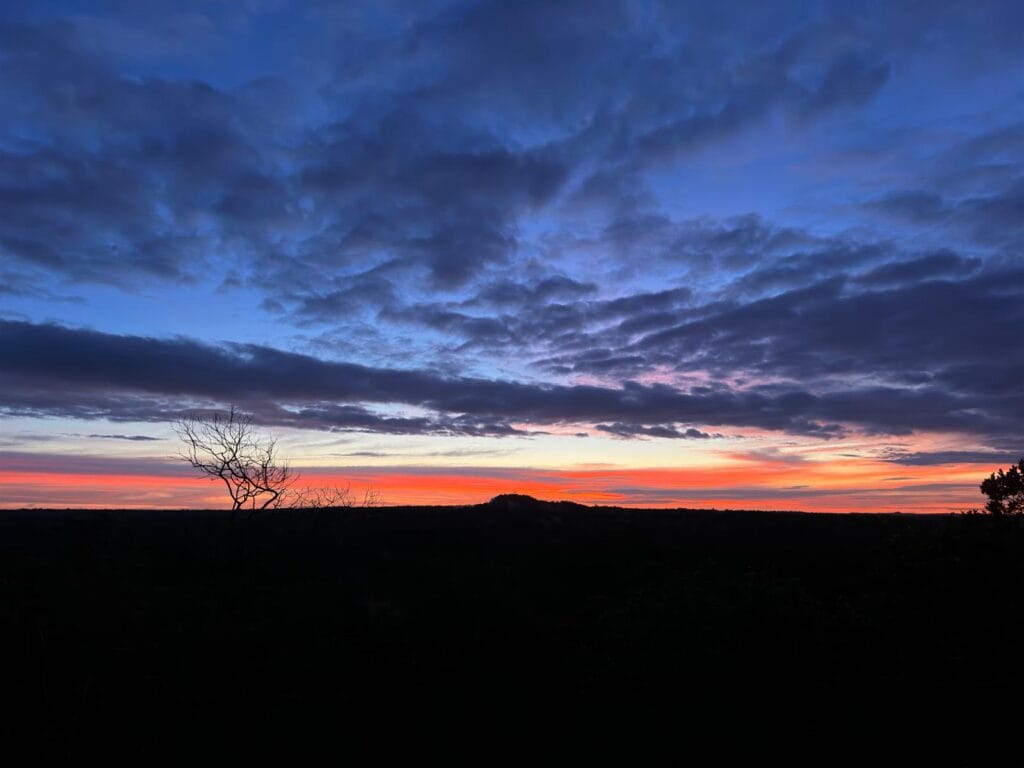
The jungle was still half-asleep when we laced up our boots for one final climb. A faint glow on the horizon hinted at dawn as we made our way toward El Tigre. The same pyramid we’d watched the sunset from the night before. This time, the sky was perfectly clear, not a trace of the storms that had followed us for days. We new it was going to be an amazing view.
The sunrise was breathtaking. A soft pink glow spread over the canopy, lighting up the mist that drifted between the trees. For the first time, we could see the jungle stretch endlessly in every direction. It felt like the perfect way to end the trip – peaceful and quiet.
Helicoptering Out
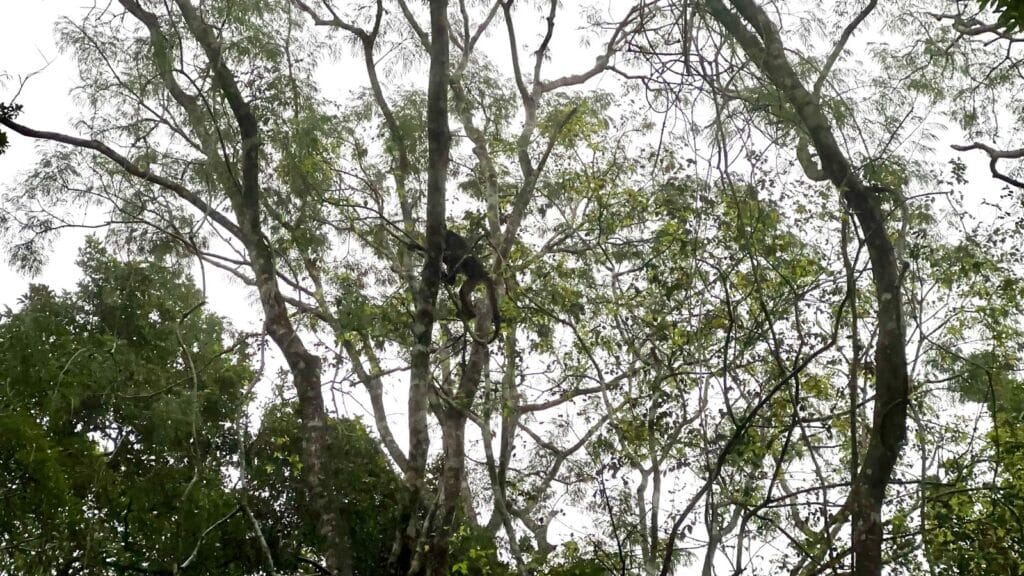
After admiring the sunrise, we said our goodbyes to the rest of the group, who would be making the long hike back through the jungle. We had just over an hour to explore a few more nearby ruins and take in the last moments at camp. Right before we left, a group of spider monkeys swung through the trees, leaping effortlessly from branch to branch as if to see us off.
By 8 AM, it was time to leave the jungle behind. We walked to the small clearing that served as our makeshift landing pad, the air thick with anticipation. A faint rumble echoed through the trees before the helicopter appeared, slicing through the canopy and sending a storm of leaves swirling around us.
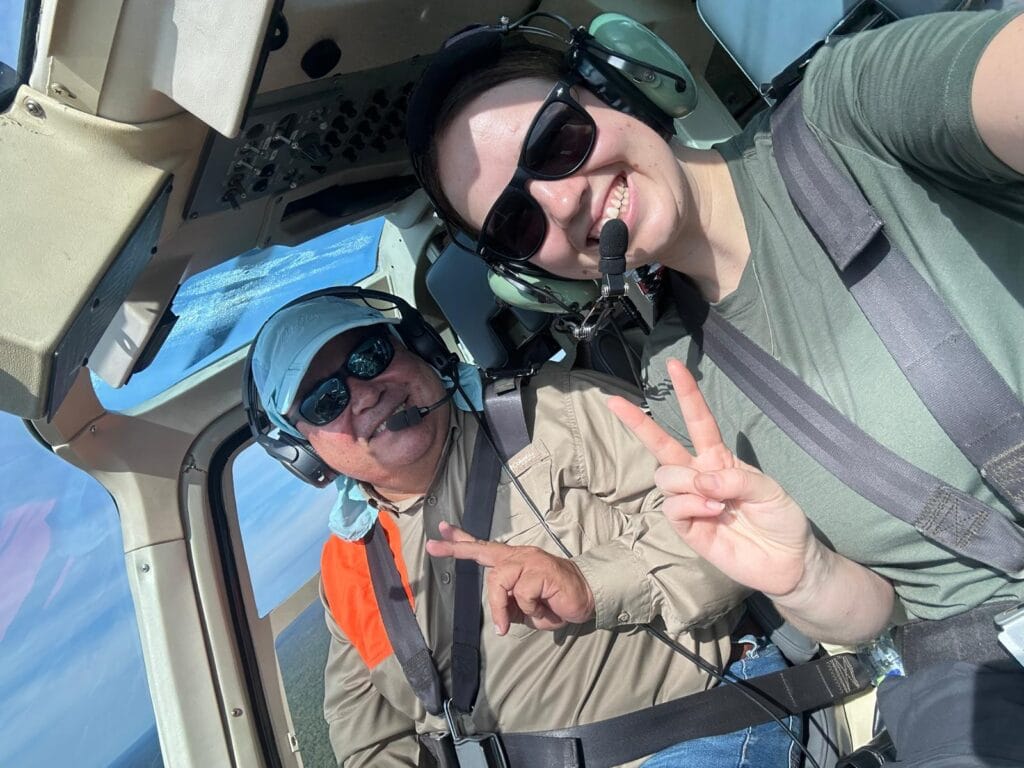
It was my first time flying in a helicopter, and the takeoff was surreal. As we lifted above the treetops, the dense green of the jungle unfolded beneath us. The pilot pointed out landmarks we had walked past only days before: El Tintal, La Muerta, and the endless stretch of jungle trail between them.
The flight back to Flores took only thirty minutes, a stark contrast to the days it took us to walk in. As the helicopter touched down and the jungle disappeared behind us, I couldn’t help but think how few people ever get to see this hidden world. It was truly incredible.
At this point I was extremely happy we decided to make the flight out, rather than retrace our steps.
Tips for Hiking El Mirador
- 1. Go in the Dry Season
The best time to do the trek is between December and April, when the trails are drier and easier to manage. Rainy season (May–October) can turn the path into deep mud and make river crossings unpredictable. Trek is still doable but you need to be in much better shape to trek through the mud. - 2. Train Before you Go
It’s a long, physically demanding hike – usually around 80–100 km round trip depending on your route. A bit of endurance training or hiking practice beforehand makes the journey far more enjoyable. - 3. Bring good gear (and don’t overpack)
Waterproof hiking boots, quick-dry clothes, and a lightweight rain jacket are must-haves. You’ll be sweaty and muddy most of the time, so comfort and breathability matter more than looking put-together. Keep your personal pack light! - 4. Protect yourself from bugs and heat
Bug spray, sunscreen, and a hat will be your best friends. The combination of humidity, mosquitos, and sun can be brutal, especially in the open sections of trail. - 5. Expect rustic camping conditions
There’s no luxury here. Think basic tents, bucket showers, and muddy boots that never quite dry. Embrace it as part of the adventure, and you’ll enjoy it much more. - 6. Disconnect and enjoy the isolation
There’s no Wi-Fi or cell service for days – and that’s part of the magic. You’ll trade notifications for the sound of howler monkeys and jungle rain, which is a far better deal. - 7. Bring cash
You’ll need it for tips, snacks in Carmelita, or any last-minute purchases before heading into the jungle. Just a small amount of cash will do. - 8. Don’t expect pristine ruins
El Mirador is still being excavated. You’ll see tarps, tools, and archaeologists at work. It’s history in progress, not a polished tourist site.
What to Pack for the El Mirador Trek
Packing smart makes a huge difference on this trek. You’ll be hiking long days through humidity, mud, and rain, so focus on lightweight, quick-drying essentials. Your main bag will go on the pack mules, while you’ll carry a small daypack with personal items and water.
Daypack Essentials
- 2–3 liters of water (hydration bladder or bottles)
- Electrolyte packets
- Snacks (nuts, granola bars, etc)
- Bug spray
- Sunscreen & lip balm
- Hand sanitizer & wet wipes
- Headlamp
- Lightweight rain jacket or poncho
- Camera or phone for photos
- A dry bag or ziplocks to keep electronics protected
- Small first aid kit (band-aids, painkillers, blister care)
- Toilet paper (bring your own!)
Main Pack
- 3-4 quick-dry shirts
- 1 long-sleeve sun shirt
- 2-3 pairs of hiking pants
- 1 pair of shorts (optional)
- 5-6 pairs of moisture-wicking socks
- Lightweight sandals or camp shoes
- Warm layer for the evenings (light fleece or jacket)
- Hat or buff for sun protection
- Sleepwear (light, breathable)
- Quick-dry towel & biodegradable soap
- Toothbrush, toothpaste, deodorant
- Power bank or solar charger
- Small amount of cash in a waterproof pouch
- Moisture-wicking packs
- Rope or small closeline
☔Pro tip: Keep everything in dry bags or plastic liners. Even in the dry season, the jungle’s humidity and sudden rain can soak through packs fast.
Final Thoughts
The El Mirador trek isn’t easy. It’s long, wet, and unpredictable, but that’s exactly what makes it unforgettable. You come for the ruins, but what stays with you is everything in between. The sound of howler monkeys at dawn, the stillness of the jungle after a storm, the feeling of standing on top of La Danta as the world wakes up.
For anyone who loves adventure, history, and wild places that still feel untouched, this is one of the most incredible experiences in Guatemala. I couldn’t recomend this trip more.